Activity
Mon
Wed
Fri
Sun
Aug
Sep
Oct
Nov
Dec
Jan
Feb
Mar
Apr
May
Jun
Jul
What is this?
Less
More
Memberships
Dakoda Herbals Academy
133 members • Free
The Clarity Circle™
22k members • Free
The Sanctuary
99 members • $11/month
Natural Healing Collective
174 members • $9/month
MountainView/Grove
75 members • Free
2 contributions to Dakoda Herbals Academy

15d •
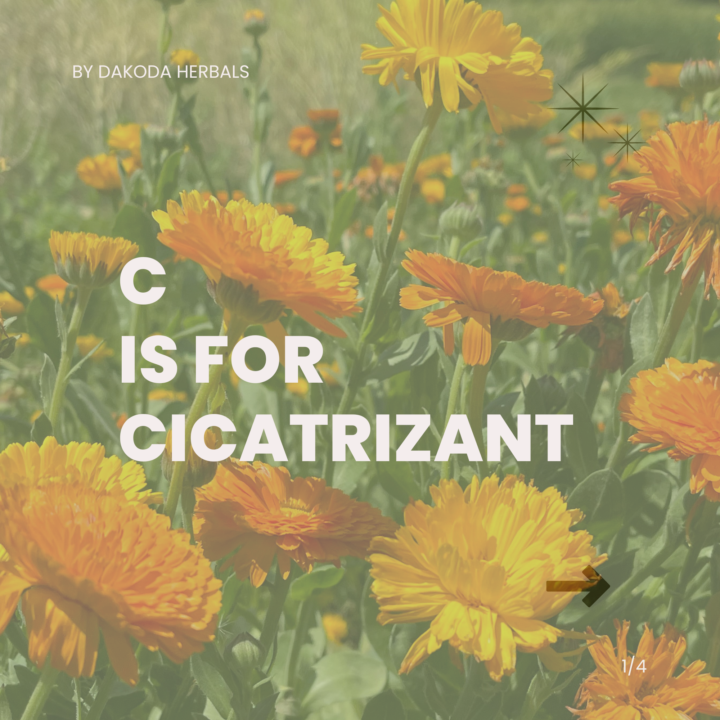
A-Z Therapeutic Terms: C is for Cicatrizant!
Happy Friday!! One of my favorite things about herbalism is that it gives us a language to describe how herbs work, not just what they're used for. This week's therapeutic term is cicatrizant! The word comes from the Latin cicatrix, meaning "scar." A cicatrizant is something that supports the body's natural wound-healing process by encouraging healthy tissue repair and helping wounds close efficiently. Many cicatrizant herbs are also anti-inflammatory and antimicrobial, making them wonderful allies for minor cuts, scrapes, burns, cracked skin, and other everyday skin irritations. It's important to remember that herbs don't magically "heal" wounds themselves. Rather, they support your body's own remarkable healing process by creating an environment that encourages tissue regeneration and healthy repair. Some of my favorite cicatrizant herbs include: + Calendula - One of the best known skin herbs. It supports healthy granulation tissue, calms inflammation, and is a staple in infused oils, salves, and creams. + Aloe vera - Instantly soothing for minor burns and irritated skin while helping maintain a moist healing environment. + Comfrey - Famous for its tissue-regenerating properties because of its allantoin content. Traditionally used externally for bruises, sprains, and minor wounds. (Because it can encourage skin to close quickly, it's generally recommended only for clean wounds and not deep puncture wounds.) + Gotu kola - A fascinating herb that has been studied for its ability to support collagen production and healthy scar formation, making it a favorite in both traditional medicine and modern skincare. As always, not every herb fits neatly into one category. Calendula, for example, is also vulnerary, anti-inflammatory, antimicrobial, and lymphatic. Therapeutic actions simply help us understand the many ways an herb may support the body. Question for the community: What cicatrizant herb do you reach for most? Are you team calendula, aloe, comfrey, gotu kola, or do you have another favorite?

1 like • 13d
I keep an aloe plant in my home 😊
Apr 22 •
Welcome to all our new members!!
I just wanted to take a moment to say how excited I am that you’re here. Truly! This space keeps getting more beautiful because of each of you joining ✨ I also want to share something honestly (and a little frustrating on my end 😅): When you request to join, I do see your answer to the membership question, but only once during the approval process. After that, it disappears on my side, which means I can’t go back and personally respond the way I would love to. And if you know me, you know I want to connect with you! So if you’re new here, I’d love for you to reintroduce yourself below: ✨ What drew you to herbalism? ✨ Are you just starting out or have you been on this path for a while? ✨ Is there anything specific you’re hoping to learn? This helps me get to know you better AND create content that actually supports you 💙 Thank you for being here, for caring about the plants, and for being part of this growing community. More goodness coming soon! — Alex
1 like • 23d
"T" here. Started developing fibroids in my 30's and didn't like the options that were given to me by my doctor...so I started on my own healing journey which includes herbs. Currently in a medicine workers course so that I can deepen my understanding of how herbs heal us on a cellular level. I live to learn. Thankful to be in the space and learn from you all as well.
1-2 of 2