Activity
Mon
Wed
Fri
Sun
Aug
Sep
Oct
Nov
Dec
Jan
Feb
Mar
Apr
May
Jun
Jul
What is this?
Less
More
Owned by Steven
We help adults who never got solid English foundations read, write, and speak with confidence in real-life situations without getting left behind!"
Memberships
AI Automation Club
865 members • Free
Skoolology: Growth Lab
41 members • Free
Skool 101
43 members • Free
Skoolers
164.9k members • Free
The Speedy Spanish Hub
480 members • Free
29 contributions to The English Triage Center

10h •
Replay : LIve Educational Session 2
Missed the live call last night? Here is the replay video from the call. Thank you. Professor Stevie Coard
0
0

23h •
Live Tonight at 8pm EST on SKool.
Hello Friends, Tonight, I will be going live at 8pm EST. I will take you through the 1st, 2nd, and 3rd amendments. Do you know your rights? See you there?
0
0
23h •
Welcome our New Skool Community Members!
We would like to welcome our new founding members to The English Triage Center Skool Community. Jeremy Garnett Vinay Kumar m Wise Man Thank you so much for being apart of our community! -Mr. Stevie Coard
0
0
2d •
The Post Office is Dead: Why Your Language Learning Is Stuck in the Past (and How to Fix It)
The Post Office is Dead: Why Your Language Learning Is Stuck in the Past (and How to Fix It) Written By: Steven L Coard (If you don't want to read it, then click to watch the video) 1. Introduction: The 90% Problem The traditional language learning industry is a failing infrastructure, a systemic hemorrhage of time and capital. Millions of learners invest years and thousands of dollars into prestigious institutions, yet the return on investment is fundamentally bankrupt. Despite this massive expenditure, 90% of students "freeze up" during real-world interactions. They are functionally paralyzed the moment they step out of the classroom. The core of the problem is a catastrophic misalignment of objectives: the current system priorities passing academic tests over surviving human conversations. It is a model built for the 19th century, designed to produce theorists rather than practitioners. To survive the 2026 reality, we must dismantle this irrelevant pipeline. The "Survival Mode" framework is the faster, leaner alternative—a triage system engineered for a world that demands results over credentials. 2. Takeaway 1: Beware the "Fluency Illusion" The "Fluency Illusion" is the most dangerous cognitive trap in learning. It is the deceptive feeling that passive recognition—identifying a word on a flashcard or in a textbook—is equivalent to the neurological ability to use it mid-sentence. This is the "Consumerist Mindset" at work: we confuse swiping a credit card for a subscription with making actual progress. The Heart Rate Metric Think of traditional learning as watching a sports game from the couch. You can recognize the players and understand the rules, but you are experiencing the "fake feeling of winning." Your heart rate never goes up. Real-world acquisition requires your heart rate to rise. If you aren't experiencing the active, uncomfortable failure of a high-stakes environment—like a heated argument or a fast-paced negotiation—you aren't "wiring" the language. Passive review is a ghost; active use is the only thing that builds the neurological muscle required for survival.
0
0

2d •
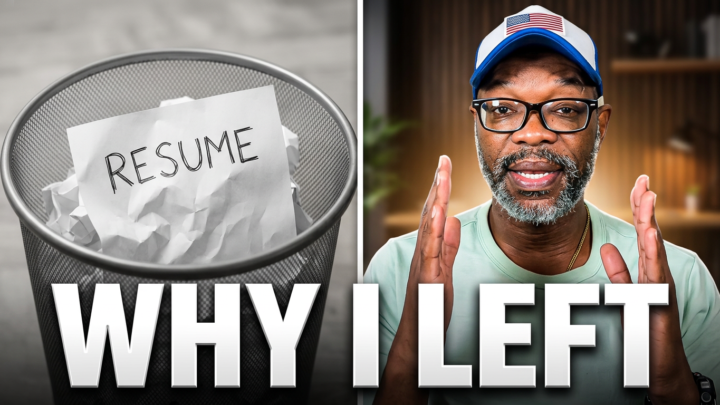
Why I Left Corporate Education To Build The English Triage Center Movement
Whether you're an English language learner, an adult working toward your GED, or someone looking to strengthen your foundational skills, this community is for you. Let’s erase the shame, address the gaps, and start building together. I’d love to hear from you: What is one area of communication you’d like to focus on first? Share your thoughts in the comments below!"
0
0
1-10 of 29

@steven-coard-8333
Educator, digital consultant, and remediation specialist who builds literacy systems for the people the traditional classroom left behind.
Active 1h ago
Joined Oct 5, 2025
Georgia
Powered by