Activity
Mon
Wed
Fri
Sun
Feb
Mar
Apr
May
Jun
Jul
Aug
Sep
Oct
Nov
Dec
Jan
What is this?
Less
More
Memberships
Home Lab Explorers
1.2k members • Free
KubeCraft (Free)
11.3k members • Free
8 contributions to KubeCraft (Free)

21h •
Starting my DevOps journey – How will AI change the landscape?
Hi Everyone, I am currently navigating a career change and I am in the early stages of my DevOps training. As I start this new chapter, I've been wondering how the integration of AI will evolve the landscape by the time I'm fully established in the industry. It seems that with the rise of agentic AI, the focus for DevOps professionals is shifting away from manual configuration and reactive troubleshooting toward designing and supervising intelligent, self-healing systems. Do you think skills in cloud architecture, AI integration, security, and strategic communication will be the primary drivers for success as a DevOps Engineer in 2026 and in the future?
2d •
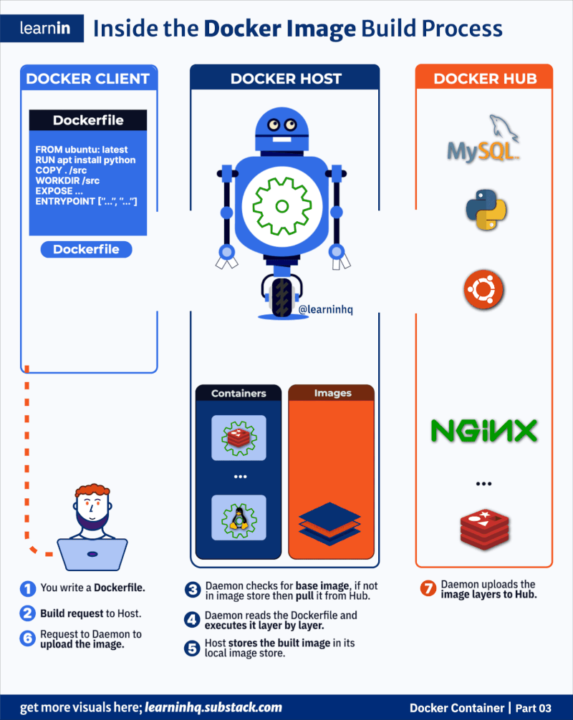
Inside the Docker Image Build Process
Hi Everyone I saw this interesting article on LinkedIn regarding the Docker Build process (the animated picture shows the process When you run: docker build -t myapp:v1 . it’s not just “magic” three main players are working together: 1️⃣ Docker Client This is the CLI you type into (docker build, docker push, etc.). The client doesn’t build the image itself, it sends API requests to the Docker Daemon running on the host. 2️⃣ Docker Host (Docker Daemon) The host is where the actual work happens. It parses your Dockerfile line by line. Each instruction (FROM, RUN, COPY, etc.) creates an image layer. Layers are cached so unchanged steps don’t rebuild unnecessarily. The final image is stored locally on the host’s image store. 3️⃣ Docker Hub (Registry) Your image lives on your local host until you push it to a registry like Docker Hub. docker push uploads layers that don’t already exist in the registry. Once in the hub, your image can be pulled to any environment (test, staging, production). 📌 Flow Recap: Client → sends command → Host builds & stores image → optional push to Hub for sharing & deployment. This workflow is why Docker makes apps portable; your environment, dependencies, and code are all bundled into a consistent image. Reference: https://www.linkedin.com/feed/update/urn:li:activity:7417411236079955969/?utm_source=share&utm_medium=member_ios&rcm=ACoAAAQDlFoBeeiykU7LSX-TEvWzCQ_zsml5fcs
1
0

👑
⭐
Dec '25 •
I have a free gift for you
Hello friends, I've been posting a lot about Kubernetes recently. For example in this previous newsletter, I explained how it is the path to a $171K remote job (on average) and how it can lead to a life of complete independence as a freelancer and business owner. I've gotten extremely positive feedback on these posts. But I also received a lot of questions. The main one being: how do I start? How do I begin learning Kubernetes? To address this question, I decided to build a free course that will help people get started on their Kubernetes journey. It's called the 7-Day Kubernetes Quickstart. And because you are a valued member of the KubeCraft newsletter, I'm giving you early access before anyone else. You can claim your free course here: >> CLICK HERE << Just use the same email that you received this mail on. Enjoy your free course, and see you next week! Mischa
2 likes • Dec '25
Also this error might not occur every time you delete a pod. Why this error sometimes: The Core Issue: Static Pod Selection The fundamental reason for this inconsistency is that kubectl port-forward, even when you specify a service name, actually selects a single, specific pod instance behind that service and tunnels traffic only to that one pod. It does not create a persistent, load-balanced tunnel to the service abstraction itself that automatically switches to a new pod if the current one disappears. When the Error Occurs The "error: lost connection to pod" message is guaranteed to appear if you specifically target a pod by its unique name, and then delete that exact pod instance. However, when you target a Service with the kubectl port-forward service/my-app 8080:80 command, one of two things happens: Error Occurs: The kubectl command initially picks one running pod (let's call it pod-A). If you delete pod-A while the command is running, the connection is lost, and you see the error message in your terminal. The command then terminates. Error Does Not Occur: If the kubectl command happens to pick a pod that is not the one you manually deleted, the connection remains active to the still-running, chosen pod, and you won't see the error. The error message is normal confirmation that the specific network tunnel you established has broken because its target no longer exists. The inconsistency arises because targeting a service is just a convenient shortcut for selecting one specific pod, and it might not always select the pod you are actively deleting.
2 likes • 29d
Does anybody have anything to add to this?

Jan '25 •
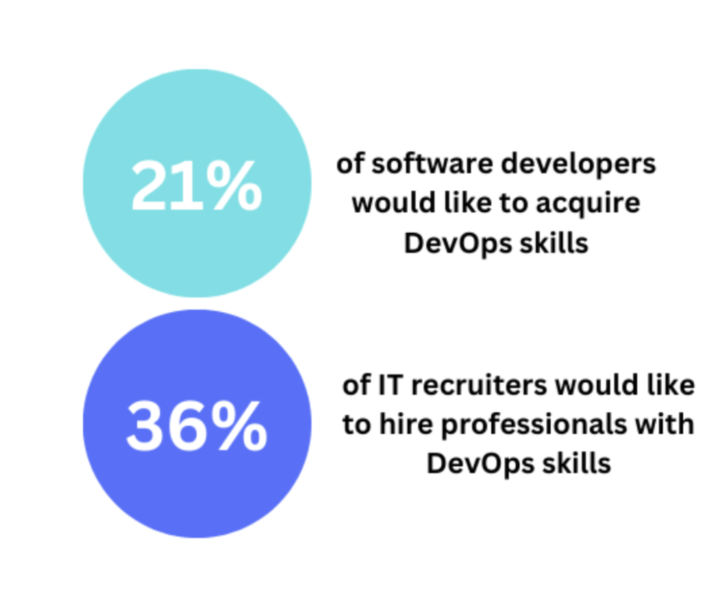
Some juicy 2025 DevOps & Kubernetes Job statistics
In 2025, DevOps engineers in the U.S. earn an average salary of $141,357 annually. Source: Coursera Specializing in Kubernetes can further enhance earning potential, with salaries ranging from $142,000 to $162,000, depending on experience. Source: Bluelight Software Solutions The demand for DevOps skills remains high, with yearly growth projected at 17% between 2023 and 2033. Souce: Coursera Proficiency in tools like Docker, Kubernetes, and cloud platforms such as AWS and Azure is highly sought after. Source: Brokee
1 like • Dec '25
How about the land down under. How do the stats compare against the US and Europe
👑
⭐
May '25 •
Where are you from?
Hi friends, May I ask you a question? Please post in the comments where you are from. This way, we can see where all the members live. Afterward, take a look through the comments and feel free to like or say "hi" to members who are from your area. I'm super curious to see where you're all from and will read every single comment. Let's gooooo! - Mischa 🫡

1 like • Nov '25
Hi @Romyen Sasithorn
0 likes • Dec '25
Hi @Romyen Sasithorn Who are you? @Romyen Sasithorn or @Linda Fox
1-8 of 8
@stephen-christie-6146
Inspiring to be DevOps engineer and aiming for CKAD
Active 1h ago
Joined Nov 13, 2025
Brisbane, Australia
Powered by