Activity
Mon
Wed
Fri
Sun
Nov
Dec
Jan
Feb
Mar
Apr
May
Jun
Jul
Aug
Sep
Oct
What is this?
Less
More
Owned by Stephen B.
A curated menu of courses, content, and tools for creators and solopreneurs; explore, choose what fits, and move forward with clarity.
Stephen B. Henry’s "Your Pathway To Growth" community is a calmer, safer place for learning A.I. through natural conversation and guidance.
Moments with May
15
Free
AI Shortcuts to Work Smarter
160
Free
Adventures With Barb
22
Free
Skoolers
151.8k
Free
Tools For Motivation Community
2.7k
Free
IN SESSION
12
Free
Phoenix Rising
21
Free
The Promo Lounge
394
4.7
Free
LlynFay Inc. Marketplace
542
5.0
Free
101 contributions to The Directory On Skool

🔥
10d •
After almost a year on Skool, it finally clicked! 🎉📸📽️
I joined Skool last November, and this month it all came together. I built my own landing page AND created my own magazine, The Hollywood Headshot Blueprint. I've learned so much from being part of so many different Skool communities, and more. Every single one taught me something, and I'm so grateful for the people in them. 💛 After Facebook deleted my 14-year account, I decided no platform will ever hold my people hostage again. Now people can find me, grab my free magazine, and stay connected with me directly. And everyone knows the truth: I direct you live, and I capture every shot myself. No studio. No travel. No selfies. I'm not a tech person, and I did it anyway. 💪 If I can do it, so can you! 📖 Get my free magazine here: https://photography-by-cristal.netlify.app — Cristal, Photography by Cristal 👉 https://www.skool.com/free-fallin-8524


🔥
4 likes • 10d
@Cristal Vancarson You go girl!

🔥
Sep 16 •
🌟🚨 IT'S LEVEL 5 DAY BABY! 🚨🌟
You've worked hard, or played hard, to leveled up! And you made it! So today all Level 5 and above members ... you get to play. 😎🔥 If you're Level 5 or higher, this thread is officially YOURS. Twice a month, we open up a dedicated space where Level 5+ members can share what they've got going on... And today is one of those days. 🎉 So YES... 🔗 Drop your link 📣 Share your offer 🖼️ Show us what you've created 👀 Tell us what you want more eyeballs on BUT REMEMBER... 🥛 Give us the glass of milk. We don't need the whole cow. 😂🐄 You don't have to write us a dissertation explaining every single thing you do. Give us enough to make us curious. You know, a good hook, a quick description, a graphic that makes us stop scrolling. And then... 👉 𝗟𝗘𝗧 𝗨𝗦 𝗖𝗟𝗜𝗖𝗞 𝗧𝗛𝗘 𝗗𝗔𝗥𝗡 𝗟𝗜𝗡𝗞. 😂 And while you're here... 🚫 𝗗𝗢𝗡'𝗧 𝗣𝗢𝗦𝗧 & 𝗚𝗛𝗢𝗦𝗧. 👻 This thread gets a whole lot more fun when everybody actually participates! So, drop your thing... THEN GO SNOOP. 👀😂 See what other people are building. Click some links! Ask some questions. Leave a comment. Tell somebody when something catches your eye. Make a connection. ✨ 𝗪𝗵𝗲𝗻 𝘆𝗼𝘂 𝘀𝗵𝗼𝘄 𝘂𝗽, 𝗽𝗲𝗼𝗽𝗹𝗲 𝗮𝗿𝗲 𝗺𝗼𝗿𝗲 𝗹𝗶𝗸𝗲𝗹𝘆 𝘁𝗼 𝘀𝗵𝗼𝘄 𝘂𝗽 𝗳𝗼𝗿 𝗬𝗢𝗨. ✨ If everybody drops a link and disappears, we've just created a generic bulletin board. 😂 We're not here for a bulletin board. We're here to DISCOVER EACH OTHER. So Level 5+ crew... 🌟 THE SPOTLIGHT IS ON. Show us what you've got, then go shine a little light on somebody else, too. 👇👇👇 DROP IT LIKE IT'S HOT LEVEL FIVE+! 🔗🔥😂

🔥
1 like • Sep 16
I am gathering all my series and other individual articles in my "Private Blog" in the Skool Cafeteria classroom. It is free but does require Standard tier membership (also free) to access. While I will continue to post in many communities, I will not post all of my shared writting in all of them all of the time. https://www.skool.com/skool-cafeteria-3864/about
🔥
1 like • Sep 16
@Cheri Hayashi Purr-fect!
🔥
Sep 15 •
🚨 IF YOU AIN'T LEVEL FIVE... YOU'RE GONNA WANNA BE FOR TOMORROW! 😁👀
So TODAY we have ONE mission: ⬆️ 𝗚𝗘𝗧. 𝗧𝗢. 𝗟𝗘𝗩𝗘𝗟. 𝗙𝗜𝗩𝗘. ⬆️ And before anybody gets excited... 🚫 NO LINKS TODAY. 🚫 NO LINKS TODAY. 🚫 NOOOOOO LINKS TODAY. 😂 Today's thread is purely a LEVEL UP PARTY. 🎉 So get in these comments and DO YOUR THING. 🎬 Drop a GIF 😂 Tell us a joke 💬 Start a random conversation ❓ Ask a ridiculous question 🐶 Show us your pet 🌮 Tell us what you're eating... or reading! 🔥 Reply to somebody 🙌 Cheer somebody on Whatever gets you talking, commenting, connecting and climbing... 𝘿𝙊 𝙏𝙃𝘼𝙏.😂 And if you're already Level 5+? YOU CAN STILL PLAY! Help somebody else get there. 👏 See somebody sitting at Level 3 or 4? 👀 TALK TO 'EM! Start a conversation. Reply to their comments. Pull them into the party. Because we're trying to get as many people across that Level 5 line as we can before TOMORROW! Because tomorrow... 𝘁𝗼𝗺𝗼𝗿𝗿𝗼𝘄 𝗶𝘀 𝗟𝗘𝗩𝗘𝗟 𝗙𝗜𝗩𝗘 𝗗𝗔𝗬 𝗕𝗔𝗕𝗬!! TODAY WE CLIMB. 🧗♀️🔥 TOMORROW WE SHINE. 🌟 👇👇👇 Alright, who's trying to hit Level 5 before tomorrow?! LET THE LEVEL-UP CHAOS BEGIN. 🎉⬆️😂

🔥
4 likes • Sep 15
Skool Cafeteria is where ideas live. It is a growing collection of resources, courses, articles, insights, and learning materials. A place to explore, discover, and revisit concepts when you need them. 👉 https://www.skool.com/skool-cafeteria-3864 Your Pathway to Growth is where those ideas become conversations. A place to ask questions, share experiences, challenge assumptions, gain perspective, and figure out what comes next. 👉 https://www.skool.com/your-pathway-to-growth-5059
🔥
Aug 28 •
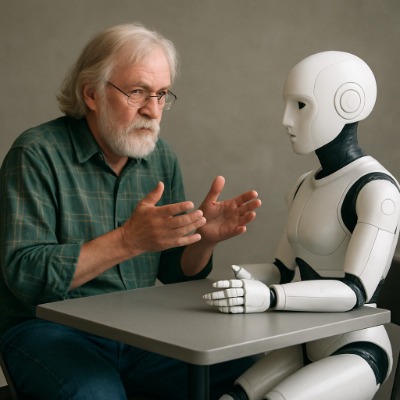
🎬 The Conversational Age #10
Living in the Conversational Age Every age leaves its mark on humanity.The Agricultural Age taught us to cultivate the land. The Industrial Age transformed the way we worked. The Information Age connected us to knowledge on a scale never before imagined. Now we find ourselves entering something different. Not an age defined primarily by machines. Not an age defined by information. An age increasingly defined by conversation. That may sound like an unusual claim. After all, conversation is one of humanity's oldest abilities. Long before there were books, there were stories. Long before there were universities, there were teachers speaking with students. Long before there were search engines, there were questions shared around family tables, workshops, marketplaces, and campfires. Conversation has always been how human beings explored ideas together. What has changed is not the conversation itself. It is who, or perhaps more accurately, what can now participate in it. For the first time in history, ordinary people can sit down with an intelligent system capable of discussing ideas, organizing information, exploring possibilities, and refining thoughts through an ongoing dialogue. That is extraordinary. Yet the technology itself is only half the story. The other half is us. Throughout this series we have explored a simple idea. The future does not belong to those who memorize the most impressive prompts. It belongs to those who learn to think more clearly through conversation. Conversation encourages curiosity. Context builds understanding. Continuity preserves momentum. Collaboration expands perspective. Judgment provides wisdom. Together, they create something greater than information alone. They create understanding. Perhaps that is the true purpose of the Conversational Age. Not producing more answers. Producing better thinkers. Some people worry that artificial intelligence will eventually make human beings less important. I see a different possibility. The more capable our tools become, the more valuable distinctly human qualities become. Kindness. Integrity. Imagination. Discernment. Humility. Compassion. Purpose. These qualities cannot be automated. They cannot be downloaded. They cannot be generated from statistical patterns.
3
0

🔥
Aug 26 •
🎬 The Conversational Age #9
The Rise of Personal A.I. For most of the history of computing, every interaction began with a blank screen. You opened a document. You created a spreadsheet. You started a new email. Each task stood largely on its own. The computer performed the work you requested, but it knew almost nothing about you beyond the file you happened to be editing. Artificial intelligence is changing that model. Increasingly, our interactions are becoming continuous rather than isolated. Yesterday's conversation informs today's discussion. Last month's project helps shape next month's ideas. Instead of beginning at the starting line every time, we continue building upon work that has already been done. That may prove to be one of the most significant changes in the history of personal computing. For the first time, many people will have an assistant that grows more useful through familiarity. Think about the people with whom you work most effectively. Perhaps it is a trusted colleague. A long-time business partner. An experienced editor. A skilled assistant. A close friend. Over time, those relationships become more productive because less time is spent explaining the basics. They already understand your goals. They know your preferences. They recognize your style. They remember previous discussions. Every new conversation begins with a shared foundation. Artificial intelligence is beginning to work in much the same way. Not because it possesses human understanding. It does not. But because it can accumulate context. It can remember projects. It can recognize recurring themes. It can adapt to the way you prefer to communicate. Each conversation adds another piece to an increasingly useful picture. That continuity changes the nature of the relationship. Instead of asking, "Can you write this article?" You may find yourself saying, "Continue the series we began last week." Instead of explaining your audience again, you simply say, "Keep the same conversational style." Instead of rebuilding an idea from the beginning, you ask, "Take this one step further."
3
0

1-10 of 101
🔥
@stephen-b-henry-9359
WordPress Wizard & Coach's Coach: instructor, guide, mentor on your journey of success. The time to hire your guide: before you get lost in the woods!
Active 3h ago
Joined Apr 20, 2026
Powered by