Activity
Mon
Wed
Fri
Sun
Feb
Mar
Apr
May
Jun
Jul
Aug
Sep
Oct
Nov
Dec
What is this?
Less
More
Memberships
Self-Improvement Challenge
7.1k members • Free
Automation-Tribe-Free
3.9k members • Free
Agency Flywheel Hub
4.5k members • Free
Elite Sales Alliance
21.8k members • Free
High Vibe Tribe
78.7k members • Free
Creator Boost Tribe
8.9k members • Free
Community Builders
8.2k members • Free
Kourse (Free)
114.8k members • Free
3 contributions to Automation-Tribe-Free

26d •
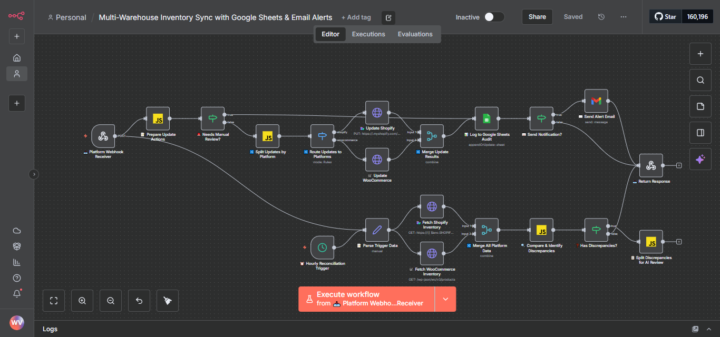
If You Start the New Year With Inventory Errors, Expect the Same Lost Revenue.
Companies Lose Money During Onboarding Here's the Fix: Most Companies don't struggle with inventory because of bad products, they struggle because their stock systems silently fail behind the scenes while everyone assumes "someone else' updated the numbers. As the year closes, this pressure intensifies: ✔Warehouses become misaligned, Shopify says one thing while WooCommerce says another ✔Google Sheets tells an entirely different story. ✔Businesses oversell, undersell, frustrate customers, and lose revenue simply because their inventory data isn’t synchronized across multiple platforms. ✔Teams end the year exhausted, ✔Chasing discrepancies manually, double-checking spreadsheets, correcting orders, and trying to fix issues that automation could have prevented months ago. The truth is harsh: manual reconciliation is slow, error-prone, and fundamentally incapable of keeping multi-warehouse operations stable during high-demand periods like year end. This automation eliminates that chaos entirely by creating a real-time sync engine across Shopify, WooCommerce, Google Sheets, and internal warehouse systems. 1. It identifies discrepancies instantly 2. Routes updates to the correct platform 3. Merges multi-system inventory data 4. Logs changes for audit 5. Sends alerts when something needs human attention 6. Triggers reconciliation on schedule even while your team sleeps. Instead of reacting to errors after customers complain, the system prevents them from happening in the first place. It tackles the root cause disconnected data and manual update delays. With this workflow, your stock stays consistent everywhere, your platforms communicate seamlessly, and your warehouse becomes predictable instead of chaotic. As a seasoned automation specialist who has built complex inventory, logistics, and multi-platform sync systems for agencies, e-commerce brands, and enterprises I understand exactly where operations break and how to design automations that keep them stable. Years of experience in n8n, Make, Zapier, and full-stack workflow engineering allow me to build systems that eliminate human error, strengthen data accuracy, and give decision-makers clarity. My priority is always simple to help businesses enter the new year with scalable, intelligent automation instead of old habits that drain resources and revenue.

1 like • 26d
What you’re describing isn’t just an operational nuisance, it’s a systemic risk that compounds over time. Inventory errors don’t simply “happen”; they emerge from structural gaps between platforms, processes, and people. When those gaps widen during high-volume periods, the financial impact becomes measurable across the entire business: lower margins, inaccurate forecasting, customer churn, and avoidable fulfillment costs.

28d •
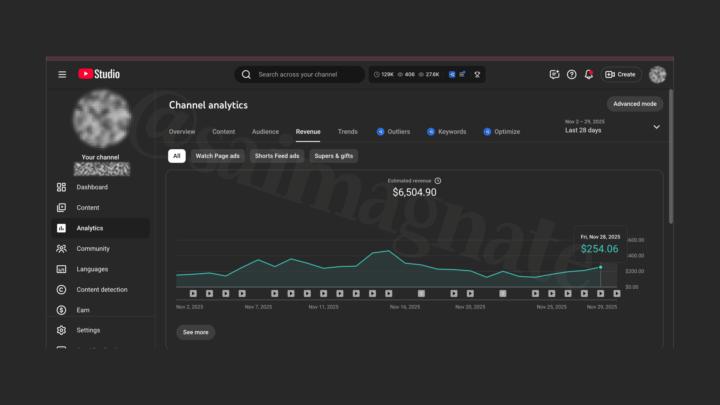
Channel growth analysis
Growth looks different when the niche is right. Actively working on a client channel refining the niche, improving content quality, and building a system designed for consistency, not luck. This is what sustainable YouTube automation looks like when strategy comes first. If you’re serious about launching or improving a faceless channel, let’s talk.
1 like • 28d
Love the breakdown. Most people underestimate how much the right niche positioning alone can change the trajectory of a channel. It’s not just about posting more, it’s about posting with precision.

28d •
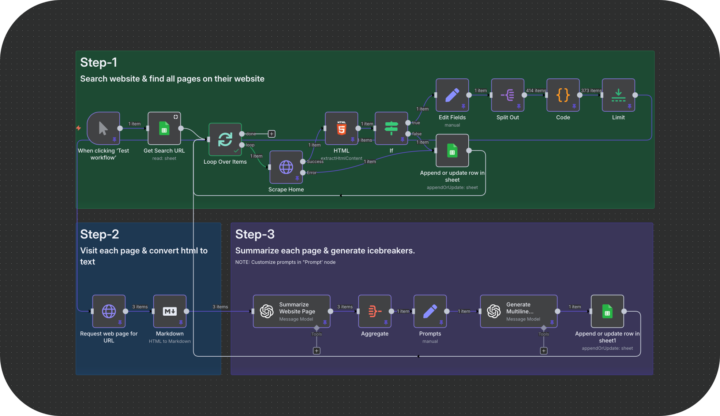
I’ve spent the last 2 years cracking outbound… and here’s what happened
I don’t run ads. I don’t chase virality. I just build systems that get replies. In the last few months alone: - Generated 84 inbound responses from cold outreach - Helped clients close $12.8K → $18.4K months (all without touching the inbox) - Built lead engines that consistently deliver 25–60 qualified conversations/month - Replaced 3-person SDR teams with one automation - And turned broken outreach processes into predictable pipelines (finally) I didn’t get here overnight. I tested for 2 years, broke things, rebuilt them, and eventually found what actually moves revenue for agencies, SaaS, and service businesses. Along the way: - My content hit 3M+ organic views - My IG grew to 19K followers - Over 10,000 people downloaded my automation templates - And more importantly → the system worked the same for clients as it did for me No hacks. No “magic” copy. Just a repeatable outbound engine that does exactly what ads promise — but at 0% ad spend and 5–10x higher ROI. If you’re in this community, you’re probably already doing outreach, content, ads… something. But if you want to know how agencies are booking calls like clockwork without: ❌ praying to Instagram for leads ❌ paying Meta/Google $40–$70 per demo ❌ writing cold emails manually ❌ or buying shady lead lists …then you’ll probably find the next few posts valuable. I’ll be breaking down: - What an actual high-ROI lead gen system looks like - The small tweaks that triple reply rates - Why most outreach fails even with a great offer - And how to finally build predictable deal-flow without scaling ad spend No funnels. No pitch. Just sharing what’s already working across multiple industries. If you want my exact lead gen process I use to close $5k–$20k clients every month → Click “Free Template.” If you want guaranteed 25+ qualified leads per month for your agency or SaaS → Book a meeting.
1 like • 28d
Really solid breakdown. What stands out here is that you’re focusing on the system, not flashy copy or volume. Most outbound fails because the backend is broken, bad targeting, no follow-up logic, and zero data feedback. Fix those, and even simple messaging starts generating predictable conversations. I’ve seen the same thing: when you treat outreach like an engine instead of a grind, you can replace entire SDR teams and still increase reply rates.
1-3 of 3

@simeon-judge-8248
Father with an entrepreneurial mindset. Pets lover, brand owner. Ready to explore and help individual on redirection
Active 15m ago
Joined Dec 1, 2025
Powered by