Activity
Mon
Wed
Fri
Sun
Nov
Dec
Jan
Feb
Mar
Apr
May
Jun
Jul
Aug
Sep
What is this?
Less
More
Owned by Ryan
Guiding the remnant to stand, speak, and serve with courage. One Master. One mission. Obedience is worship. Let the remnant arise.
LawGeeks.Org
471
Free
Jesus-Centered Leaders
190
Free
Disciples of Christ
884
Free
Biblical Business Fellowship
182
Free
Ephesians 6 Ministry
69
Free
101 contributions to MerakiPMA
Jun 26 •
Achievement Registry
I've been building something I'm calling Administrative Literacy — the practice of using public processes (Right-to-Know requests, OOR appeals, Sunshine Act filings) to surface what the public record actually contains, rather than accepting any party's summary. Today I turned three milestones in that process into an Achievement Registry — partly because the bureaucratic absurdity deserves to be honored, and partly because I genuinely believe this framework is teachable. If you've ever felt administratively outgunned — by an institution, a process, or someone who knows how to work the system — this is for you. 🏆 Achievement Registry: The record does not always tell the whole story. But it usually tells more than the summary.
0
0
Jun 16 •
My public post on Substack
Recently I published an essay titled "The Record and the Story." The essay explores something I've observed repeatedly over the years: Records matter. Documentation matters. Facts matter. But records alone rarely tell the whole story. Behind every public record is a human story involving assumptions, fears, motivations, mistakes, growth, and lessons learned. That observation has shaped much of my work involving parent advocacy, administrative literacy, public records, institutional communication, privacy, and personal responsibility. For those interested in learning more about who I am, why I built the Meraki PMA, and how I approach these topics, I've created a free introductory course: 👉 [About Me and the PMA] Inside you'll find: • My background and journey • Why I believe privacy matters • Why I chose a Private Membership Association (PMA) structure • The difference between public information and private stewardship • How educational resources, courses, essays, and archives fit together Many people first encounter my work through a specific conflict, document, or essay. The goal of the PMA has never been the documents themselves. The goal is helping people develop the skills necessary to navigate institutions, relationships, and life with greater clarity and confidence. The record tells us what happened. The story helps us understand why it mattered. I hope you find value in both. If you have children in public education, I have a few resources worth a review. The Triangle The Parent in the Room
0
0
Jun 5 •
Meraki / The Ordered Mind Project / Regulated Family and more
Many creators measure success by engagement. I don't. My goal is education. If a resource helps one family avoid harm, one parent ask a better question, or one individual understand a process they previously misunderstood, the resource has served its purpose. Some materials are public. Some are private. Some require financial support because time, effort, and expertise were invested in creating them. Agreement is not required. Engagement is optional. Understanding is the goal.
0
0
May 27 •
The Fortress Document — What It Looks Like in Practice
One of the resources available in this community is a document I call The Fortress and the Siege Engine. It maps the institutional asymmetry that most families feel but rarely have language for — the four walls, the unstarveable supply line, the armory of qualified immunity and good faith doctrine, and the five specific strategies that consistently change outcomes for informed families navigating institutional resistance. A member asked me once what this looks like in practice — not as a framework, but as a real sequence of decisions and documents. I have maintained a private archive called Octorara Communications — a documented record of my own navigation of an institutional dispute using exactly the tools the Fortress document describes. Contemporaneous documentation. Specific written requests. Formal complaints filed through the correct channels. The parallel record that exists independent of the institution's version of events. I am sharing one document from that archive here — a Right-to-Know request submitted to the Pennsylvania Office of Open Records — as a working example of what a specific, bounded, procedurally correct written request actually looks like in practice. This is not shared as a grievance. It is shared as a tool. The request references the applicable statute, states a bounded scope, identifies what is and is not being asked for, and closes with a statement of purpose that is factually accurate and non-adversarial in tone. A parent who reads this and then walks into their next IEP meeting — or sends their next email to a special education director — with this level of precision is in a fundamentally different position than the parent who arrives with emotion alone. The Fortress document is available in the private resource library. The full Octorara archive is available to members who request it directly. If this resonated — welcome. You are in the right room.
0
0
May 8 •
Truth and Reconciliation
One thing I hope remains true about my life is this: I do not believe every fracture must become permanent. People misunderstand each other.Fear distorts communication.Pride hardens positions.Pain causes retreat. Systems and conflict can magnify all of it. But I do not believe every bridge must remain burned forever. That does not mean trust automatically returns. It does not erase accountability, wisdom, or boundaries. It simply means I try to leave room for restoration where truth, humility, and good faith are still possible. My door is not locked.I will not force anyone to knock.But I also do not believe every transgression is beyond reconciliation. That is not weakness for me. It is conviction.
0
0
1-10 of 101
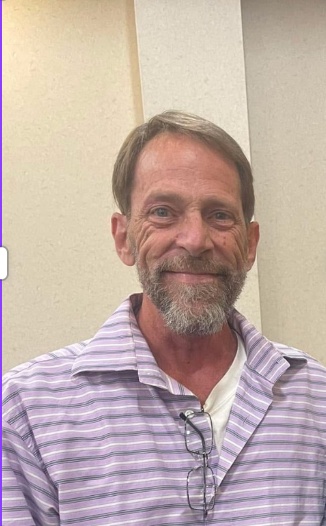
@ryan-miller-7670
We can only serve one master. Guiding and advising to assist one is certain whom they should serve, and what obedience looks like.
Active 31d ago
Joined Apr 10, 2025
ESTJ