Activity
Mon
Wed
Fri
Sun
Feb
Mar
Apr
May
Jun
Jul
Aug
Sep
Oct
Nov
Dec
Jan
What is this?
Less
More
Owned by Rudolf
For AI builders, Electricians, and Tradies who want Real Support, live calls, open convos & chill w/ a cuppa — grow with action, not hype.
Memberships
This Is It Team Training
8.3k members • Free
Skoolers
190k members • Free
Wizard Ai Video
2k members • $4/month
Easily create your AI Clone
52 members • Free
BlazorSharp (.NET Web Devs)
352 members • Free
The Skool Nichers
63 members • Free
46 contributions to Ai Titus


🔥
1 like • 7d
@Ayah Khalel thanks, welcome to you too
🔥
Dec '25 •
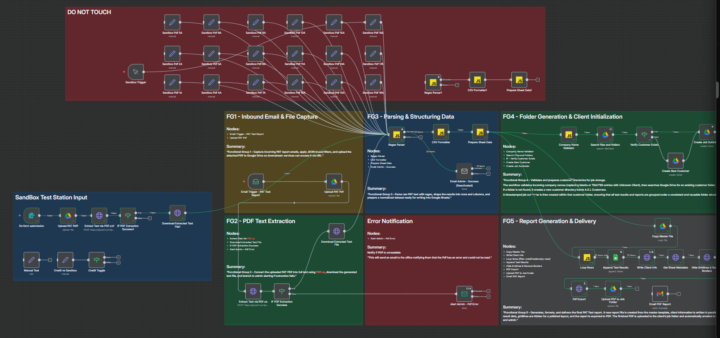
What do you call this
Its not a crows nest I promise, thats how I test my customers workflow to try and break it before I do handover
🔥
0 likes • 20d
@Enoch Adebisi I still just doesnt like regex, its too unstable I think
🔥
Nov '25 •
Broken PDF
Hey everyone, how do you brake a pdf, I tried to just black marker out crucial words but that doesn't brake it it just make that data set unreadable and passes as unread - I need to brake it for testing (production readiness) Any advise will be appreciated TIA

Nov '25 •
The Great Termination: Why the Next 7 Years Will Redefine Human Work Forever
We keep hearing it. "AI will enhance jobs, not replace them." It's the same reassuring mantra repeated by CEOs, consultants, and optimists everywhere. But I've spent the past three years building AI applications in voice and chat as a Chief AI Officer. I've watched the technology evolve from impressive to devastating. And I need to tell you something nobody wants to hear: They're lying to you. Or worse, they actually believe it. The "AI will enhance not replace" narrative is exactly like saying automobiles would enhance horses, not replace them. Sure, technically true in the narrowest sense, some horses still exist. But we didn't need 20 million horses in 1900 to become 20 million "enhanced" horses in 1950. We needed about 3 million. The other 17 million? Gone. Except this time, you're the horse. The Numbers Don't Lie, They Scream October 2025 just became the worst month for job cuts in over 20 years. Companies announced 153,074 layoffs, almost triple the same month last year. This isn't a blip. This isn't a correction. This is the beginning. By July 2025, over 130,000 tech workers had already lost their jobs. The year isn't even over and we've seen more than 806,000 total job cuts announced, the highest figure since 2020. But here's what should terrify you: these aren't struggling companies. Microsoft posted $70.1 billion in revenue (up 13%) while cutting 15,000 jobs. Cisco reported a 5% revenue increase and then laid off hundreds. Intel is eliminating 15% of its entire global workforce, not because they're failing, but because they're "optimizing." The pattern is clear: profit is up, humans are out. What's Really Happening Behind the Press Releases Let me give you the translation guide for corporate-speak: When Amazon CEO Andy Jassy says AI will lead to a "reduction in corporate workforce," he's not talking about restructuring. He's talking about 14,000 middle managers being shown the door. When Microsoft mentions GitHub Copilot writing 30% of new code, they're explaining why they don't need thousands of engineers anymore.
🔥
3 likes • Nov '25
Grounded take; the shift is structural, not a momentary trend. The practical hedge seems to be moving up the stack—fewer “button clicks,” more problem framing, systems thinking, and measurable outcomes. Individuals who build durable skills, small networks of proof, and feedback loops will adapt faster than org charts. Worth separating fear from planning and focusing on what compounds over 6–12 months.
🔥
Nov '25 •
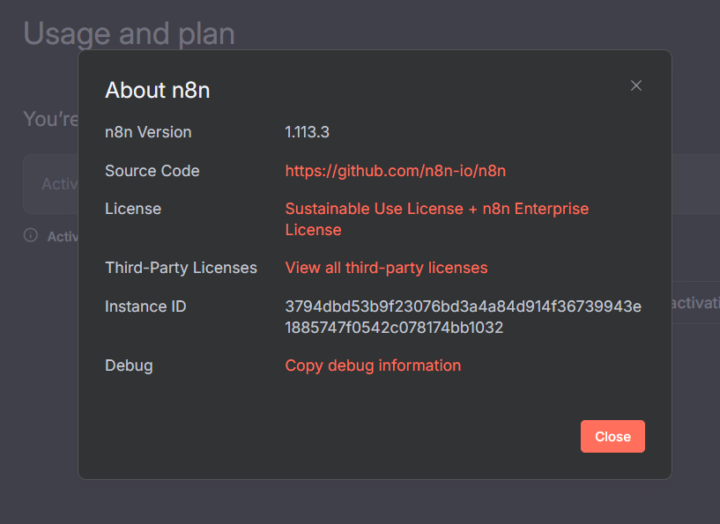
n8n Self host update
Hey everyone, wonder if there is some advice pls. I updated my n8n but the actual n8n stays on the old version. I did the Dev F12, resetted the cache and restar n8n but it still stays on the old version. Namecheap domain + VPS NPM installation TIA
🔥
1 like • Nov '25
@Christian Rivadeneira might have found the problem
1-10 of 46

🔥
@rudolf-van-loggerenberg-3547
Electrician | Business Owner | AI Automation lover, helping entrepreneurs to learn AI and Business Owners to take their time Back.
Online now
Joined Sep 11, 2025
New Zealand, Tauranga