Activity
Mon
Wed
Fri
Sun
Nov
Dec
Jan
Feb
Mar
Apr
May
Jun
Jul
Aug
Sep
Oct
What is this?
Less
More
Owned by Rene
The community of people interested in starting their journey into the world of affiliating.
Cash Pops
43
Free
Leads On Demand
665
5.0
Free
Ad Nerds
1.2k
Free
The School of Guitar
180
$19/m
GuitarZoom
3.4k
Free
Jazz Guitar Vault
934
Free
Royalty Ronin
519
5.0
$111/m
Rebelpreneurs
172
Free
Skoolers
151.5k
Free
10 contributions to Connected Through Play

🔥
Jun 13 •
Daughter Update
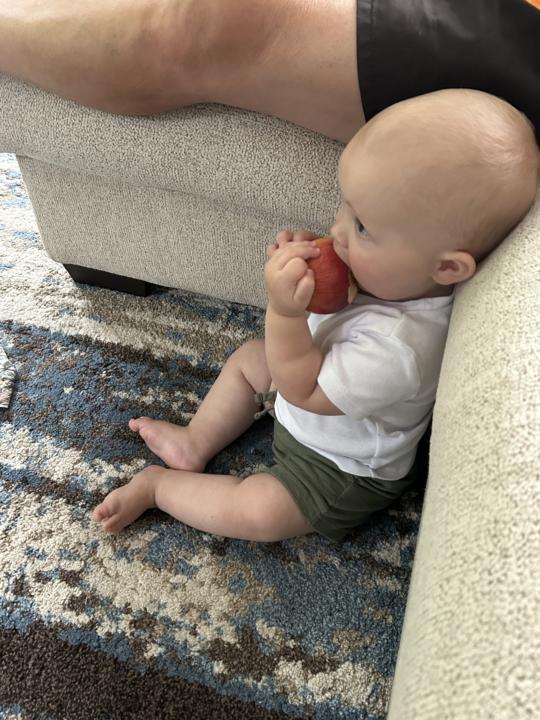
For those of you who were here last week, I wanted to provide a quick update on my daughter and to thank everyone who reached out. My daughter saw the podiatrist earlier this week, no tendon damage and stitches come out in two weeks. She’s healing nicely and in good spirits. I spent the day with her today, chasing a toddler so she could rest.

2 likes • Jun 13
I'm so happy to hear that
🔥
May 5 •
The "Kitchen Table" Invitation
You know that one little thing you do that just… works? Maybe it’s the silly rhyme you use to get shoes on in the morning, the way you turn a boring car ride into an imaginary safari, or how you handle a "big feelings" meltdown with nothing but a cardboard box and some markers. You probably don’t even think about it anymore, it’s just your "normal." But lately, seeing the stories shared here, I’ve realized that your "normal" might be the exact bridge another family is looking to build. I’d love to invite you to share that spark with us. I’m looking for members of our community who would be willing to host a 30-minute "Coffee & Connection" session. If you have a hobby that’s family friendly, this is for you. If you have a business supporting families, let’s showcase your expertise. Don’t think you can do it? I’m here to support you. Some things to keep in mind. - Nothing Polished: No slides, no scripts, no "hacks." Just you, your coffee, and your story. - Low-Tech, High-Touch: Just walking us through something that brings a little more play and a little less friction to your home. - Simple & Supported: If you’re worried about what to say, I’m here to help you find the flow. We’ll find a time that fits into your actual life, not around it. There is so much quiet magic sitting in this group. When we share these moments, we prove that play isn't another chore on the to-do list, it’s the heartbeat of the home. If you have a "play win" you’d be open to sharing, or even if you’re just a little curious, leave a comment below or send me a quick message. @Natasha Bryant @Brenda Chilstrom @Ramona Zihlke @Roslyn Hill @Mayelice Castro @Max Orlewicz @Janell Bitton @Celia Kibler @Tim Tindle @Karen Gibson @Betty Jo Winters @Yu-Tzu Huang @Rene Kerkdyk @Daniel Cavaretta

1 like • May 5
If you want I can show an easy (one-finger) way to play all chords on the guitar, so that you can basically accompany any song.
🔥
Mar 21 •
Weekend Fun- Forgotten Hobbies
I’m borrowing this from @David Iya who shared this in his Recess community. What’s a hobby or activity from your childhood you wish you still did? What made it fun or special? Have you ever shared it with your family members? Tagging a few folks we haven’t heard from in a while and this is one I’d love to hear from everyone. I’ll start and for fun, comment on one or two other posts. Let’s see what we loved as kids and if we can bring the magic back. @Catherine McDowell, @Erin O'Neill, @Mukkove Johnson, @Erica Sisco-Dube, @Des Cooke, @Ramona Zihlke, @Shelma Erikson, @Anzumana Taal, @Janell Bitton @Katya McEwen

2 likes • Mar 21
@Mary Nunaley buy a pen with a flat tip and try it out. Since all of us are already able to write it's just a matter of practice. But it's worth it because if you write a birthday greeting in calligraphy the person receiving it will feel like they are the most important person to you.
2 likes • Mar 21
@Mary Nunaley Yay! I was talking about pens like these:
🔥
Mar 16 •
The Character Interview
Time to step into someone else’s shoes. This playful activity isn't about summarizing a plot; it’s about "attunement,” practicing the ability to feel what someone else feels. Gather Your Gear: A favorite book, a movie you’ve recently watched, or even a well-known fairy tale. A notebook and writing instrument to write down answers or phone and microphone to record the interview. Get Started: 1. Pick a character from a story you both know well. 2. The Roles: One person is the "Journalist," and the other is the "Character." 3. The Journalist asks 3 "Internal" questions. For Example: "Cinderella, when you were left behind at the house, what was the very first thing you did to make yourself feel better?" or "Spiderman, do you ever get tired of having to save everyone?" 4. The Goal: The person playing the character has to answer based on feelings, not just what happened in the story. The Special Twist: The Journalist must start every follow-up question with: "That makes sense because..." This forces the "Journalist" to validate the character’s feelings before moving on. It’s a literal rehearsal for empathy. Options for Older Kids: For Ages 12–14: The Unheard Perspective Pick a "villain" or a side character from a movie. Write or record a 60-second "Confession" from their point of view. Why did they do what they did? What is the part of their story that the main movie missed? This builds "critical literacy,” the ability to see that every story has multiple sides. For Ages 15–17: The Social Media "Ghost" Writer Pick a historical figure or a fictional character and imagine their social media feed during a crisis. What would they post if they were trying to be "authentic" versus what they would post to "achieve" status? Discuss the difference between their public image and their private reality. Your Turn: Which character did you choose to interview? What was the most surprising "feeling" your child assigned to that character?

1 like • Mar 16
Hey Mary, you are a constant source of great ideas. Thank you! Have you considered collecting these into a (work)book?
🔥
Mar 15 •
Beyond the Numbers
We’ve spent the last week looking at math through a different lens not as a school subject to be mastered, but as a language of connection, agency, and presence. Take a moment today to look back at the week. Whether you were hunting for Fibonacci spirals in the garden, remixing a "serious" chore with logic, or debating the probability of a coin toss, you were doing something far more important than "practicing math." You were showing your child that: 1. Their logic matters more than their speed. 2. Their perspective is valuable, even when the "answer" is still being found. 3. Failure is just data. When the tower fell or the estimate was off, it wasn't a "zero,” it was a chance to try Version 2.0. When we play with these concepts, we aren't just building STEM skills; we are thinning out that "lead vest" of achievement pressure. We are replacing the fear of being ",wrong" with the joy of being "curious." Final Reflection: Look back at the week's activities. • Which day sparked the most conversation in your house? • Did you notice a shift in your own "math anxiety" as you played these games? • What is one "math-ish" habit you want to keep in your daily routine? Share your biggest takeaway from the week below. Let's celebrate the "Aha!" moments together. Question for you? Would it be helpful if I compiled each of the theme week activities into a classroom and including trackers and guides? Free to current community members but would unlock at Level 3 for new members. I’ve got several weekly themes planned including: literacy, science, world culture, and emotional intelligence.

1 like • Mar 16
Even though I studied physics my true love is maths.
1-10 of 10
@rene-kerkdyk-8243
Captain of the Prosperous Affiliate Pirates and Auctioner of the Hearts
Active 15h ago
Joined Mar 4, 2026
INTJ
Germany
Powered by