Activity
Mon
Wed
Fri
Sun
Aug
Sep
Oct
Nov
Dec
Jan
Feb
Mar
Apr
May
Jun
What is this?
Less
More
Owned by Renato
Your hub for church sound, livestream mixing, and Sunday audio solutions—practical tips, training, and community for church sound teams by NATE Audio.
Memberships
Ministry Hub
15 members • Free
Scale Your Coaching
20.2k members • Free
CREATE
1.6k members • Free
Mastering.com Members Club
36.9k members • $29/month
50 contributions to Church Sound Crew

Nov '25 •
Sidechain Compression — The Secret Sauce Nobody Talks About in Church Mixing
If your mix ever feels like it’s fighting itself — vocals vs. pads, kick vs. bass, or keys vs. tracks — sidechain compression might be the missing piece. It’s one of those tools most sound techs hear about but rarely use right. Let’s fix that 👇 What Sidechain Compression Actually Does: A regular compressor reacts to its own channel.A sidechain compressor reacts to another channel. So when one signal gets loud, it gently pushes another out of the way.It’s basically your “make room” button for the mix. Real Church Uses for Sidechain Compression: 1️⃣ Vocals vs. Pads/KeysPads are beautiful… until they bury the vocal. 👉 Use a compressor on your pad bus and key it to the lead vocal.Every time the singer comes in, the pads dip slightly, giving space for the voice.When they stop singing, the pads rise back up. Smooth, invisible clarity. 2️⃣ Kick vs. BassClassic problem: the kick and bass live in the same frequency zone. 👉 Put a compressor on the bass channel and key it to the kick.Each time the kick hits, the bass ducks just a little.The low end stays tight and punchy instead of muddy and overlapping. 3️⃣ Speech vs. Background MusicPerfect for pre-service playlists, transitions, or altar calls. 👉 Place a compressor on the music channel and key it to the pastor’s mic.When they speak, the music automatically ducks under them.When they stop, it comes back up. No more chasing faders. 💡 Tips to Get It Right - Keep the ratio gentle (2:1 or 3:1). - Fast attack, medium release — it should move naturally. - Aim for 2–4dB of gain reduction, not massive drops. ⚡ Sidechain compression isn’t about volume control — it’s about space control.You’re not lowering levels; you’re creating breathing room.
2
0
Oct '25 •
Reverb: The Least Used Effect in Church Audio (and How to Actually Use It Right)
Reverb can make a vocal sound full and powerful…or like someone’s singing in a cave. In church sound, we tend to love reverb a little too much. So let’s talk about what it’s really for — and how to use it musically, not emotionally. 🎚️ What Reverb Actually Does Reverb creates space. It makes a sound feel like it’s in a real room — not a dry, close-mic’d recording.The problem is, most church mixes already happen in a real room… with natural reflections bouncing off every wall. So adding reverb on top of that? That’s double-room. Instant mud. 💡 The Golden Rule If you can hear the reverb clearly during a song, it’s already too much. Reverb should be felt, not heard. It glues the mix together quietly in the background, not up front like a fog machine. How to Dial It In Right 1️⃣ Start Small Add reverb until you can barely hear it… then back it off a touch. 2️⃣ Medium Decay for Vocals1.5–2.5 seconds is plenty for most worship vocals.Enough space to sound natural, not enough to drown the lyrics. 3️⃣ EQ Your Reverb Return Cut lows below 200 Hz (they just create mud).Sometimes roll off highs above 8 kHz to keep it soft and warm. ⚡ Pro tip: Reverb isn’t a fix for a bad vocal sound — it’s the icing after the vocal already sounds good. 💬 What’s your go-to reverb setting for worship vocals — long and lush, or short and tight? — Nate
Poll
4 members have voted
Oct '25 •
Top 3 Livestream Audio Myths That Won’t Die (but Need To 😅)
There are a LOT of bad ideas floating around about how to make your livestream mix sound “better.” Let’s clear some of that up 👇 🎤 Myth #1 – “Add more reverb so it sounds bigger.” You don’t need a worship cathedral on your stream. Reverb on livestream audio can make it muddy and distant if not dialed correctly. Keep it natural. The “air” people want to hear actually comes from room mics, not plugins. 🧠 Myth #2 – “It’s fine if the mix clips — Facebook/YouTube will normalize it.” That’s like saying, “It’s fine if the car hits the wall — airbags will fix it.”Once your signal distorts, it’s baked in.Always leave a few dB of headroom before your limiter. 🎧 Myth #3 – “Headphones are enough to monitor.” Not even close. Always check your livestream on real devices — a phone, a TV, a laptop.You’ll be shocked how different it sounds outside your booth. ⚡ Truth: A great livestream mix isn’t louder, brighter, or wetter — it’s balanced, consistent, and human. 💬 What’s the biggest livestream myth you’ve heard other sound techs believe? Drop it below 👇 — Nate
2
0
Oct '25 •
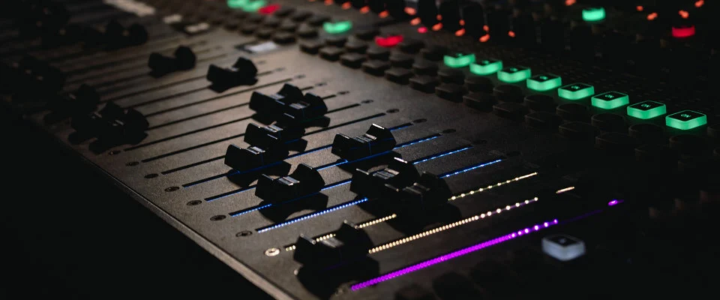
🥁 How to EQ Drums in a Church Mix (The Real-World Guide)
Drums are one of the hardest instruments to EQ in a church setting.Every room’s different. Every drummer’s different. Every kit sounds like it came from a different planet. But the truth is — if you understand what you’re listening for and why you’re cutting or boosting, EQing drums gets a lot easier. Let’s break it down piece by piece 👇 🥁 KICK DRUM The goal: tight, punchy, and not boomy. Start with these moves: - High-pass filter under 40 Hz — removes unnecessary sub rumble that muddies the room. - Boost around 60–80 Hz for low-end thump (but carefully — too much and it eats your mix). - Cut around 250–400 Hz to get rid of boxiness. - Add a small boost at 3–5 kHz for beater attack and clarity. Pro tip:If your room has subwoofers near the stage, avoid over-boosting the lows — your mix will sound fine in headphones but way too heavy in the sanctuary. 🥁 SNARE DRUM The goal: crisp and present, but not harsh. Start here: - High-pass up to 80–100 Hz — clean up low-end rumble. - Cut around 400–600 Hz to remove “cardboard” tone. - Add a small lift around 2–5 kHz for stick definition. - Air around 10 kHz if it sounds dull. Pro tip:If your snare sounds “honky” or nasal, notch out 800 Hz slightly.And if the bottom snare mic is too bright, low-pass it around 8 kHz to tame the buzz. 🥁 TOMS The goal: clear, round, and natural. EQ starting points: - High-pass around 60–100 Hz (higher for smaller toms). - Cut around 400–600 Hz to remove the boxy tone. - Add around 5–7 kHz for stick attack. - Slight boost at 100–150 Hz for fullness. Pro tip:Don’t EQ toms in solo mode. Always listen in the context of the kit — what sounds huge soloed often muddies everything together. 🥁 HI-HATS & OVERHEADS The goal: clear, natural shimmer — not harsh noise. EQ moves: - HPF option 1: high pass the lows at up to 300-600Hz (if you just want the shimmer of the cymbals/hh) - HPF option 2: high pass to around 100-150Hz so you can have the fundamental tone of the snare in the overheads, then you do more cuts at around 300-800Hz to clean up the boxy sound - Boost lightly around 8–12 kHz for brightness.
2
0

Oct '25 •
THE HOLY MIC TAP TEST 🙏
There are two types of pastors in this world: 1️⃣ The ones who trust the sound tech. 2️⃣ …and the ones who gotta “make sure it’s on.” You know exactly who I’m talking about. They walk up to the pulpit, look at the mic like it’s possessed, and hit you with that tap-tap-tap-tap-tap-tap-tap-Like they’re trying to send Morse code to heaven. Meanwhile, you’re in the booth, watching the channel meter clearly bouncing, whispering to yourself: “Yes, Pastor. It’s been on since Genesis.” Then they go: “Hello? Hello?”(Feedback screams)“Okay, now it’s working.” And the whole worship team turns around to see if you’re okay.You’re not. ⚡ Sound tech translation: The mic worked fine. The faith did not. 💬 Drop your favorite pastor mic moment below 👇Bonus points if you’ve ever seen one blow into the mic like it’s a Nintendo cartridge. — Nate
4
0

1-10 of 50

@renato-licioni-1601
Helping churches deliver distraction-free worship experience. 100+ Churches served ⛪️
Active 122d ago
Joined Aug 16, 2025
Orlando, FL