Activity
Mon
Wed
Fri
Sun
Feb
Mar
Apr
May
Jun
Jul
Aug
Sep
Oct
Nov
Dec
What is this?
Less
More
Owned by Raymond
Average guy with hobbies that I'm sure others will relate to. Let's learn about our aquariums and our fur friends together
Memberships
7 contributions to Fins and Fur Junkies

Aug 20 •
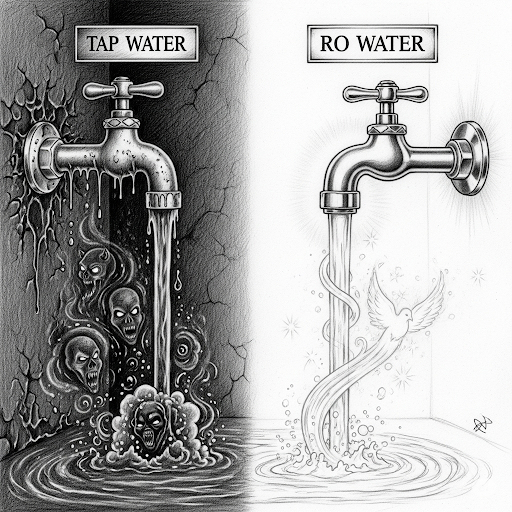
Tap water vs RO water
There seems to be a lot of questions and concerns about what type of water to use in your aquariums. Let's talk about what you use and why.
0 likes • Aug 20
Using RO (Reverse Osmosis) water is often considered superior to tap water for aquariums because it gives you total control over your water's chemistry. While tap water is convenient and inexpensive, its unpredictable nature can lead to problems for many fish and plants. Here is a more detailed breakdown of why RO water is a better choice for many aquarium keepers: 1. Purity and Elimination of Contaminants RO systems work by forcing water through a very fine, semi-permeable membrane that filters out up to 99% of dissolved solids. This process removes substances that are often present in tap water and can be harmful to aquatic life. Chlorine and Chloramines: These chemicals are added to tap water as disinfectants and are highly toxic to fish and the beneficial bacteria that maintain a healthy biological filter. While a simple dechlorinator can neutralize them, this is an extra step. Heavy Metals: Tap water can contain trace amounts of heavy metals like copper, lead, and zinc, especially if your home has older plumbing. These metals can be toxic to fish and invertebrates, particularly shrimp and snails. Nitrates and Phosphates: Many municipal water supplies have elevated levels of nitrates and phosphates, which can fuel rampant algae growth and contribute to poor water quality. RO water provides a blank slate with zero nitrates and phosphates, making it easier to manage algae. 2. Consistency and Stability Tap water's chemical composition can vary depending on the season, local water source, or even what maintenance your city is doing on the water lines. This can lead to unpredictable changes in your aquarium's water parameters, which can stress or even kill your fish. Stable pH, GH, and KH: RO water is nearly pure H₂O, so it has a neutral pH and almost no General Hardness (GH) or Carbonate Hardness (KH). This allows you to add specific minerals back into the water to achieve and maintain the precise parameters required for your fish. For example, if you're keeping African cichlids that need hard, alkaline water, or discus that require very soft, acidic water, RO water provides the perfect foundation to create and maintain that specific environment.
Aug 15 •
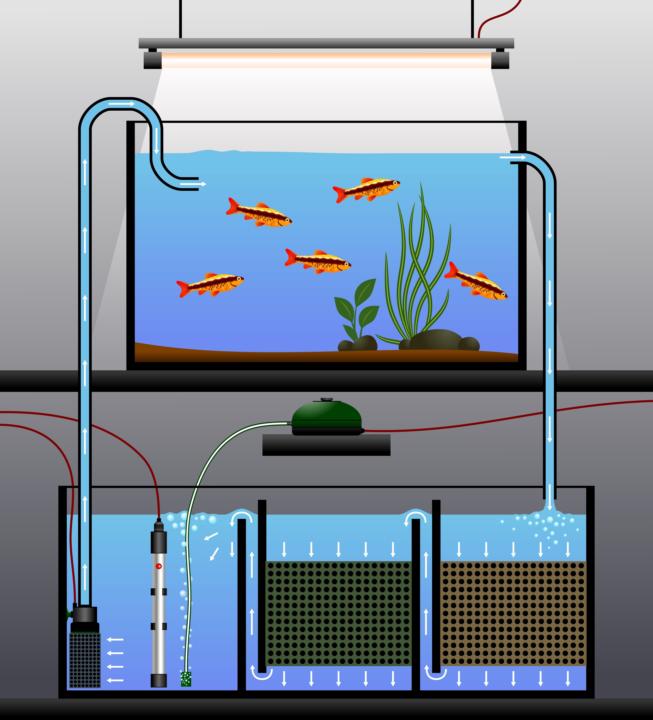
Sump or No Sump???? That is the question.
What do you currently use for your filtration system and why? Is one more beneficial than the other? Pros and cons of each? Let us discuss....
0 likes • Aug 20
Each type of filter—a sump, a canister filter, and a hang-on-back (HOB) filter—has its own set of advantages and disadvantages. The "best" choice is not universal and depends on a number of factors, including the size of your aquarium, your budget, the type of aquatic life you're keeping, and your personal aesthetic preferences. Here's a breakdown to help you decide which is more beneficial for your specific needs: 1. Sump A sump is essentially an additional tank or reservoir, usually placed in the cabinet below the main display tank. Water flows from the main tank into the sump and is then pumped back up. Benefits: Superior Filtration: A sump offers the most space for a wide variety of filter media (mechanical, chemical, and biological). This allows for highly customizable and efficient filtration, which is crucial for heavily stocked or large tanks. Increased Water Volume: By adding a sump, you increase the total water volume of your system, which makes the water chemistry (like pH, temperature, and salinity) more stable. This is a significant benefit for saltwater aquariums. Hidden Equipment: You can place heaters, protein skimmers, reactors, and other equipment in the sump, keeping the display tank clutter-free and more visually appealing. Easier Maintenance: Because the filter media is in the sump, it can be easier to access and clean compared to a canister filter. Versatility: Sumps are highly versatile and can be used for refugiums (a space to grow macroalgae or live food) or to separate different filtration stages. Drawbacks: Complexity and Cost: Setting up a sump is more complex and expensive than other filter types. It requires specialized plumbing and a robust overflow system to prevent flooding. Space Requirements: You need a stand or cabinet large enough to house the sump tank. Evaporation: The open surface of the sump can lead to faster evaporation, requiring more frequent top-offs to maintain a consistent water level. This is why many people use an auto top-off system with sumps.
Aug 17 •
LED, Halogen or Fluorescent lighting for reef tanks?
What do you use/prefer and why? How much should you spend on lighting? Pros and cons of each?
0 likes • Aug 20
Determining the right type of lighting for an aquarium depends on what you plan to keep in it. The needs of a simple fish-only tank are very different from a tank with live plants or corals. Here's a breakdown of the key factors to consider: 1. Identify Your Aquarium's Purpose The first and most important question is: what are you trying to accomplish? Fish-only aquarium: If you only have fish, lighting is primarily for viewing. Fish are less reliant on light than plants or corals. You can use most types of lights, but be mindful of heat, as incandescent bulbs can raise the water temperature. LED lights are a popular choice because they are energy-efficient and produce very little heat. Freshwater planted aquarium: Plants need light for photosynthesis. This means you need to consider not only intensity but also the light spectrum. Intensity: Measured in lumens per liter or PAR (Photosynthetically Active Radiation). Low-light plants: (e.g., Anubias, Java fern, mosses) need about 10-20 lumens per liter or 10-30 PAR. Medium-light plants: (e.g., Amazon sword, water wisteria) need 20-40 lumens per liter or 30-50 PAR. High-light plants: (e.g., carpeting plants like dwarf baby tears) need over 40 lumens per liter or 50+ PAR. High-intensity lighting often requires a CO2 injection system to prevent algae growth from the rapid plant growth. Spectrum: Plants primarily use blue and red wavelengths for growth and coloration. A "full-spectrum" or "daylight" bulb with a color temperature around 6,500 Kelvin (K) is generally recommended for planted tanks. Saltwater/Reef aquarium: Corals have a symbiotic relationship with algae (zooxanthellae) that need light to photosynthesize. This requires intense lighting, particularly in the blue and UV spectrum. Spectrum: Reef lights typically have a Kelvin rating of 10,000K to 20,000K. The blue light spectrum is crucial for coral health and growth. Many saltwater lights are a blend of white and blue light (often called "50/50" or "actinic white" bulbs) to mimic the conditions of deep water.
0 likes • Aug 20
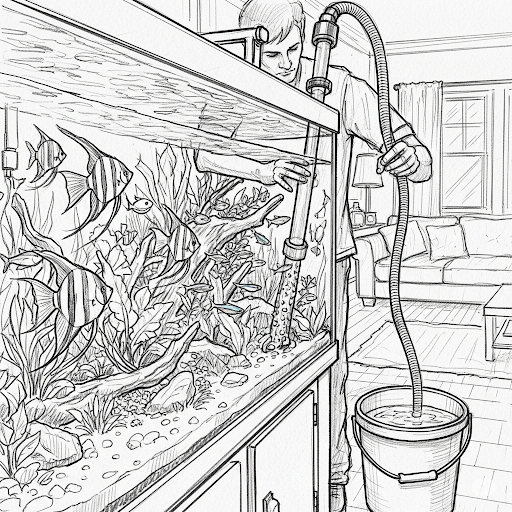
Water changes are a fundamental and necessary part of aquarium maintenance, and they serve two primary purposes: removing excess substances and replenishing depleted ones. Here's a breakdown of the key reasons why water changes are essential: - Removing Harmful Waste Products: The biggest reason for water changes is to get rid of nitrogenous waste. In an aquarium, fish waste, uneaten food, and decaying plant matter break down into ammonia. The nitrogen cycle, facilitated by beneficial bacteria, converts this highly toxic ammonia into nitrite (also toxic), and then into nitrate. While nitrate is far less harmful than ammonia or nitrite, it still builds up over time and can cause chronic stress to fish, leading to poor health, color, and growth, and making them more susceptible to disease. Water changes are the most effective way to remove this accumulated nitrate. - Replenishing Essential Minerals and Nutrients: Over time, fish and plants use up important minerals and trace elements from the water. In a closed system like an aquarium, these vital components are not naturally replenished. Regular water changes introduce fresh water with these minerals, helping to maintain a balanced environment for your aquatic life to thrive. - Diluting Other Accumulated Chemicals: Beyond the nitrogen cycle, other substances can build up in an aquarium. These include phosphates, which can fuel algae growth, and fish hormones or other allelopathic substances that can stunt the growth of other fish or plants. Water changes dilute these chemicals, preventing them from reaching harmful concentrations. - Maintaining Stable pH and Water Hardness: As organic waste breaks down, it can cause the water to become more acidic, which can lower the pH. Water changes help to replenish the buffering capacity of the water, which helps to keep the pH stable. This is especially critical for saltwater aquariums. - Providing a "Reset" for the Tank: Think of a water change as a partial reset button for your aquarium. It physically removes detritus and decaying organic matter that filters can't always reach, and it helps to prevent water parameters from getting "out of whack" by correcting for gradual changes that can be hard to track.
Aug 17 •
Dragons
Can you host more than one Bearded Dragon in the same enclosure? How is your enclosure set up and why that particular way?
0 likes • Aug 20
[attachment]
0 likes • Aug 20
It is strongly recommended that you do not house more than one bearded dragon in the same enclosure. Bearded dragons are solitary and territorial animals by nature, and cohabitation comes with significant risks that can lead to injury, stress, or even death. Here's a breakdown of the key reasons why cohabiting bearded dragons is a bad idea: 1. Territorial and Aggressive Behavior: Bearded dragons, especially males, are highly territorial. They will compete for resources like basking spots, food, and space. This competition can lead to dominance disputes, which may manifest as head bobbing, beard puffing, and eventually, biting and fighting. Even females can become aggressive with each other. A fight can happen suddenly, even after a long period of apparent harmony. 2. The Risk of Injury: Fights can result in serious injuries, including lost toes, tails, and limbs. In the worst-case scenarios, a fight can be fatal. The stress of cohabitation can also lead to illness and a weakened immune system. 3. The Stress Factor: Even without physical fighting, the constant presence of another dragon can cause immense stress. A dominant dragon may bully a more submissive one, preventing it from getting enough food, basking time, or access to essential resources. This can negatively affect the submissive dragon's overall well-being and health. Bearded dragons do not get lonely and do not need a companion. They are much happier and healthier when they have their own space. 4. Unwanted Breeding: If you house a male and female together, you will likely end up with eggs. Breeding can be rough on the female and requires careful management to ensure her health. The male may try to constantly mate, causing stress and exhaustion for the female. Exceptions and Considerations: While some experienced keepers or breeders may temporarily house bearded dragons together for specific reasons (like breeding), it's a risky practice that requires constant supervision and a large, specially designed enclosure. Even in these controlled environments, injury can still occur.
1-7 of 7

@raymond-cervantez-9725
Let's ask the big questions when it comes to our pets... What works? What doesn't? What was your experience? How do you get started? Upkeep etc.
Active 126d ago
Joined Aug 11, 2025
Iowa