Activity
Mon
Wed
Fri
Sun
Jul
Aug
Sep
Oct
Nov
Dec
Jan
Feb
Mar
Apr
May
What is this?
Less
More
Owned by Ray
Teaching Aspiring Traders to become profitable.
A community for structured learning, growth, and discussion in the Catholic faith. Tailored for all those new & Interested in the Catholic faith.
Memberships
GospelMentality
1.3k members • Free
8 contributions to Online Catholic Community

Mar 30 •
Where is your next holiday ?
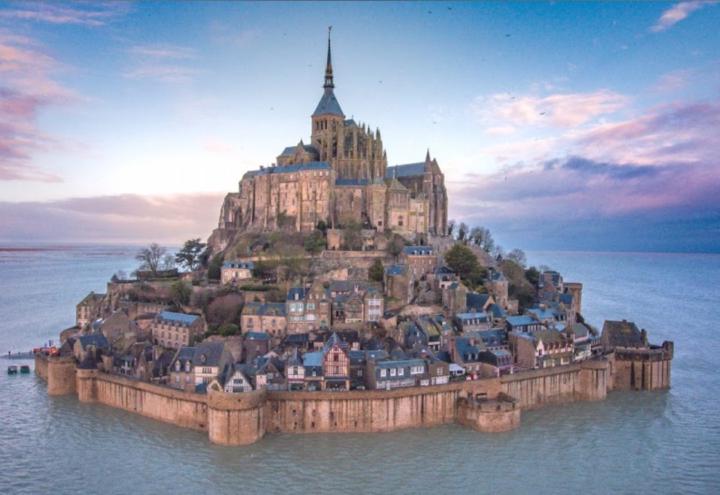
After my tour of the Churches and Cathedrals in San Sabastian, I am already looking to plan my next trip. The medieval village of Mont St Michael, France is calling… https://www.ot-montsaintmichel.com/en/discover/visit-the-mont-saint-michel/the-mont-saint-michel-differently/spend-a-night-at-the-mont-saint-michel/ Where do you have planned ?
2 likes • Mar 31
@Joshua Estes that sounds amazing ! God willing your plans come together soon 🙏
Mar 30 •
Holy Week Monday
On the Monday of Holy Week, Christ enters the Temple and drives out those who had turned it into a place of trade. He declares: “My house shall be called a house of prayer, but you have made it a den of robbers.” (Matthew 21:13) This moment reveals His authority and zeal for the holiness of God’s house. The Temple is not a marketplace, but a place set apart for worship, reverence, and prayer. It’s also a moment that challenges us personally. It’s easy to let other things take priority. Noise, routine, distractions… even in the spaces meant for God. Christ’s actions remind us to step back, clear what doesn’t belong, and return to prayer with honesty and reverence.

Mar 29 •
Palm Sunday
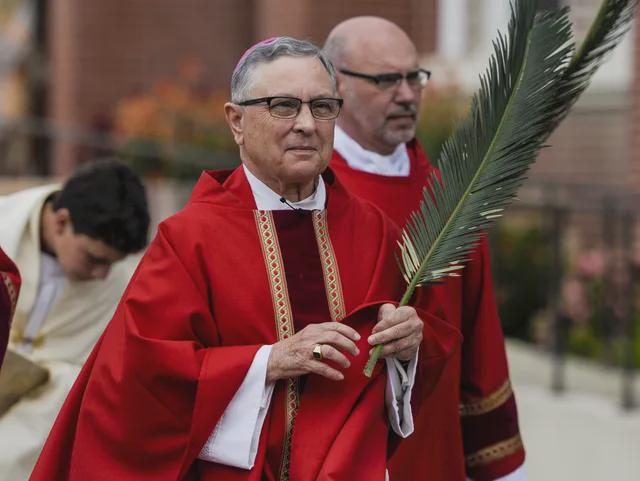
Palm Sunday marks the beginning of Holy Week. It’s the moment the Church remembers Christ entering Jerusalem, welcomed by crowds waving palm branches. At Mass, you’re not just hearing about it—you’re stepping into it. As you arrive, you’ll usually be given a palm. Take one. It’s not just a symbol or a keepsake—it becomes part of the liturgy itself. Early in the Mass, the priest blesses the palms with holy water, setting them apart as sacramentals. In some churches, Mass begins with a short procession. People stand or walk while holding their palms, echoing the crowd that welcomed Christ. Even if there isn’t a full procession, that same meaning is still there in the opening. The Gospel is different on this day. It’s longer, and it recounts the Passion—Christ’s suffering and death. You may even be asked to speak as part of the crowd during the reading. That’s intentional. It brings home the reality that this isn’t just history—it involves all of us. At the end of Mass, take your palm home with you. Don’t leave it behind. Many people place it near a crucifix or keep it somewhere in their home as a quiet reminder throughout the year. Some even return old palms the following year, where they’re burned to create the ashes used on Ash Wednesday. Palm Sunday starts with honour and praise, but it quickly turns toward the Cross. The same voices that cried out in welcome would later call for Christ’s crucifixion. That contrast is the point. It invites a real question—whether our faith stays steady, or shifts when things become difficult.
1
0
Mar 23 •
Matthew 21. 1-11
Here’s the reading for the coming Sunday. This marks Palm Sunday, the beginning of Holy Week, where we remember Christ’s entry into Jerusalem. Jesus enters not as a worldly king, but in humility, riding on a donkey, fulfilling prophecy and revealing the true nature of His kingship. The crowds recognise something significant and cry out, “Hosanna to the Son of David”, welcoming Him as the Messiah. At the same time, there is confusion. As the city is stirred, people ask, “Who is this?” Even in this moment of praise, He is not fully understood. Palm Sunday holds both sides together. It is a moment of recognition, but also the beginning of the path to the Cross. The same voices that welcome Him will soon turn. The same city that praises will later reject. Feel free to share your thoughts and reflections
1 like • Mar 24
Today I was talking with my Priest and we discussed this artwork as it relates to the topics raised with yesterday’s reading. I thought I would share this with you too. Christ Before the High Priest is an oil on canvas painting by Dutch artist Gerard van Honthorst, created around 1617. It now hangs in London's National Gallery.[1] It depicts Jesus Christ being questioned by the High Priest Caiaphas shortly before being sentenced to death. Jesus looks down on Caiaphas with serenity, seemingly unconcerned. His face and body language express the peace and self-control that, according to Gospel testimony, he maintained throughout the interrogation process
Mar 24 •
Reflecting on Yesterday’s reading
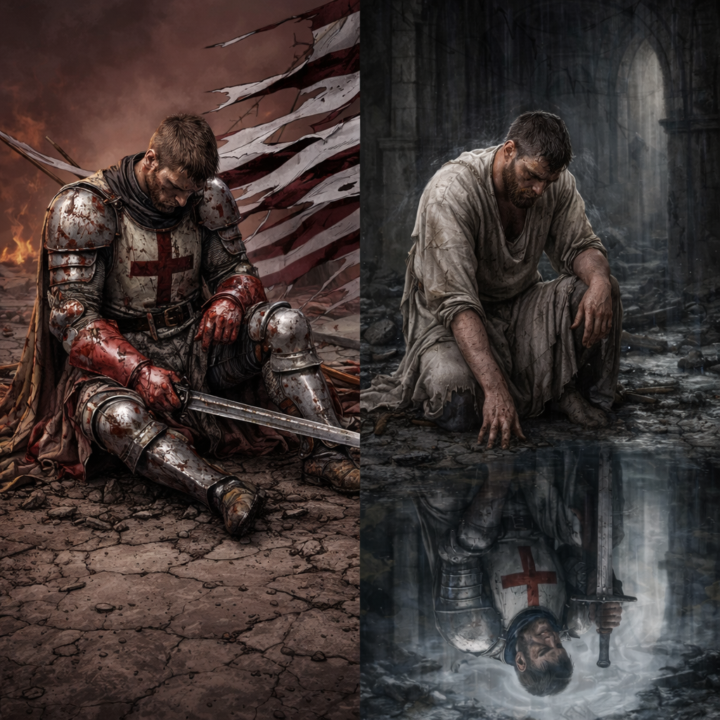
Reflecting on yesterday’s readings, especially the warning against bearing false witness and condemning the innocent, it brought to mind the story of the Knights Templar. In Scripture we are told: “You shall not bear false witness” (Exodus 20:16) and “Do not condemn the innocent or the righteous” (Exodus 23:7) — a clear call to truth and justice. The Knights Templar were men who served God and the Church faithfully for nearly two centuries, protecting pilgrims and living under a strict religious rule. Yet in 1307, King Philip IV of France, who was heavily in debt to them, had them arrested and accused of heresy and false crimes. Many were tortured into giving false confessions, and the pressure placed on the Church was immense. The order was eventually dissolved, not through clear proof of guilt, but largely to bring peace under political pressure. What’s striking is that later evidence, including the Chinon Parchment, shows that the Pope actually absolved the Templar leaders of heresy before the order was suppressed. It’s a sobering reminder of how truth can be distorted, how the innocent can suffer, and how power can influence justice — something Scripture warns us about clearly. A powerful example of why we’re called to stand firmly in truth, even when the cost is high.
1
0
1-8 of 8

@ray-matt-4495
📈Day Trader, Coach & Mentor for Aspiring Traders pursuing financial freedom.
•
✝️ Offering Spiritual Fellowship & Support to new & forming Catholics.
Active 1d ago
Joined Mar 7, 2026
UK