Activity
Mon
Wed
Fri
Sun
Nov
Dec
Jan
Feb
Mar
Apr
May
Jun
Jul
Aug
Sep
Oct
What is this?
Less
More
Owned by Randy
Drinking way too much? Overthinking and feeling miserable? The answer isn’t out there, it’s in you. A quiet wisdom that’s been with you all along.
Profit Consultants Network
18.3k
Free
Six-Figure Car Sales
817
Free
Fearless Prospecting Group
3.4k
Free
Skool Course
36.7k
5.0
$29/m
Soul Purpose Group
2.8k
5.0
Free
141 contributions to Easier Ways

Nov '25 •
Love: It's Bigger Than Our Brains
Today is my birthday. Instead of sharing a list of lessons learned or how grateful I am to be alive, I want to offer something that might ruffle a few feathers. If it does, I’d just ask for one thing: Please give me the gift of grace, maybe even a little tolerance. Try to hear this as something coming from my heart, not my head. Because I want to talk about religion. More specifically, the kind of religion that’s rooted in fear and shame. The version a lot of us were handed growing up. The one that says love is conditional, and God is basically a cosmic scorekeeper, watching and waiting for us to screw up. Immature, fear-based religion often starts with shame. It’s rooted in the belief that love is conditional and that God, or whatever higher power we grew up with, is keeping score. The message is something like: “I messed up. I broke the rules. My dad is going to kill me." That old script tells us we must earn our place and hide our humanity. And that fear? It doesn’t just keep us from God. It keeps us from ourselves. We start to believe that our mistakes define us. That we’re only lovable if we don’t screw up. If we’re unable to meet some standard of excellence, we’re unworthy. But a spirituality anchored in grace, in the Gospel of forgiveness, says something entirely different. It says: “I messed up. I need to call my dad.” That version doesn’t ignore the mistake—it just doesn’t turn the error into a reason to run and hide. It’s relational, not transactional. It’s about trust. Knowing there’s a love that isn’t going anywhere, even when we fall flat on our faces. And that shift? It changes everything. Instead of spiraling into shame, we reach out for connection. Instead of punishment, we open the door to grace. Instead of fear, we move toward love. Because we will mess up. We’ll say the wrong thing, hurt people, and make choices we wish we hadn’t. But the question isn’t “Will we fail?” It’s, “What happens next?” And if what happens next is calling our spiritual ‘dad’—our higher power, our inner knowing, our Source—not because we’re trying to avoid punishment, but because we trust there’s still love on the other end of the line… well, that’s what transforms us.

Nov '25 •
Just a Heads-Up; We do have a blog on Substack
I realized something today, the Easier Ways Blog has quietly grown to 349 posts. That’s 349 reflections, stories, and reminders about what it means to live with more peace, purpose, and prosperity. I never set out to write that much. I just wanted to explore how recovery, spirituality, and everyday life come together and somehow, post by post, it’s become a living record of that journey. If you ever need a reminder that you don’t have to fix yourself, just remember who you already are, there’s something waiting for you there. CLICK HERE TO CHECK IT OUT.
0
0

Sep '25 •
Why this community was created
Some people learn to survive by keeping others at arm’s length, looking strong on the outside while quietly fearing the risk of being vulnerable. For many, alcohol becomes the shortcut. It dulls grief and fear while amplifying confidence and charm, creating the illusion of connection without the risk of being seen. But what begins as a coping mechanism eventually becomes a cage, trapping them in a quiet war between the person they pretend to be and the emotions they’ve never allowed themselves to feel. For me, that cage was what I called hell on earth. Fortunately, I found a way out. And for that, I am eternally grateful. It’s why I set an intention every day to calm my busy mind, soften my heart, and be of service whenever I can to those suffering like I once did. I’ll never be able to pay back the people who helped me, but I can pay it forward with an attitude of gratitude. And that is why this community was started.
0
0
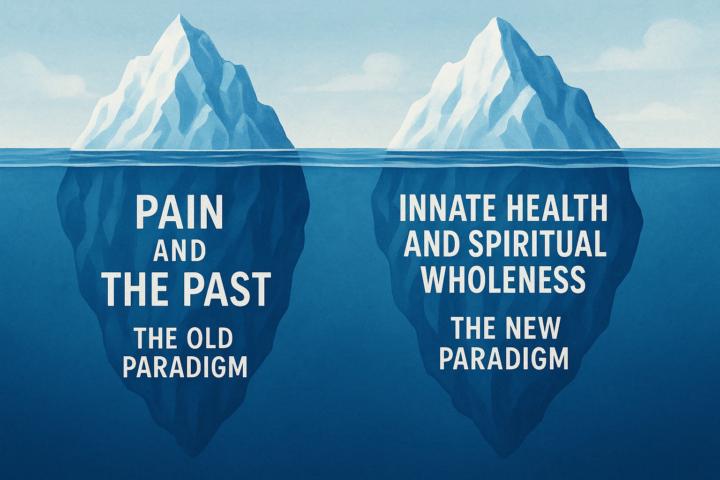
Sep '25 •
Michael Shoeman Talks About Sins of The Father
This incident happened a few months ago. It is very similar to some of the other stories I've shared, but somehow, I have lately been finding the universal relevance in these interactions with my kids. Micah dressed up as a ghost with the intention of scaring me. I chucked and pretended to be scared. He threw the costume down and was legitimately and visibly very angry. I asked him what was wrong. "I have been trying for THREE YEARS to scare you for real! I have been failing over and over again!" This tantrum genuinely concerned me. So, when he took the moment to breathe I asked him, "Why is it so important to you that you scare me, Micah?" "There you go being all wise again, Daddy! Your words and questions don't help me. I am a failure!" With that response I realized I was genuinely frightened. I started asking myself some intimidating questions: How much am I responsible for this insecurity? In what ways might I have role modeled thinking of myself as a failure? Did my son inherit something about me that I was afraid to look at? Is this something 'wisdom' can't really help or fix? For the first time in years, I was genuinely in fear. No anger. No sadness. No shame or guilt. Just genuine fear. "Micah. I want to say something. This is not me trying to be 'wise', but I want to be completely honest with you. At this moment I am really scared. What scares me the most is that you are beating yourself up for my mistakes. It scares me that you are being so hard on yourself because it reminds me of how hard I have been on myself my whole life. It really scares me that at eight years old you are being so rough on yourself. So you have succeeded in scaring me without even trying. No, it's not about being afraid of a ghost or a demon. And, Micah, let's be honest, I am not scared of things like that. You have instead tapped a primal fear in me...that I am failing as a father. Because I love you more than anything. It hurts me to see that you have inherited my habits of being a tyrant to myself."
1
0
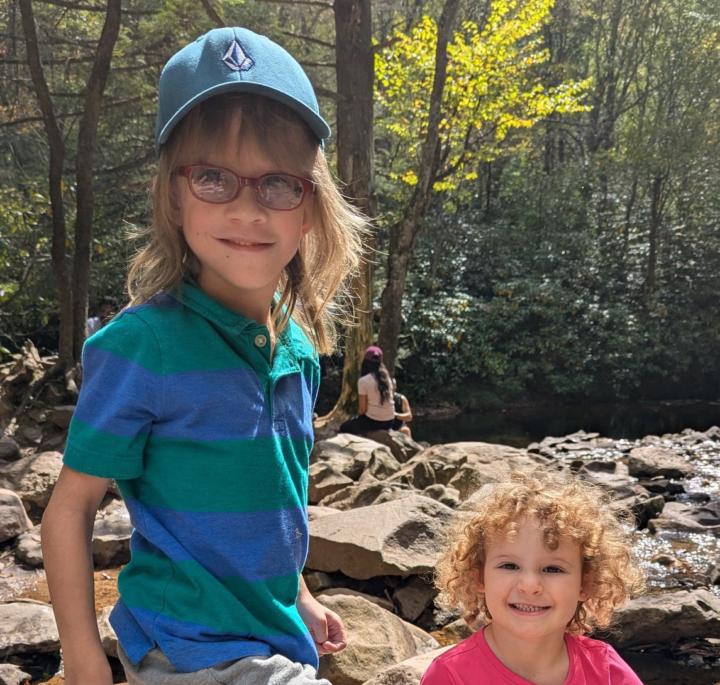
Sep '25 •
Michael Shoeman Talks About Mistakes
"Daddy. I learned today that making mistakes is a good thing." I didn't hesitate, "Absolutely it is a good thing. Forgiving yourself for your mistakes is the hard thing." Micah asked, "Why?" This answer didn't come so easily. "If I had to guess, I think it is because when our ancestors made mistakes there were more life and death situations. For many adults too many mistakes means loss of a job or a relationship to someone they care about. Which is almost like life and death." Micah was playing a video game and wanted me to help him. I told him to keep trying even though the video game character "dies" over and over again. He eventually beat the level. "Perfection is the only real 'Big Boss', Micah. Most people still make every moment a life and death situation. They are very hard on themselves for making mistakes. Failure is a friend not an enemy. If you can go through life knowing that then you can help others forgive themselves for making mistakes. You can enjoy 'the game' instead of judging yourself for learning by failing over and over again. The 'game' is as real as you make it. But once the game gets addictive or you begin judging yourself for failing, that is when it is time to stop and remind yourself that the game is not real...and that you have a choice to step away." "I think I'm done playing video games, Daddy. I want to play with play dough now." #DaddyJournal
2
0
1-10 of 141

@randy-hyden-easier-ways
I show people how to trust their inner wisdom so that they can coach themselves.
Active 19d ago
Joined Aug 15, 2024
ENTJ
Knoxville, Tennesse