Activity
Mon
Wed
Fri
Sun
Jul
Aug
Sep
Oct
Nov
Dec
Jan
Feb
Mar
Apr
May
Jun
What is this?
Less
More
Memberships
Nautical Me!
23 members • Free
The Off Grid Collective
500 members • Free
The Digital Marketing Bar
70.1k members • Free
2 contributions to Nautical Me!

Feb 20 •
Hull Speed Example for C350 -16m Trawler
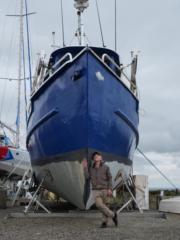
HULL SPEED FOR A ~16 M (52.49') TRAWLER (RULE-OF-THUMB) Hull speed (knots) ≈ 1.34 × √(LWL in feet) (LWL = length at waterline, not LOA.) If your boat is “16 m” by LOA, typical LWL-based hull-speed range Because LWL is usually a bit shorter than LOA, here’s a practical bracket: - LWL 14.0 m (45.9 ft) → hull speed ≈ 9.1 kn - LWL 15.0 m (49.2 ft) → hull speed ≈ 9.4 kn - LWL 16.0 m (52.5 ft) → hull speed ≈ 9.7 kn That 9–10 knots number is the point where wave-making resistance starts climbing fast for a displacement hull (not a brick wall, just “now you’re paying a lot for each extra tenth”). WHAT THIS MEANS FOR A TRAWLER CONVERSION IN REAL LIFE - Comfortable cruising target: often ~70–85% of hull speed, so very roughly 6.5–8.5 kn depending on hull, load, sea state, prop, and power. - If you’re consistently trying to cruise 10+ kn on a true displacement hull, fuel burn tends to jump sharply and engines/props need to be matched very carefully. CONVERSION “SPEED SANITY CHECKS” (WORTH DOING EARLY) 1) Get the real LWL at your loaded waterline (fuel/water/gear aboard). Hull speed tracks LWL, not the brochure LOA. 2) Confirm hull type: true displacement vs semi-displacement. Semi-displacement can live a bit above “hull speed” with enough power; true displacement usually hates it. 3) Prop/gear/engine match: a conversion often gains weight (interior, tanks, house systems). That can pull RPM down and make the boat feel “stuck” below where you expected. 4) Pick a “happy cruise” goal: many owners love a trawler at 7–8 kn because it’s quiet, efficient, and easy on machinery—then accept that 9–10 kn is “push mode.”
1 like • Feb 22
"Voyaging Under Power" by Robert Beebe is a great resource.
Feb 1 •
The Boatyard — Show Your Work (Reply Here)
Bring one project to the bench. It can be: - a full-size boat, nautical artifact like a dock, a ship model, etc. - a refit, repair, or restoration - a tool setup, jig, or technique - a sketch or idea that isn’t built yet Include: - 1 photo or sketch - What it is - What you’re solving or learning - One question for the crew Progress beats perfection. — Nautical Me!
2 likes • Feb 17
I'm Pete, my wife is Edz. We bought a steel hull trawler with the intention of turning it into a liveaboard cruiser. Located south of Melbourne, Australia. We've been at this for a year now and hope to finish enough to get us back into the water by the end of this year. Still working a full time job that is 1 1/2 hours travel each way, it's not easy, yet we'd not have it any other way. We'll make our own solar and wind electricity, our own water by both RO and distillation and fuel for THE CAT D333 engine. Hope to find a few others who are on a similar journey!
1-2 of 2
@pete-richards-1576
Pete: 62, Skipper, truck driver, writer and market trader.
Active 106d ago
Joined Feb 16, 2026
Powered by