Activity
Mon
Wed
Fri
Sun
Aug
Sep
Oct
Nov
Dec
Jan
Feb
Mar
Apr
May
Jun
Jul
What is this?
Less
More
Owned by Dr. Peninah
Helping people optimize health, energy, mindset, and wellness by addressing root causes through Functional, Nutritional and Holistic Medicine.
Understand your pet through physiology. Learn the gut - immune - neuro patterns that shape behavior, mood, and resilience long before symptoms appear.
Memberships
Skooligans
141 members • Free
Empowering Animals
46 members • Free
Deal Hub
400 members • Free
Root Cause Fatigue
199 members • Free
🇮🇱 Israel IRL
8 members • Free
Claude Code Club
6.8k members • $9/month
Grow My Skool
255 members • Free
Remote Income Blueprint
58 members • $27/month
Promotion Hub
84 members • $5/month
208 contributions to The SKOOL Directory
🔥
10h •
Monday Nugget - Myth Monday
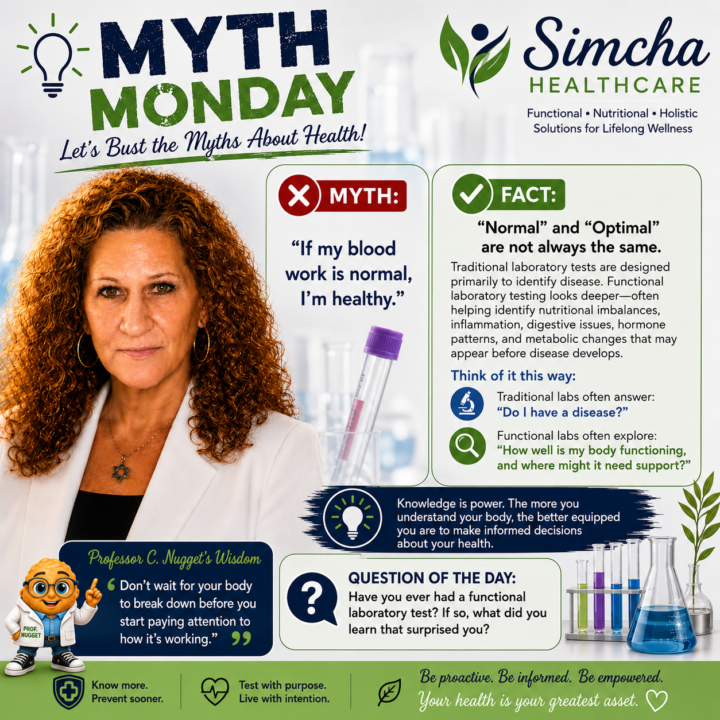
MYTH: "If my blood work is normal, I'm healthy." FACT: "Normal" and "optimal" are not always the same thing. Traditional laboratory tests are designed primarily to identify disease. Functional laboratory testing looks deeper, often helping identify nutritional imbalances, inflammation, digestive issues, hormone patterns, and metabolic changes that may appear before disease develops. Functional laboratory testing is about looking for the root cause. Functional testing is more advanced, and it is tests that your physician won't order and insurance won't pay for. Think of it this way: Traditional labs often answer: "Do I have a disease?" Functional labs ask: "How well is my body functioning, and what is the root cause of that disease? Knowledge is power. The more you understand your body, the better equipped you are to make informed decisions about your health. Professor C. Nugget's Wisdom: "Don't wait for your body to break down before you start paying attention to how it's working." https://www.skool.com/simcha-healthcare-3222/about
🔥
0 likes • 7h
@Ina Tenniswood indeed it is. Absence of disease does not mean optimal health.
🔥
10h •
Myth Monday: Hairballs Are Normal...Or Are They?
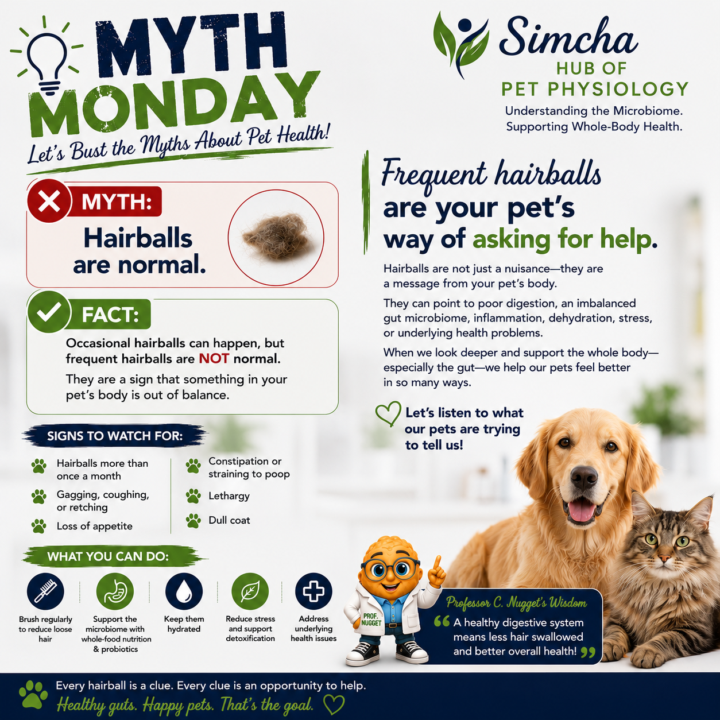
MYTH: Hairballs are just a normal part of being a cat. FACT: While an occasional hairball can happen, frequent hairballs are not something to ignore. They may be your cat's way of telling you that something deeper is going on. Hairballs can be associated with: An imbalanced gut microbiome Poor digestion Dehydration Inflammation Nutritional deficiencies Stress or anxiety Other underlying health concerns Instead of simply treating the hairball, ask yourself: "Why is my cat swallowing so much hair, and why isn't their digestive system moving it through normally?" At Simcha Hub of Pet Physiology, we believe in looking beyond the symptom and understanding the physiology behind it. Every hairball is a clue, and clues help us better support our pets' long-term health. A healthy digestive system, healthy skin, and a balanced microbiome all work together to help reduce excessive hairballs. Professor C. Nugget's Wisdom: "Your pet's body is always communicating. Our job is to learn its language." Click the link to learn more myths and the truth about them. https://www.skool.com/simcha-hub-of-pet-physiology-5304/about
🔥
2d •
Today Is Pet Remembrance Day
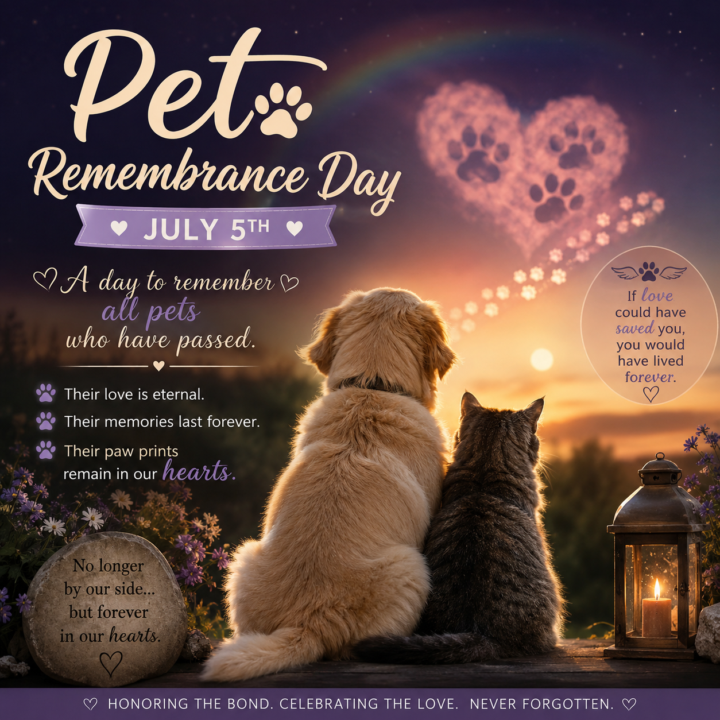
Today we pause to honor the pets who forever changed our lives. They may have walked beside us for only part of our journey, but the love they gave remains with us every single day. Their wagging tails, gentle purrs, happy greetings, silly antics, and unconditional devotion become part of who we are. For those who have loved and lost a beloved companion, know that your grief is a reflection of a bond that was truly extraordinary. Love like that never disappears, it simply changes form. Today, light a candle, share a favorite photo, tell a cherished story, or simply take a quiet moment to remember the paw prints that will always remain on your heart. To every pet who has crossed the Rainbow Bridge, thank you for your loyalty, your comfort, your joy, and your unconditional love. You were never "just a pet." You were family. You were loved. You are remembered. You are missed. We'd love to honor them with you. Click the link and share on our Memorial Page, the name and a photo of a pet you'll never forget in the comments. https://www.skool.com/simcha-hub-of-pet-physiology-5304/about
🔥
1 like • 1d
@Ina Tenniswood so precious! ❤️
🔥
1 like • 12h
@Ashley Melton beautiful❤️
🔥
3d •
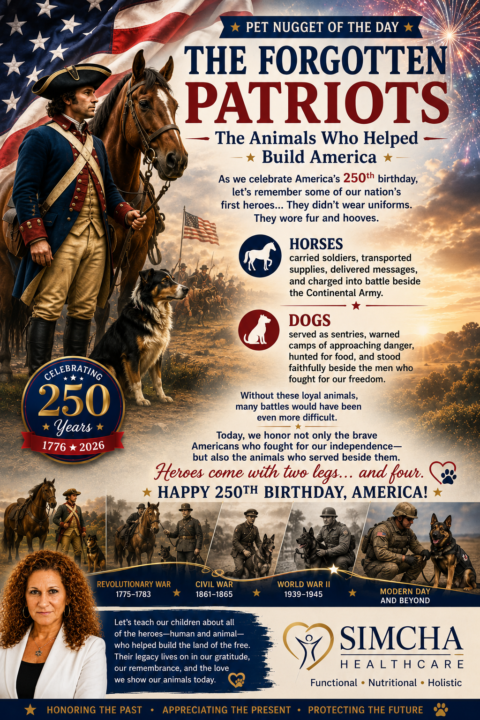
The Forgotten Patriots: Animals Who Helped Build America 🇺🇸
PET NUGGET OF THE DAY 🇺🇸 As we celebrate America's 250th birthday, let's remember some of our nation's first heroes. They didn't wear uniforms. They wore fur and hooves. Horses carried soldiers, transported supplies, delivered messages, and charged into battle beside the Continental Army. Dogs served as sentries, warned camps of approaching danger, hunted for food, and stood faithfully beside the men who fought for our freedom. Without these loyal animals, many battles would have been even more difficult and maybe even lost. Today, we honor not only the brave Americans who fought for our independence, but also the animals who served beside them. Remember: Heroes also come with four legs! Happy 250th Birthday, America! 🇺🇸🐾 Click that link to join us! https://www.skool.com/simcha-hub-of-pet-physiology-5304/about
🔥
0 likes • 3d
@Ina Tenniswood, indeed!! Thank you! ❤️
🔥
3d •
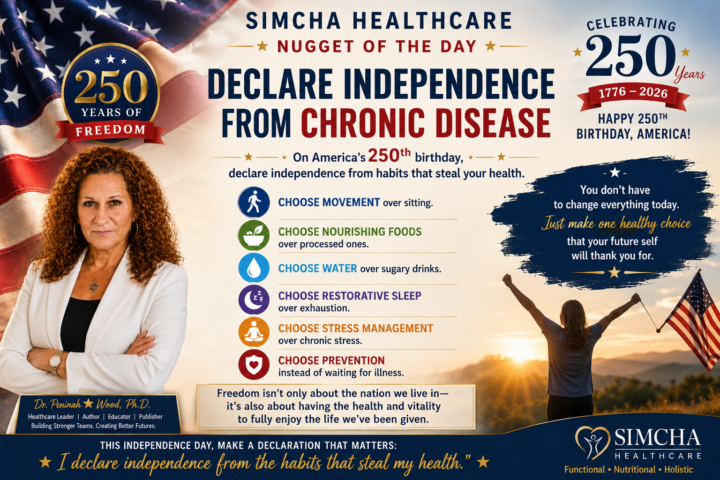
🇺🇸 SIMCHA HEALTHCARE NUGGET OF THE DAY 🇺🇸
Declare Independence From Chronic Disease As America celebrates 250 years of freedom today, why not celebrate your own declaration of independence? Today, declare independence from the habits that slowly steal your health. Choose movement over sitting. Choose nourishing foods over processed ones. Choose water over sugary drinks. Choose restorative sleep instead of "I can survive on 4 hours sleep." Choose stress management over chronic stress. Choose prevention instead of waiting for illness. You don't have to change everything today. Just make one healthy choice that your future self will thank you for. Freedom isn't only about the nation we live in, it's also about having the health and vitality to fully enjoy the life we've been given. This Independence Day, make a declaration that matters: "I declare independence from the habits that steal my health." I Am A Daughter Of The American Revolution Happy 250th Birthday, America! 🇺🇸 Click that link! https://www.skool.com/simcha-healthcare-3222/about
1
0
1-10 of 208
🔥
@peninah-wood-2002
Dr. Peninah Wood, Ph.D, is the founder and CEO of Simcha Healthcare. She has a Doctorate in Functional, Nutritional, and Holistic Medicine.
Active 30m ago
Joined Feb 14, 2026
Kentucky
Powered by