Activity
Mon
Wed
Fri
Sun
Nov
Dec
Jan
Feb
Mar
Apr
May
Jun
Jul
Aug
Sep
Oct
What is this?
Less
More
Owned by Paul
A hub for all detection dog teams—professional, sport, and hobby—offering expert teaching, support, and shared learning.
Canine Detection Academy
15
Free
Conservation Dog Alliance
184
$30/y
Nose Worx Detection Skool
427
Free
Truffle Dog Club
453
5.0
$7/m
GLP-1 Real Talk Community
1.2k
Free
Redirect K9s
100
Free
Skoolers
151.4k
Free
78 contributions to Redirect K9s
11d •
What is something that you are working on with your dog this week?
Welcome to the first official post in Field Notes! I will go first in the comments.
2 likes • 10d
I need to start to teach Ypres close ground searching in a 1 m x 1 m box.
18d •
The Potcake Dog
What happens when humans and dogs simply coexist instead of working together? This question can be answered with the Potcake dog. This breed is found in the Bahamas and is neither wild nor owned, especially in the beginning. Some sources say the breed started 1500 years ago when the Arawak people brought their dogs to the Bahamas then the arrival of settlers introduced their purpose bred dogs many centuries later but we don’t actually know for sure their origin. All of these imported dogs are thought to have interbred with the local dogs and then each other for generations. The Potcake formed over generations not for a job to work alongside humans but to survive despite them and without them. The physical characteristics that developed were only to survive their environment. The smooth coat with no undercoat for the tropical heat, their long faces to help search and forage for food, their athletic builds to help access the terrain and probably most important their robust health to survive with little to no veterinary care. This combination of adaptability has led the Potcake to be able to digest a variety of food without becoming ill and to be flexible to their environment. Their personality is surprisingly compatible with humans given how independent they live compared to most dogs in the world. Their unique living situation has still granted them the opportunity to develop the ability to know which humans may be approachable for food or pets and which ones to avoid. While I have not met one myself, this does not mean every single Potcake you meet will be nice, as they do vary in how feral they are, so be aware if you ever meet one. How the Potcake dog earned their name is from what they were fed. The locals would feed the thickened rice and peas from the bottom of the pot that they would scrape off and feed the dogs that learned to wait by the door. Locally they are known as Sato, Agouti dog and Island Dog but Potcake has become and internationally recognized name that is used by rescue organizations that remove some of the dogs to put up for adoption in an effort to help with local populations.

1 like • 16d
I've seen a lot of these "types" of dogs around the world. Especially in rural, village-type situations.
21d •
Why Your Dog Pulls Back When You Pull
A couple of weeks ago I was at the ophthalmologist with my cat, Minka, who was diagnosed with histoplasmosis. We were waiting in the lobby for her recheck when I saw something that I have not been able to stop thinking about. There was a large middle aged dog (dog #1) at the reception desk with his owners and someone had just entered the lobby with their medium/large dog (dog #2). I immediately could tell that dog #1 was going to have an issue with dog #2 and the owner saw it too but did not do anything. He just stared at the stand off his dog was having and instead of creating distance or removing the dog entirely from the lobby (the owner was there with his wife so no dine and dash would have occurred) his dog reacted and owner of dog #1 pulled back with the leash. Owner of dog #1 then pulled his dog further into the lobby and closer to the other pets that were there and his wife finished up talking to the staff. What was demonstrated above is something called opposition reflex which is when the person pulls back against the dog wanting to go forward. This type of pressure, dog wants to go forward and the person is pulling back, creates an involuntary counter response. This involuntary counter response will actually increase the dog’s resistance instead of dampening it. This is due to increased frustration within the dog and typically the response to being frustrated is persistence. Think about how people increase toy drive: they hold the dog back while the toy that they want is out of reach. So how can we change how we physically remove a dog from a situation whether that be in the lobby at the vet or on a nature walk near interesting critters? You use something called Conditioned Harness (Collar) Pressure. This is found within the PST curriculum and while it is recommended to have a dog on a harness to minimize tracheal damage this can work on a collar as well. This is something that should be taught to all dogs so they understand what you are wanting but especially to dogs that may have a negative reaction to being grabbed/startled especially while focused on a stimulus.
1 like • 16d
A video of this will be a great teaching tool.
25d •
Icelandic Sheepdog
The Icelandic Sheepdog is the only native dog of Iceland via Norse settlers that originated in Scandinavia and is part of the spitz family. Their predecessors are documented through Nordic literature to have been introduced to Iceland approximately 1100 years ago. It is thought that they are part of the same foundational stock as the Buhund of Norway and the Vallhund of Sweden. The Icelandic Sheepdog did not just stay on the island but also had fans in other countries and in various literature. This documentation ranged from Shakespeare in Henry V from 1599 to Natural History (English) by Georges-Louis Leclerc which was published in 1755. It was not all fun and games for the Icelandic Sheepdog because in the late 19th century canine distemper, which effects the central nervous system and is highly contagious, and parvovirus, which effects the gastrointestinal tract and is highly contagious, plus Tapeworm Laws which enforced that each farm is only allowed one dog. The Tapeworm Law caused the population to drop drastically in only a couple of decades and the highly contagious diseases, which are still around today, caused the breed to be dangerously close to extinction. Thanks to an Englishmen named Mark Watson and an Icelandic journalist Haukur Snorrason they located the last few pure bred Icelandic Sheepdogs and had them exported to Watson’s kennels abroad which helped secure bloodlines. An Icelandic veterinarian was also involved in preservation efforts of the breed and incorporated the exported bloodline to encourage genetic diversity. As you can imagine the Icelandic Sheepdog has to be a tough and hardy dog to be able to endure the rough terrain and weather of Iceland. They come in two coat lengths: long-haired and short-haired with both having an undercoat. The accepted colors are tan/fawn, grey, tri colored, chocolate and reddish brown with each coat color including white markings and some having a black mask. They stand between 42-45cm (17-18”) and weigh 9-14kgs (20-30lbs) so I think it is safe to say they are mostly fur.

1 like • 16d
They are smaller than I imagined! My spaniels weigh more than those dogs.
28d •
Everyone Needs Help. Even Professionals.
I wanted to talk today about something that some people might struggle with and that is asking for help. Perhaps you have been doing this for a number of years, you are on your second, third or fourth dog, you have been part of a team for a while, copious amounts of operations and attend plenty of workshops in person and online. With dedication like that it can sometimes feel like you finally are starting to have a grip on this whole dog handling thing. Then it happens…either you have a new dog that makes you feel like you don’t know anything or your current dog shows a behavior that you have never seen them do. This is when it is important to reach out to a trusted person that you feel is the best fit not only for your concern but also this dog’s learning style. Preferably a trainer that can adapt to the dog in front of them over one that has the approach of “your dog is this breed so you must do this” or “your dog is this discipline so it has to do that”. Running into snags isn’t just for handlers but trainers too. It is through the difficult moments that learning occurs even for us humans. If we want our dogs to enjoy their work and be successful we figure out how to communicate that to them in the best way possible and tailor training to what that dog needs. Do they need steps broken down into smaller ones? Do they need a different direction? Do they need a whole different approach? These questions, and those like them, are why there are so many different ways to train a dog for the same job and it is important to keep an open mind while also having discernment. You may go to a workshop or seminar and hear something that you think is not helpful but a year or two down the line you remember it and it is exactly what you needed to troubleshoot. I had a similar experience recently and, while I cannot go into detail, I can say that it is a benefit to work with people who have many more years of experience than you. Not just quantity of years but quality and variety. Dog training has evolved tenfold in the past 20 years or so with what is accepted as mainstream. Welfare is huge compared to how it use to be and the types of dogs that have access to work has multiplied in ways that very few probably saw coming.
1 like • 16d
It's important to have a network of trusted, experienced people you can turn to when you are struggling with something.
1-10 of 78
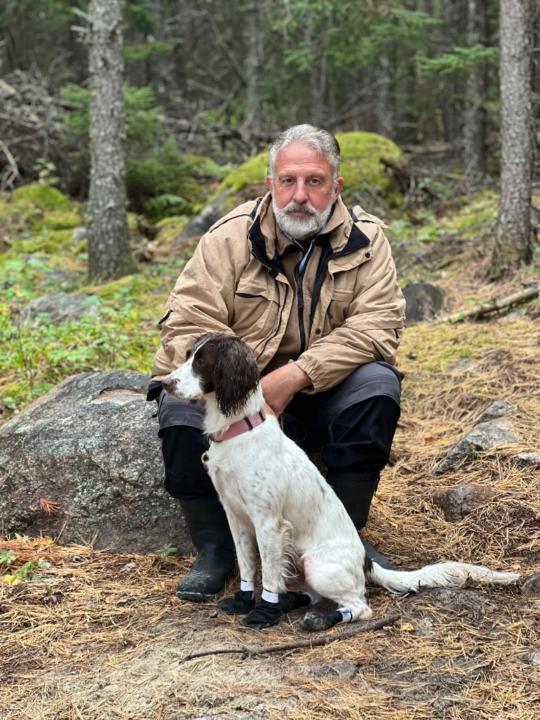
@paul-bunker-4145
Dog trainer and consultant specializing in detection in research and field deployments.
Active 9m ago
Joined Dec 18, 2025
INFJ
San Antonio, Texas