Activity
Mon
Wed
Fri
Sun
Aug
Sep
Oct
Nov
Dec
Jan
Feb
Mar
Apr
May
Jun
Jul
What is this?
Less
More
Memberships
Clief Notes
41.5k members • Free
7 contributions to Clief Notes

7h •
First Agentic Folder Structure Implemented
The last few days I was able to take some time and dial in my first folder structure setup. I decided that I was going to implement this with Claude Cowork first. I've been using AI a ton for the past several years and was hesitant to go with a cloud hosted agentic system. But this got me inspired so I decided to go with it. I built my folders out based on how I use AI. So instead of by mode of work, my root folders are listed out by each domain that I use AI in my personal life to help with. So there's work, health, games, gardening, career development, etc. Inside those folders are where the modes of work live ie. brainstorming, processes, learning, documents, etc. This is working amazingly! This has transformed my AI usage from a list of chats into something much more useful. My prompts have turned into just tasks, with so much context living in the markdown files. Loving this system so far. Looking forward to continuing the learning!
1 like • 7h
@Bas Rosario Thanks! Looking forward to what this is going to unlock for me!

4d •
A networking giant just named the problem we've been building around
Jeetu Patel, Cisco's president and chief product officer, posted this after their keynote week: https://www.linkedin.com/posts/jeetupatel_we-are-at-the-beginning-of-one-of-the-most-activity-7469585414857687040-4mtk/ Most of it is silicon and platform news. One line is worth pulling out if you build ICM systems: "every agent action will be a routing challenge, a trust decision and a telemetry event." A $200B infrastructure company just said what's slowing agents down is a trust problem, not a capability one. Agents don't get adopted until something can vouch for what they produce. The whole field, top to bottom, is arriving at the problem the people in this community have been working on since day one. What I want to flag is the crack in his own triad. Two of the three are infrastructure. Routing and telemetry get solved from outside the agent, and Cisco will happily sell you both. The trust decision is different. Their word for it is observability, meaning behavior monitoring, watch what the agent did. But watching what an agent did tells you nothing about whether its output should have shipped. You can log every step and still send a confident wrong answer out the door. That gap is the opening for every ICM builder here. Observability makes a system readable. It doesn't verify anything. The part that holds the line is a gate at the point of action with the authority to refuse, and that gate depends on knowing what "correct" means for your specific work. Which is exactly what a platform can't template. Cisco can build the dashboard. It can't decide, for your build, whether this particular output is honest. That decision stays judgment, and judgment doesn't commoditize when the infrastructure gets cheap. So here's the possibility for this community: the biggest players are going to make agents observable. Very few are going to make them refuse. If your ICM system already has a real gate, a step that can say no and mean it, you're building the layer they just named as the frontier, at the one altitude a platform struggles to reach.
1 like • 3d
For anyone who wants to see how enterprise level software is monetizing agentic AI, Jeetu's keynote from Cisco Live this year contains an impressive demo on Cisco's agentic network and security management platform. It's worth watching for the newer to AI folks.

8d •
Help please
I've run into what I hope is a no brainer for someone. How do I make a transcript for a video in a website... the right way?

1 like • 6d
youtubetotrasnscript.com or other sites like it. Most don't require an account to use.

7d •
Anyone using Obsidian as a company knowledge base? Here's the problem we ran into
We run a startup and we've been using Obsidian as our company knowledge base. Great tool but there's one big gap, no security. Everyone with vault access sees everything. API keys, strategy docs, client info, all wide open. And when you connect AI tools they burn through tokens reading raw markdown with all the noise. We ended up building a plugin called VaultGuard that adds encryption and access control to Obsidian. Built it for ourselves first, now we are testing it. If anyone else ran into this, how do you handle sensitive info when sharing an Obsidian vault with your team? And if you're interested in VaultGuard let us know, we'd love to hear your feedback.
0 likes • 6d
I'd recommend using a password tool for the API keys, secrets, passwords, etc. Personally I use 1Password but have used tools like Secret Server in the past. There are many options. Look for one that has a feature match to how your organization works. They generally aren't very pricy but well worth spending a little to protect the crown jewels of the kingdom.

16d •
Before / After: 10 days since joining...
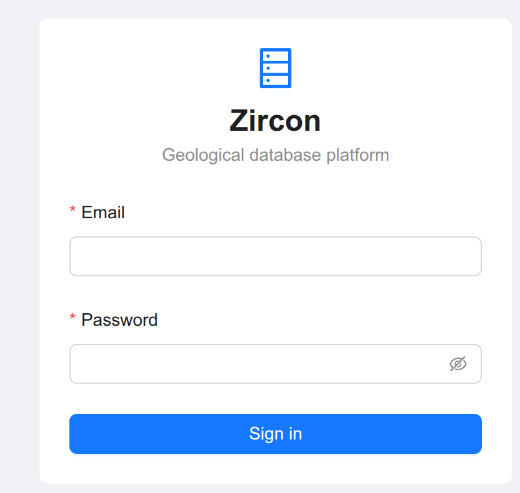
It has been 10 days since I joined Clief Notes community and started Jake's coursework. It has been a massive step change in how I understand - and now use AI more effectively. A few days ago I joined into a paid subscription and the resources have proved to be very helpful in setting up my own folder structure. Before joining this community my use of AI was prompting the web user interface and copying the artefacts / outputs for my work. I had projects setup with various context files and instructions. I recently created my first website (in-progress) using Claude Code in VS Code and Jake's 'workflow-starter-code-project.md' template to create the folder structure. Most of the time has been spent in learning ICM, configuring the folder and file structure to route AI, and planning the geological database schema. Building the website was the easy bit! What has changed / unlocked in my use of AI: - spending more time planning and less time managing prompts and outputs - output has significantly increased with less prompts required to get the same job done I feel more "human" now and less like a "machine" in my use with AI since moving to the ICM method. The time being creative and planning is often away from the computer, where I'm spending time with family or doing the things I enjoy outdoors. I appreciate how Claude just "gets me" now without typing out an essay or giving me vague responses or hallucinations. If you are new here my advice is: - take your time to work through the foundation content - no rush, it takes time to learn and understand how to implement this knowledge into your work - start small and build for something specific - don't spend time creating a folder structure on what you think you will use - build for what you will use today, in 30 minutes. - play around and fail fast it won't be perfect to start with and that is OK :) Thank you to Jake - and everyone who has contributed to this community and built the resources that exist.
4 likes • 6d
That's awesome! Great share!
1-7 of 7

Active 6h ago
Joined Jul 1, 2026
Phoenix AZ
Powered by