Activity
Mon
Wed
Fri
Sun
Jul
Aug
Sep
Oct
Nov
Dec
Jan
Feb
Mar
Apr
May
Jun
What is this?
Less
More
Memberships
New Jersey Notary Association
57 members • $1/month
15 contributions to New Jersey Notary Association
14d •
July Webinar Announcement
Hello everyone. A webinar of The Garden State Notary has been posted. This course will be held over two evenings on July 8th and 9th from 6 to 9:30 pm Course sign-up can be found at: https://inquiry.newjerseynotaryassociation.org/public/6983f2f3e3f08f0024d17164/1-Events
0
0
18d •
📘 NEW RESOURCE: The “One Journal” Rule in New Jersey
Hello NJNA family! We received a very interesting question recently, and the answer was thought-provoking enough that we decided to turn it into a full topic on the NJNA website rather than just a post here in the community. 👉 https://www.newjerseynotaryassociation.org/one-journal New Jersey law requires notaries to maintain only one official journal for all notarial acts, including in-person notarizations, electronic notarizations, and RON. This new page breaks down: - What the “one journal” requirement means in practice - How to handle in-person, electronic, and RON entries within a single journal - Why RON platform records do not replace your journal - NJNA’s recommended approach for maintaining clear, consistent compliance If you’re working across both traditional and remote notarizations, this is an important read and directly relevant to day-to-day recordkeeping decisions. As always, NJNA continues to focus on practical guidance for real-world notary situations, not just theoretical rules.
2
0
Apr 26 •
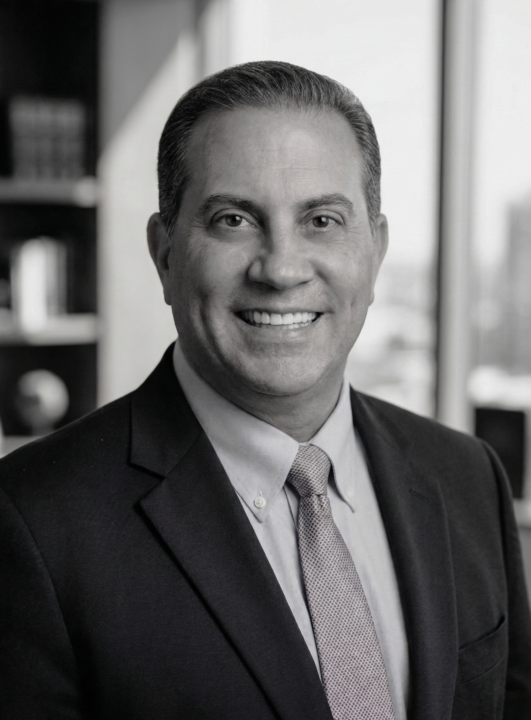
NJNA Member Spotlight: Alexandar H. Spano
This month, the New Jersey Notary Association is pleased to feature Alexander H. Spano, President and Owner of Premier Paralegal & Mediation LLC and an Adjunct Professor across multiple colleges in New Jersey and Pennsylvania. Welcome to the very first Member Spotlight. The New Jersey Notary Association is excited to honor Alex as the first member to be highlighted, and we are grateful for his willingness to share his story with all of us. Our hope is to offer this spotlight at least four times a year, or more whenever possible. Why do we do this? Because a strong association is built on more than just newsletters and continuing education. It is built on relationships. It is important that we all participate in this forum and take the time to get to know one another. When we know who is standing next to us in this profession, we build a stronger community and a more reliable support network for everyone. Growing together as notaries, colleagues, and friends starts right here. Now, let us introduce you to Alex. Ask Alex what drives his work, and he will give you a straightforward answer. "Being a notary isn't just about stamping paper," he says. "It's about being the 'Gatekeeper of Integrity.'" That mindset has carried him through more than 30 years in business, education, and legal support services. Since 2009, he has run Premier Paralegal & Mediation LLC in Mount Holly, New Jersey, where he focuses on paralegal services, mediation, and settlement coordination. But his work does not stop at his own business. Across several colleges in New Jersey and Pennsylvania, Alex steps into the classroom as an Adjunct Professor. He has developed and taught courses in Mediation, Paralegal Studies, and Professional Standards at Camden County College, Rowan College of South Jersey, Mercer County College, and Delaware County Community College, among others. His students learn from someone who has lived the material, not just read about it. His teaching covers workforce development topics such as conflict resolution, negotiation skills, delegation, and team building. He also leads personal development courses including notary training, public speaking, and time management.
Apr 22 •
Checking in
Hello everyone, We know things have been a little quiet here in the forum, and we want to take a moment to check in. While you may not be seeing daily updates, please understand that work is actively happening behind the scenes every single day. We have been in contact with multiple legislators, both past and present, as well as other state officials, continuing to push forward on issues that matter to New Jersey notaries. These conversations take time, persistence, and follow-through, and we are fully engaged in that process. Our commitment remains the same: to advance the profession, strengthen standards, and provide meaningful, accessible education to notaries across the state. That mission is driving everything we are doing right now. We appreciate your patience and your continued support. Your involvement and trust allow us to keep moving forward, even when progress is not always visible in real time. Team NJNA
Apr 1 •
ASK NJNA: Notarization via FaceTime
QUESTION RECEIVED: I have been asked by a husband and wife to notarize a school form containing an acknowledgment. The couple are very well known to me, so I do not need their identification. Both of them have already signed the form. Only the wife is able to visit me in person. Can I accept the husband’s acknowledgment via FaceTime video? ANSWER: No. In New Jersey, performing a notarization for someone who is not physically present before you requires authorization to perform Remote Online Notarizations (RON). RON must be conducted through a state-approved platform that meets New Jersey’s security and recordkeeping standards. Video chat services such as FaceTime, Google Meet, and Skype do not satisfy these requirements and cannot be used for this purpose. If you are not authorized as a Remote Online Notary through the State of New Jersey, you may not perform remote notarizations. SUGGESTED ALTERNATIVES: OPTION 1: Suggest the couple use an approved Remote Online Notary. Both individuals would be able to appear remotely before an authorized New Jersey notary public to complete the notarization together. Many notaries in our organization are authorized to perform RON services. OPTION 2: Complete the notarization for the wife only, in person. The document can then be sent to the husband, who can appear before a notary in the state where he is physically located to complete his portion. Note: The out-of-state notary must be authorized to perform notarizations in that state. OPTION 3 (If permitted by the document issuer, in this case the school): Complete the notarization for the wife only. The husband can then complete a separate but identical copy of the form where he is currently located. Note: This is a practical workaround if the school permits, but it’s not a formal notarial solution. This simply splits the acknowledgment into two separate forms with separate notarizations. For many documents, such as those for loans, this would most likely not be an allowable solution. Acceptance is entirely up to the receiving party (the school) and should be verified in advance before proceeding with this scenario.
4
0
1-10 of 15
Active 12d ago
Joined Jan 9, 2026
Powered by