Activity
Mon
Wed
Fri
Sun
Sep
Oct
Nov
Dec
Jan
Feb
Mar
Apr
May
Jun
Jul
Aug
What is this?
Less
More
Owned by Nevriye
Science-backed happiness coaching, facilitated by a Master of Happiness Studies. Weekly live calls. Real tools.Stop surviving. Start flourishing.
8 contributions to Happiness Circle

15d •
Your Happiness Is Hidden in Your Habits
Happy Monday, Happiness Circle! This week, let's focus on our patterns. Positive psychology reminds us that happiness isn't built by one big decision, it's built by the small choices we repeat every day. When life gets stressful, notice your default pattern. Do you reach for gratitude or worry? Connection or isolation? Movement or avoidance? The beautiful thing about the brain is its ability to change. Every time you choose a healthier response, you're strengthening new neural pathways and creating habits that support greater resilience and well-being. This week, don't try to change your entire life. Simply choose one healthy pattern to practice every day. Small, consistent actions create extraordinary results. I'd love to hear from you, which healthy pattern are you choosing this week? 💛
0
0
21d •
What miracles have you stopped noticing?
What if one of the greatest barriers to happiness isn’t what we’re missing, but what we’ve stopped noticing? Our brains are remarkably efficient. To help us navigate the world, they filter out what is familiar and direct our attention toward what is new, uncertain, or threatening. While this ability helped our ancestors survive, it can also cause us to overlook the very things that enrich our lives every day. Psychologists call this hedonic adaptation. The extraordinary gradually becomes ordinary. The promotion, the healthy relationship, the supportive friend, the home we have built, and even our own health quietly fade into the background as our attention shifts to the next problem to solve. Gratitude interrupts that pattern. It is not about pretending life is perfect or ignoring hardship. It is about intentionally training your mind to notice what is already present alongside the challenges. Research in positive psychology consistently shows that practicing gratitude is associated with greater well-being, stronger relationships, increased resilience, better sleep, and lower levels of stress. Perhaps its greatest gift is that it changes how we experience our lives without requiring our circumstances to change first. Take a moment and ask yourself: What miracle have I stopped noticing? Maybe it is the person who always checks in on you. Maybe it is your body carrying you through another day. Maybe it is the opportunity that has been quietly waiting in front of you. Maybe it is the sunrise you rushed past this morning. Maybe it is the laughter you almost ignored. Sometimes the happiest people are not those with the best lives. They are the ones who have learned to notice the beauty, the goodness, and the miracles that were there all along. That is why our next Happiness Circle gathering is dedicated to Gratitude: The Power of Noticing Everyday Miracles. Together, we will explore simple, evidence based practices that help retrain our attention, strengthen our well-being, and deepen our appreciation for the life we are already living.
0
0

30d •
Where focus goes energy flows!
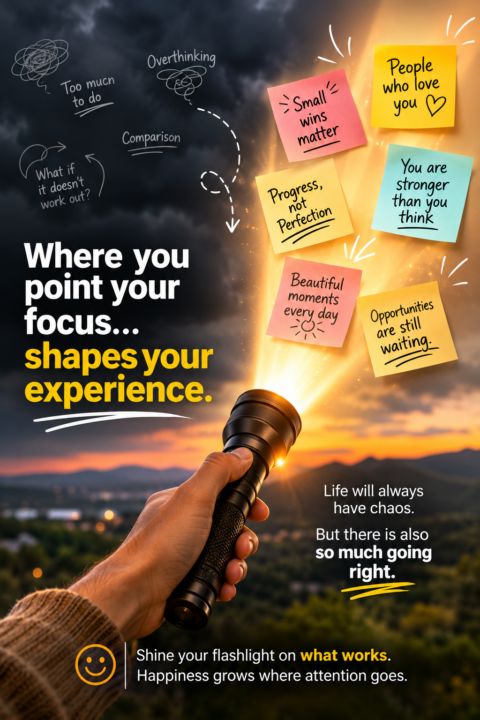
What if your happiness isn’t determined by what happens to you, but by where you choose to shine your attention? Life will always have its share of chaos. There will always be problems to solve, expectations to meet, and challenges to overcome. But there is another side to the story. There are people who love you. There are victories you’ve overlooked. There are lessons making you stronger. There are moments of beauty happening all around you. This is the Flashlight Effect. Whatever you repeatedly focus on grows in your awareness. The more you notice what is working, the more resilient, grateful, and hopeful you become. Today, pause for just one minute and ask yourself: What is one thing going right in my life that I haven’t fully appreciated? Your attention is one of the most powerful tools you have. Use it wisely. 💛
0
0
Jul 11 •
Thank You for Joining Us Live! You Are a Miracle!
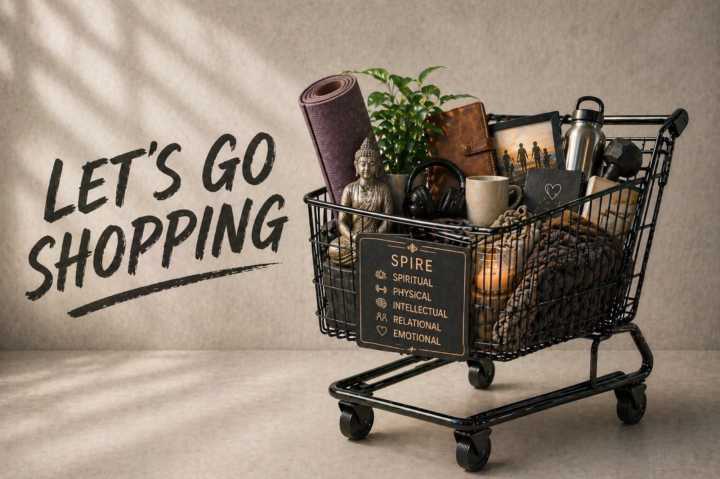
Thank you to everyone who joined us live from around the world for our Happiness Circle gathering. Whether you were with us from your living room, your office, or somewhere across the globe, you were part of our circle. Today we explored masculine and feminine energy, the three C's and the three U's, and how understanding one another's deepest needs can transform our relationships. I've attached a few reminders to carry with you this week: the Shopping Cart, the Bullshit Dumpster, and the beautiful song, "You're a Miracle," that we listened to together. Remember, the flashlight of your life is in your hands. Whatever you shine your attention on becomes illuminated. What you appreciate, appreciates. What you focus on grows. Keep the Shopping Cart as a reminder that you choose what you carry through life. And just in case you need it, I'm leaving the Bullshit Dumpster with you. Whenever life hands you something that steals your peace, your joy, your confidence, or your happiness, toss it in. Thank you for being part of this growing global community. I can't wait to see you at our next gathering. Until then, sprinkle the happiness forward, because happiness grows when we share it. With gratitude, Nevriye
0 likes • Jul 11
https://suno.com/s/De0sYLPJDx8cTNjA Here is the Miracle Song!
Jul 11 •
Join us live tomorrow!
Join us live tomorrow as we explore masculine and feminine energy. Not from the lens of stereotypes, but through the lens of self-awareness. Where do you naturally spend most of your time? What are the strengths of each energy? And what might you discover about yourself when you begin to understand them more deeply? See you tomorrow.
0
0
1-8 of 8

@nevriye-yesil-9659
MA Happiness Studies | PhD Student | International Author | Business & Happiness Strategist | Weightlifting Champion| Serial Entrepreneur
Active 1d ago
Joined Sep 8, 2025
Florida, USA
Powered by