Activity
Mon
Wed
Fri
Sun
Jun
Jul
Aug
Sep
Oct
Nov
Dec
Jan
Feb
Mar
Apr
What is this?
Less
More
Memberships
ノチコン | Notion , AI ...
11 members • Free
AIで仕事を自動化研究会
52 members • Free
AI自動化の神
51 members • Free
L'Alliance 🤝
273 members • Free
AI SoftLife Society
718 members • Free
Learning Pretty Academy + AI
396 members • Free
Poised 4 Profits in AI™©️
244 members • Free
OpenClaw and Autonomous AI
138 members • Free
AI & Free Intelligence
212 members • Free
8 contributions to The AI Hub

6d •
Open to New Projects & Developer Collaboration
Hi everyone I recently completed my current projects and I’m now open to new opportunities. I’m interested in connecting with developers building in backend, SaaS, AI, or automation, and I’m always open to exchanging ideas with people working in similar areas. If you’re interested in a technical session, mentorship, collaboration, or discussing a project, feel free to reach out. Happy to connect.
0
0
Mar 29 •
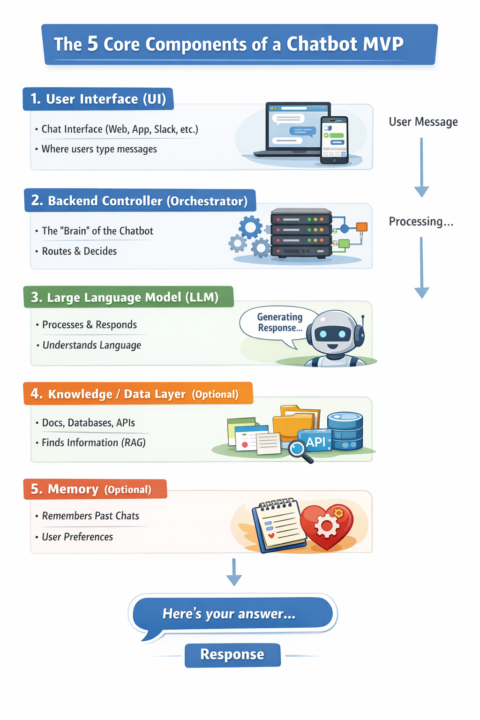
How Chatbots Actually Work: From User Message to AI Response
I have previously conducted lectures on LLM orchestration, RAG pipeline, multi-modal models, and multi-agent architecture. I am going to explain how to implement chatbot functionality by utilizing the previous lecture. A chatbot MVP is essentially: A system that takes a user message → understands it → optionally looks things up → generates a response → returns it You can express this as a simple loop: The 5 Core Components of a Chatbot MVP Break the system into 5 understandable parts: ① User Interface (UI) Chat screen (web, app, Slack, etc.) Where users type messages ② Backend Controller (Orchestrator) The “brain” that decides what to do next Routes requests between components Connect to your previous lectures: This is where **LLM orchestration logic** lives. ③ Large Language Model (LLM) Generates responses Understands natural language ④ Knowledge / Data Layer (Optional but critical for MVP+) Documents, database, APIs Used in **RAG (Retrieval-Augmented Generation)** ⑤ Memory (Optional but powerful) Conversation history User preferences User ↓ UI ↓ Orchestrator ├── LLM └── Knowledge Base (RAG) ↓ Response contact information: telegram:@kingsudo7 whatsapp:+81 80-2650-2313
1
0
Mar 24 •
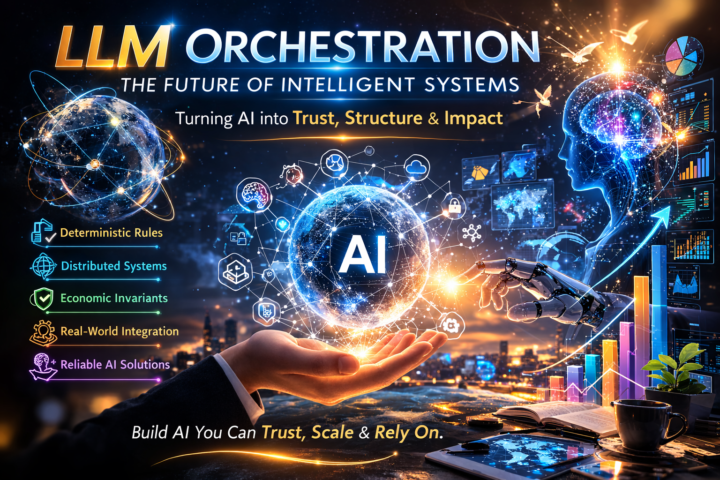
!!!! The Advantage of Integrating Multi-Modal Models, LLM Orchestration, RAG Pipelines, and Multi-Agent Architecture !!!!
Modern AI systems require more than isolated models to handle complex tasks. The integration of multi-modal models, LLM orchestration, retrieval-augmented generation (RAG), and multi-agent architectures creates a powerful framework for building scalable, intelligent, and production-ready systems. -Multi-Modal Models Multi-modal models process text, images, voice, and structured data simultaneously, providing a richer understanding of context. This capability allows AI systems to interpret complex scenarios and make more informed decisions. -LLM Orchestration LLM orchestration manages reasoning and decision-making across multiple prompts or agents. Combined with multi-modal inputs, it ensures that insights from various data types are interpreted cohesively and translated into actionable outputs. -RAG Pipelines RAG pipelines enhance generative models by retrieving relevant external knowledge. By integrating multi-modal inputs, RAG pipelines ensure responses are accurate, context-aware, and grounded in up-to-date information, whether the input is text, images, or structured data. -Multi-Agent Architecture Multi-agent architecture assigns tasks to specialized agents and coordinates them efficiently. This approach scales system performance, improves reliability, and enables complex workflows that a single agent could not handle effectively. -Synergy Across Technologies Multi-modal models supply rich, cross-domain data. LLM orchestration interprets and reasons across these inputs. RAG pipelines provide relevant external knowledge to support decision-making. Multi-agent architecture manages distributed execution and ensures scalability. This integration allows AI systems to perceive, reason, retrieve, and act across multiple data types, bridging the gap between experimental prototypes and real-world, production-grade applications. Conclusion By combining multi-modal models, LLM orchestration, RAG pipelines, and multi-agent architectures, organizations can build AI systems that are accurate, versatile, scalable, and context-aware. This approach represents the next step in creating robust, intelligent solutions for complex, real-world challenges.
0
0
Mar 23 •
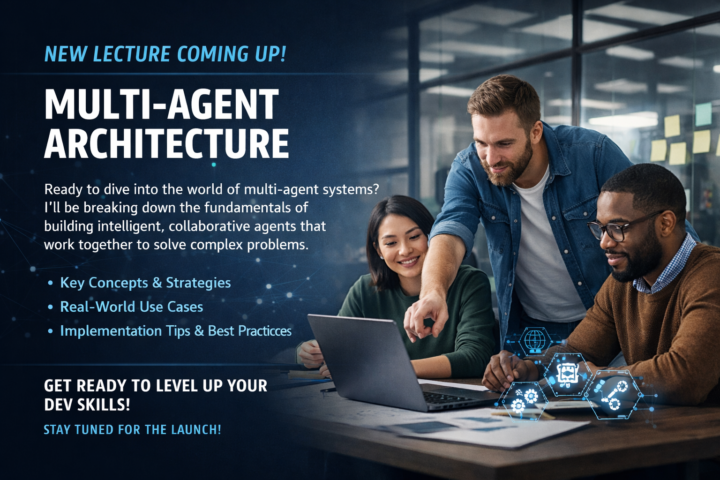
🚀 New Lecture: Multi-Agent Architecture (Production Systems)
Today I’m starting a lecture on Multi-Agent Architecture, focusing on how modern AI systems move beyond single LLM prompts and into coordinated agent ecosystems. In real-world AI products, the challenge isn’t generating text — it’s orchestrating multiple agents that can plan, reason, and execute tasks reliably. In this session we’ll break down: • Core architecture patterns for multi-agent systems • Agent orchestration, routing, and task decomposition • Tool usage and memory management • Building reliable pipelines instead of fragile prompt chains • Real production use cases from modern AI systems The goal is simple: move from demos to production-grade AI architectures. If you're building with LLMs, AI agents, or automation pipelines, understanding multi-agent design patterns will be one of the most important skills going forward. More details and implementation walkthrough coming in the lecture. Let’s build systems that actually scale. ⚙️
0 likes • Mar 24
@Andrew Jules Sorry I amnot teacher so but I can answer about development plan or issue The purpose of my posting this is to widely introduce advanced technology to others and advance mutual communication to a higher level
Mar 15 •
For the future
I am looking for someone to collaborate with. I do not care where you live. I build AI systems using LLM orchestration, RAG pipeline, multi-modal models, and multi-agent architecture combined full-stack development and automation integration. If you need my help, I will gladly assist for our collaboration. My Discord ID is @ur_sa. Let's further develop our collaboration here.

0 likes • Mar 22
@Andrew Jules what kind of project are you developing?
0 likes • Mar 22
@Germain-Blaise Nkede Thank you !!!!! To be honest there are very few people who recognize the value of my writing. I would really love to have the opportunity to work together. If possible, could we communicate using a different platform?
1-8 of 8

@misa-dana-2493
Full stack and AI developer
contact info: telegram kingsudo7
whatsapp: +81 80-2650-2313
Active 5h ago
Joined Jan 31, 2026
Powered by