Activity
Mon
Wed
Fri
Sun
Jul
Aug
Sep
Oct
Nov
Dec
Jan
Feb
Mar
Apr
May
Jun
What is this?
Less
More
Memberships
VoltEdge Automotive
10 members • Free
Real World Auto Training
20 members • Free
Modern Chinese Medicine
247 members • Free
Airtable Community
369 members • Free
Home Lab Explorers
1.5k members • Free
Business Tech Alliance
7 members • Free
Self-Host Hub
157 members • Free
Tech Framework
11 members • Free
3 contributions to Home Lab Explorers

6d •
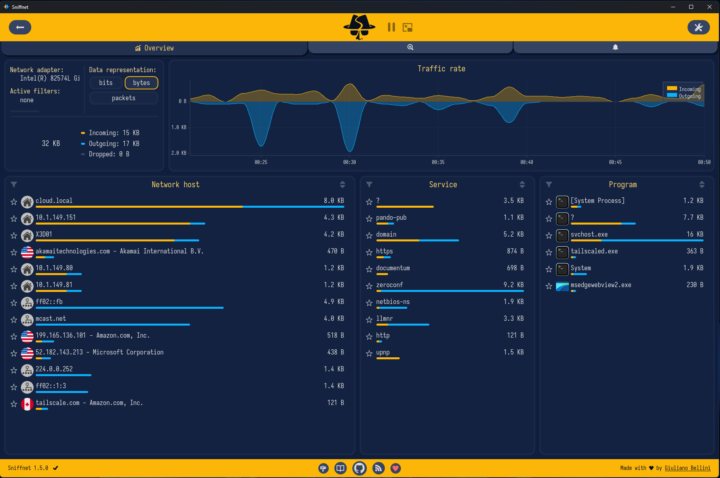
New network monitoring tool called Sniffnet is a great Wireshark alternative
I Still Use Wireshark, but This Is the Network Tool I Open First #wireshark #networking #homelab #sniffnet https://www.virtualizationhowto.com/2026/06/i-still-use-wireshark-but-this-is-the-network-tool-i-open-first/

1 like • 4d
Some anecdotal history of mine from decades ago. As a network engineer, I worked with these tools and those teams. Those were incredible days of inventing the networks of today. ___________________ Network General Corporation (often referred to as Network General) was a pioneering Silicon Valley company in the computer networking industry, best known for its flagship product line, the Sniffer—a hardware/software network packet and protocol analyzer that became the market leader for detailed communications network analysis and troubleshooting in the late 1980s through the 1990s. This directly connects to your prior experience with ProTools, as Network General acquired ProTools (and its Protolyzer technology) around the early-to-mid 1990s, integrating it into their broader ecosystem of diagnostic tools. Company Background and History - Founded: May 13, 1986, in Menlo Park, California (later associated with Mountain View), by Harry Saal and Len Shustek. Saal had previously co-founded Nestar Systems (a personal computer networking company), and the Sniffer's origins trace back to an internal test tool (TART) developed there. - Growth: Started small (2 employees in 1986) but expanded rapidly. By the mid-1990s, it had nearly 1,000 employees, multiple offices worldwide, and was selling ~1,000 Sniffer units per month. It went public in 1989 (NASDAQ: NETG) and raised significant capital through offerings. - Key Milestones: 1986: Introduced the original Sniffer (initially for Token Ring/ARCNET, quickly expanded to Ethernet and others). 1990s: Acquired companies like Progressive Computing (WAN tools) and integrated products like WatchDog (network monitoring). 1997: Acquired by McAfee Associates for ~$1.3 billion, merging to form Network Associates (later McAfee Inc.). Founders Saal and Shustek departed soon after. 2004: Network Associates spun off/sold the Sniffer business to investors (including Saal), reviving a new Network General Corporation. 2007: Acquired by NetScout Systems for ~$205 million. NetScout continued marketing Sniffer products for a time (e.g., Sniffer Global suite) but later divested parts of the handheld/test tool business.
Jan 28 •
Do you think that home labs are going away in 2026 and beyond? Your thoughts?
Are Home Labs Dead in 2026? The Comment That Forced Me to Rethink Everything #homelab #homeserver #ramprices https://www.virtualizationhowto.com/2026/01/are-home-labs-dead-in-2026-the-comment-that-forced-me-to-rethink-everything/
4 likes • Jan 29
No, will not go dead, never really will, but will continue to morph, refine, and evolve to emerging options. Every generation of telecom and computer equipment I ever worked with has gone through this never ending iterative process. When I started my career in the datacomm business a commercial 9,600bps modem weight 55 pounds and had 11 edge cards on a bus. It took a few decades for all that to land into a single chip. Same with servers, same with emergent internet equipment, again, a $50,000 router took up 22 RU in a rack and now costs a few thousand and weighs a pound. Then SDN (Software Defined Network) arrived and started packing all that gigabit data transportation capability into a compact 1U server and it used to take a full rack, or two to do that, and so on. Plus, the network fibers attach directly to the server, now. This process does not stop, but shall continue. GPU + RAM + I/O is everything. RAM pricing is bumping right now because of short term demand and will self level itself in a short time and that does not count innovation - that which produces the long tail of repurposing each generation. The learning curve and the paradigm itself will forever fuel our home adaptations and I like it that way. :-)
Jan 7 •
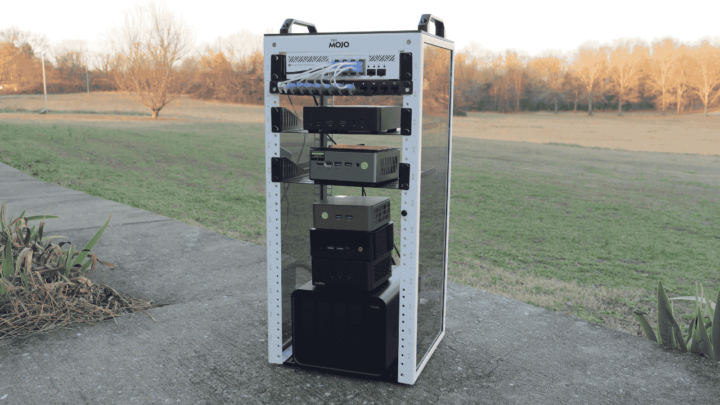
I bought a 10 inch rack for home lab - who is running one too?
I Bought a 10 Inch Home Lab Rack for 2026 and It Surprised Me https://www.virtualizationhowto.com/2026/01/i-bought-a-10-inch-home-lab-rack-for-2026-and-it-surprised-me/
2 likes • Jan 7
I must investigate these pronto. I spent my life installing and provisioning telecom and datacom racks and cabinets of every imaginable floor, wall, and "other" configurations, but once we moved away from the old crossbar systems used by telco COs long ago, the 19" standard has ruled.
1 like • Jan 8
@Brandon Lee Same here. The world I worked in needed all that space and power. Data centers, comm centers, MDF and IDF rooms galore. Fitment solutions for speciality applications, and so much more. The needs of the market are shifting radically in this season and a new adaptation for mounting is needed and it appears that this 10" standard is it. Standard being an operative word here. I will go looking to see where the EIA/TIA standards development process is right now on this.
1-3 of 3

@mike-trayler-7621
Old school Codger. My entire professional life has been invested in designing, building, and operating network enabled infrastructure and systems.
Active 1d ago
Joined Nov 10, 2025
Powered by