Activity
Mon
Wed
Fri
Sun
Aug
Sep
Oct
Nov
Dec
Jan
Feb
Mar
Apr
May
Jun
Jul
What is this?
Less
More
Owned by Mikael
Discover the beauty of the Nordic countries and the tasteful cooking with it's roots close to nature. Recipes, stories and pictures.
Memberships
Basquenese Academy
60 members • Free
CC
Campfire Cooking
8 members • Free
Culinary Skills Club (CSC)
7 members • Free
The Chef Circle
48 members • Free
The Chefs Brigade
47 members • $49/month
The Kitchen Life
13 members • Free
Home Canning With Kelli
4 members • $19/month
5 contributions to The Nordic chef

Nov '25 •
The complete dish.
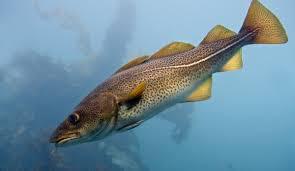
For me a complete dish has to have a lot of different ingredients and with that said I mean something else than most people. Fist I decide what will be my main ingredient. For an example it can be a bit of cod fish. The cod is tasty but mild. Now I know that I can't have to much spiciness. I want things that complement the fish in flavor, texture and taste. Too spicy and the fish will be destroyed. Texture. Want something creamy, another part shall be crispy and ingredients that are chewy/crispy. If everything is the same texture it will be boring to eat. Taste. Here I want all kinds of tastes but there need to be a saltiness, some acidity and if possible umami My dish when ready: Saltmarinated panfried cod / potatoe- & parsnip purée / creamy dill- & crayfish sauce/ lemonsauted carrots & leek / parsnip chips Different textures: Smoothness in both sauce and purée. Crispy carrots. Soft leek. Really crispy parsnip chips. Taste: Saltiness in the fish. Mild but interesting (parsnip) taste in the purée. Mild but nice taste of dill and a hint of acidity in the sauce. Umami from the crayfish stock. Acidity in the carrots and the leek. Saltiness in the chips. This a little hint of how I think when I compose a dish.
0
0
Nov '25 •
Let the ingredient do the talking.
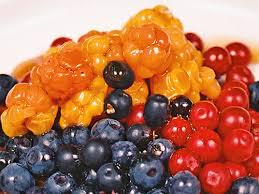
As I have said before Nordic cooking is much about letting the ingredients speak for them self. We try to get as much of taste as we can from every ingredient and combine them into a lovely dish. So if we for example take a mushroom we may dry it, fry it, puree or pickle it for maximum taste. ' Then we can pair it with ingredients that enhances the flavor of the mushroom. Such things can be rosemary, onion, soy sauce or maybe root vegetables that we roast in the oven so that they loose some water and taste even more. Together with a nice sauce and a protein it becomes av tasteful dish. Less is more. My philosophy is to simplify things so therefore I mostly use salt and black pepper. Parsley and dill are the most used herbs but also the mediterranean ones like bay leaves, rosemary, thyme, basil and some more. Other than that juniper, horseradish, pine tree spruces, allspice and a few more are used in traditional Nordic dishes. I see a danger in trying to use many spices. It's difficult to balance many spices if you're not a pro on that. To start with a few and then maybe if necessary add some more and another one can be good to the dish. But mostly I like the clean taste which gives you the chance to know the different parts of the course. Seasonal cooking. For us it's important to maximize the taste and freshness so therefore we choose to use every ingredient when they are in season as long as we can. Cooking seasonal also makes you vary ingredients and cooking in different techniques. You also learn more about the growing part of the food. Picking in nature. We are fortunate to be allowed to pick berries, mushrooms and herbs for free in our nature. Many of us love to go outdoors and breath fresh air, enjoy the wildlife and bring food from the nature. Among berries we pick blueberry, raspberry, cloud berry, lingonberry, black-berry, wild strawberry, cranberry, rowan-berry and some more less common.
0
0
Nov '25 •
Living in the Nordic countries.
We are fortunate to live in a part of the world where it hasn't been war fr a long time. We haven't had large environmental disasters or other horrible things that unfortunately happens in parts of the world. Where ever you live there is lots of nature around the corner. We are only less than 30 million people divided into five countries (and Greenland). Apart from the big cities and parts of Denmark we are sparsely populated and there is lots and lots of nature to explore and enjoy. We are well off and have a high material standard compared to many parts of the world. The welfare system is solidary and makes us secure even if we get ill or lose our jobs. School is free and healthcare is very, very subsidized which makes us good educated and healthy. Our work is important to us. We are ambitious, loyal and want to be the best at our jobs. Finland has the worlds happiest people in the world for eight years in a row and the other Nordic countries are also top ranked in surveys. As people we might be little more reserved than others but when you learn to know us you have a friend for life. Perhaps the nature around us has shaped us into quiet, thoughtful and somewhat reserved people. We are curious, early adapters keen on learning and embracing new things. Get a nordic friend and learn us about your self and get to know us!
0
0
Nov '25 •
What is Nordic cooking about?
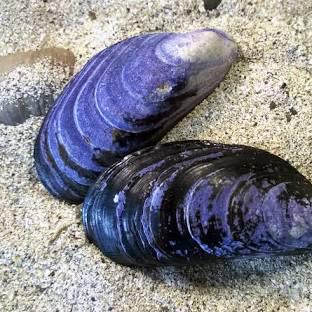
It's quite easy to answer what Nordic cooking is because the roots are our nature and what it brings us. We cook what we can hunt, pick in the forests, catch in the seas or harvest in our fields. Our climate gives us less harvest than in other places but it makes what ever grows here taste more and very intense. The berries and mushrooms are the best inte world! Even fish and shellfish is of the highest quality possible because of the cold water. We have a lot of game, moose, rain deer, deer and wild birds that are popular for hunters. We grow lots of root vegetables which likes our climate and gives us vegetables all around the year. The nordic food is very much about our four seasons, Winter, spring, summer and fall. We try to live in harmony with nature and use what ever ingredients and food is in season. We don't season our food particularly much more than with salt and pepper. But there is some spices that are commonly used. That's is such as dill, allspice, horseradish, cumin, white vinegar , sugar We do pickle, dry, smoke, preserve and ferment as traditional ways to preserve food. But it's also a way to get unique taste to our delicious ingredients. Most famous might be the pickled herring that is commonly served in all the Nordic countries but with each countries own touch. Dried meat is common in the northern parts meanwhile smoked meat and fish is all over the Nordics. Then there is variations of fermented fish but they aren't appreciated by everybody. The Nordic cooking can be explained as clean, simple and sustainable.
0
0
Nov '25 •
The nordic chef.
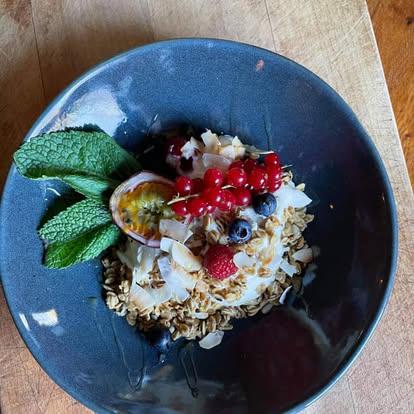
I want to inspire people who are curious about the Nordic countries. On my Skool page you will get to know more about how we live and what we eat. All the nordic countries Sweden, Denmark, Norway, Finland and Iceland have lots of beautiful nature that is available för everyone. You are allowed to pick berries, mushrooms and to travel in nature as long as you do it with care and respect of nature. My ambition here is to let you know a bit of Nordic cooking since I am a chef. My cooking can seem to be extremely easy because I use just a few ingredients in my dishes. That's how I like to cook. Less ingredients gives more authentic taste. Everything tastes from what it is and we have fantastic ingredients så there's no need to cover in to much spices. I would love to answer your questions and to learn from your experiences. Together I think that we can improve our cooking skills and learn more about Nordic cooking. Soon I'm going to post recipes!
0
0
1-5 of 5
@mikael-jokinen-4766
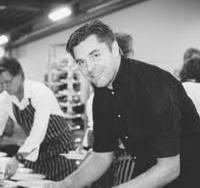
Swedish chef with roots from Finland living and working in Norway wanting to share the fantastic Scandinavian cooking. Loves the Nordic nature!
Active 215d ago
Joined Nov 12, 2025
Sweden and Norway