Activity
Mon
Wed
Fri
Sun
Aug
Sep
Oct
Nov
Dec
Jan
Feb
Mar
Apr
May
Jun
Jul
What is this?
Less
More
Owned by Mercedes
Yoga, Breathwork & Somatic practices. Use science & spirituality to release stress & tension and connect with your higher self
For women building wealth on their own terms. No bro-finance, no fluffy manifestation. Just doing the work, together.
Memberships
Skoolkit
47 members • $2/month
Rapid Emotional Mastery
20 members • Free
Yoga Lifestyle Community
206 members • Free
The Shift Academy
461 members • $997/year
The Success Club
13.8k members • Free
Manifestation Mastery
259 members • $15/month
Grow With Evelyn
3.5k members • $7/month
Focused Founders™
615 members • Free
Cozy Astro HQ
133 members • $7/month
126 contributions to High Vibe Tribe

🔥
Sep '25 •
Showing up When Your Energy is Low
Today I woke up tired, full of cold, and honestly just wanting to curl up and rest. No makeup, no energy, no polish. In the past, that would have meant one of two extremes: 👉 Collapse completely, disappear into rest, and then struggle for weeks to rebuild momentum. 👉 Or push myself so hard through the exhaustion that I’d crash later anyway. Both paths led to the same place: collapse. But lately I’ve been practicing something different, and it feels like a huge shift. Instead of forcing or disappearing, I’ve been choosing the middle ground. Today that looked like softer tasks: journaling, light admin, responding gently to comments in my community. And then resting in between. It also looked like showing up authentically, tired voice, blocked nose, no makeup, but still showing up. This is what nervous system regulation looks like in daily life. It’s not about being perfect. It’s not about powering through. It’s about listening to your body, recognising your state, and finding a way to show up that feels safe and sustainable. And honestly? It feels so much more spacious. Because instead of my body being in fight-or-flight, I can stay regulated even in low energy. That’s the big difference for me: 🌱 Rest is no longer the enemy. 🌱 Work is no longer something I have to perform. 🌱 Both can co-exist in a gentler rhythm. So here’s my reflection for you - How do you show up when your energy is low? Do you collapse, push, or find the middle ground? Because if there’s one thing I’ve learned, it’s that you don’t need to be at 100% to be authentic, impactful, or enough.
🔥
0 likes • Sep '25
@Daniel Mc coy hello and welcome
🔥
1 like • Mar 3
@Laura Hansen thank you, that is really kind of you to say x
🔥
Mar 2 •
Is it Safety or Confidence?
I want to ask you something. When you’re about to walk into a room, join a call, or show up somewhere that feels a bit intimidating, what happens in your body? Do you start to shrink? Go quiet? Decide in advance what you will and will not say before you’ve even arrived? That’s not a confidence problem. It’s your nervous system trying to keep you safe. I’m sharing this because I’ve noticed it in myself recently. In the past I’ve been quite confident getting involved in things. But lately, showing up to group calls and coaching spaces has made me anxious. I catch myself thinking everyone else knows more than me, that I might look stupid, that someone might call on me and I won’t want to speak. Part of that is being neurodivergent, and I know that. But I also found myself thinking, “I just need more confidence.” The strange thing is, I am a confident person. So I felt confused by it. When I looked at it through a nervous system lens, it started to make sense. I work with a lot of smart, capable, experienced people who still freeze in moments like this. So I’m not talking about this from a place of having it all sorted. I’m working through it too. Here’s what’s actually happening. Before you even enter that room or join that call, your nervous system is doing a social threat check. It is asking, “Is this safe?” If it decides there is a risk, even a small one, you get a spike of fight or flight. You might not fully shut down, but you feel wired. You can’t relax. You don’t feel open or connected. This is biological. It is not personal. Your nervous system is designed to protect you. A long time ago, entering a new social group could mean exclusion. Exclusion could mean real danger. So your system learned to treat unfamiliar social spaces as high stakes. The problem is not that you have anxiety. The problem is that your system has outdated information. The worst case now is usually just feeling awkward. But your body reacts as if it is life or death. I’ve noticed this more as I’ve tried to step into bigger rooms. I’m pushing myself a little. My nervous system does not love that. It senses change and thinks, “This is risky. Let’s protect you.”

🔥
0 likes • Mar 3
@Lee Simmons That is such an amazing story and yes, when we don't have a choice, it is amazing what we can pull off
🔥
Dec '25 •
Have you ever noticed how hard you are on yourself...
And how exhausted you feel afterwards? That constant inner voice telling you to do better, try harder, be different. I’ve spent years thinking that voice was motivation. That it was discipline. That it was what kept me going. What I’ve learned is that it does the opposite. Self-criticism isn’t just a mindset thing. It does something very real to your nervous system. When I’m harsh with myself, my body doesn’t hear “do better.” It hears I’m not safe as I am. And that keeps me tense. On edge. Unable to rest properly. Even when I stop working, my body doesn’t switch off. I see this pattern everywhere in my life. With work. With parenting. With my weight. With rest. I push myself to do more. Then judge myself for not doing enough. Then judge myself for resting “wrong.” Then wonder why I still feel tired. What finally shifted things for me wasn’t more effort. It was more safety. I realised that my nervous system doesn’t respond to pressure. It responds to tone. Self-criticism keeps the body in stress. Self-compassion doesn’t make you lazy, it makes regulation possible. And regulation is what allows change to happen. One small thing that helps me when I catch myself spiralling is this: Hand on my chest. Slow breath in. Long breath out. And quietly saying: “I’m allowed to be human.” I’m not trying to fix my thoughts. I’m just changing the message my body is receiving. Because growth doesn’t happen from being harsher. It happens when we feel safe enough to soften. Notice how you speak to yourself today. Does your body tense or settle? A reflection for you: If I spoke to myself the way I speak to someone I love, what might change?
🔥
1 like • Mar 2
@Mike Antenor Yes, I love this
🔥
0 likes • Mar 2
@Andrew Brooks this is great. I love being clear of things like that, I can have the odd coffee now but don't rely on it which I think is the key
🔥
Feb 17 •
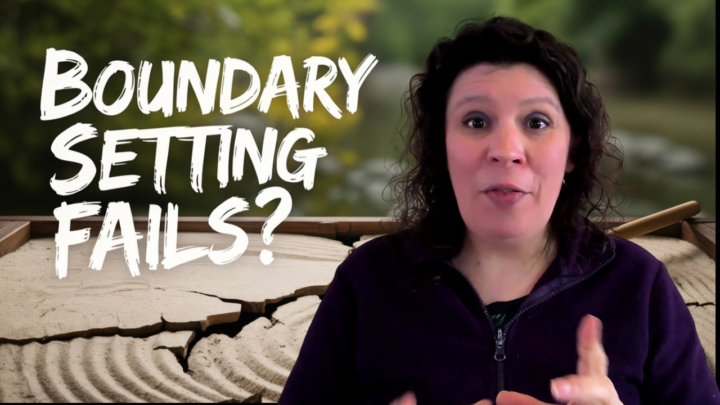
Setting a boundary takes more than saying it out loud
I want to tell you about something that happened this morning, because it's too relevant not to share. I sat down to meditate. Looked my son in the eye. Said: "I'm doing my meditation now." He nodded. And then he shouted through the entire thing. By the end I'd lost my temper with him. And the part that really got me wasn't the interrupted meditation. It was that I know better. I understand this stuff. And I still exploded. Here's why. I didn't set a boundary. I announced one. And those are two completely different things. Announcing: "I'm doing my meditation now." Setting: "I'm meditating for 10 minutes. I don't want to be interrupted unless it's urgent. If you interrupt me, here's what happens." One is a statement. The other is a full picture with a duration, a clear ask, and a real consequence. I gave my son none of that. I gave him five words and expected him to fill in the rest. He's five, with autism. Five words meant almost nothing to him. And I knew that. And I still got angry when he didn't magically understand. That's on me. We stop at the announcement because setting a real boundary takes energy. You have to think it through. Decide the consequence in advance. Have enough in the tank to follow through. On a depleted day, that feels like too much. So we shortcut it, announce instead of set, and then feel confused when nothing changes. There's also the older stuff underneath. For most of my life I've carried this quiet belief that my needs matter less than other people's. That holding a firm boundary is selfish. That asking for what I need, with clear consequences, makes me difficult. So I've been softening my edges before I even open my mouth. This morning I watched the whole pattern in about twelve minutes flat. I said I was meditating. He interrupted. "Just wait." He interrupted again. "Just wait." Again. Again. Snap. The guilt came immediately. And I zeroed in on losing my temper. That became the whole story. Not: the boundary was never really set. Not: he didn't know what was expected.
🔥
1 like • Feb 18
@Lee Simmons thank you and yes, it needs continual work
🔥
Feb 12 •
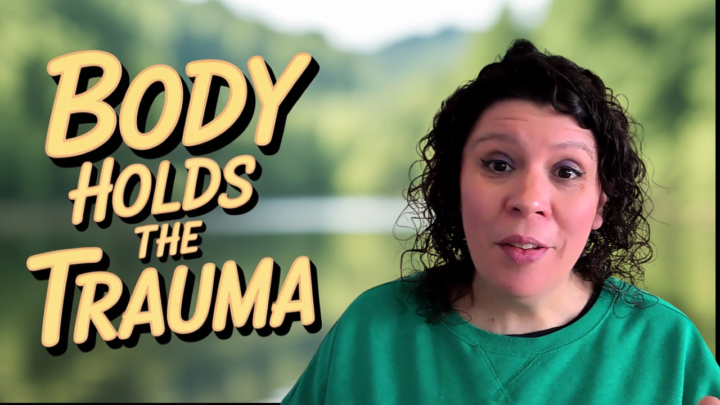
Trauma Doesn't Live in Your Thoughts
You've read all the books. You've done the therapy. You can explain exactly why you're anxious, why you have trust issues, why you shut down in conflict. And yet you still wake up at 3am with your heart racing. You still feel that tightness in your chest when someone raises their voice. You still can't relax even when you're safe. The reason for this is that trauma doesn't live in your thoughts. It lives in your body. I've lived through this myself. I destroyed all my dad's letters when I was 16. Didn't think about it for years. Thought I was fine. Then something triggered it when I was older and suddenly I was feeling it all over again, not thinking about it, feeling it in my body. We've been sold this idea that insight equals healing. That once we understand what's going on, it'll just dissolve. And yes, talking therapy can be incredible. But it's not the whole picture. Your body is literally holding onto things you thought you'd processed. And no amount of understanding will shift what's stored in your nervous system. I've done a lot of trauma release work over the years, TRE, yoga, all sorts. What I've learned is that you have to work gradually. Think of it like a tap. If you turn it on full blast, you flood yourself with trauma and end up retraumatizing yourself. But if you release it bit by bit, drip by drip, your body can actually process and let go. For me, I held so much in my inner thighs and hips. Years of yoga practice slowly opened those areas, and I had actual emotional releases on the mat. Emotions I didn't even know I was carrying. Your body is telling you all the time what's going on. Those tight spots? They're holding onto something. And it's our responsibility to acknowledge that and give it space to release. If you've been trying to think your way out of trauma, if you've read all the books and done all the therapy and you still feel like you're sitting on it, this is your sign to come back to your body and try something different. The journey of releasing trauma is ongoing. More layers keep coming up. But when I look back at what I've actually cleared? It's massive. And the more we learn to process trauma through our bodies, the easier it gets.
🔥
0 likes • Feb 14
@Marcella Fields it does and it will release over time
🔥
0 likes • Feb 14
@Madalina Sticlan that can be a tough place to shift it, how are you finding moving it through
1-10 of 126

🔥
@mercedes
🧘♀️Somatic healer, 🪷 Buddhist 👩👦Single mum, 🤯Late diagnosed ADHD. 🪴RHS Trained Gardener, 💖 lover of Skool
Active 3h ago
Joined Jul 17, 2024
INFP
Dover
Powered by