Activity
Mon
Wed
Fri
Sun
Aug
Sep
Oct
Nov
Dec
Jan
Feb
Mar
Apr
May
Jun
Jul
What is this?
Less
More
Owned by Melvinia
Not perfect. Just real. A cozy space for women to share, grow, and navigate life together—messy moments included. Let's rise above the Ashes
Memberships
💖 Love Yourself to Health 💖
104 members • Free
The Language Portal
137 members • Free
Sacred Circle
36 members • Free
🌎Our Peaceful Liberation✌🏽
61 members • Free
The School of Herbs & Remedies
18 members • Free
Skoolers
162.8k members • Free
Crystal Appreciation Society
160 members • Free
Art & Alchemy
56 members • Free
Soul Art Journey
136 members • Free
16 contributions to The Language Portal

7d •
🙌 🌟 🎉Happy Birthday Zor!! Portal Pals, let's flood the field!
A sweet little birdie (aka @Rebecca B) told me that July 17th is @Zor Zen Den is celebrating his birthday and as Rebecca wrote ... it's the 17th already in some parts of the world. Time to flood the field with love, appreciation, and gratitude for our friend, mentor, and Master Signal Operator, Zor. Zor, we're starting early and want to be the first to wish you an incredible day. Your signal is strong and I absolutely love you for your guidance, generosity, and gifts you share with all of us. Portal Pals, your assignment if you wish to accept it is to drop one TRUE SENTENCE about Zor in the comments.

4 likes • 7d
[attachment]

🔥
18d •
Writing myself into the mythology...using ChatGPT
"Generate the concept of Aevoria in a Sci-Fi sense of universal peace": Aevoria is not merely a place, but a field of consciousness—a way of being that people can enter individually and together. Aevoria: The Living Field of Peace Aevoria is the unseen realm where every act of compassion, truth, forgiveness, courage, creativity, and love continues to exist. It is not somewhere else; it is woven through reality, waiting to be recognized. Whenever someone chooses understanding over domination, curiosity over certainty, or reconciliation over revenge, they strengthen Aevoria. In this vision, Aevoria isn't the absence of conflict. It is the capacity to move through conflict without losing one's humanity. The Great Story The mythology might begin with the idea that humanity forgot Aevoria. People came to believe they were separate—from one another, from nature, and from the sacred. That forgetting gave rise to fear, scarcity, and cycles of violence. The role of the "Goddess of Peace" would not be to defeat enemies, but to remind people of what they have forgotten. Her power would be remembrance rather than conquest. Why Story Matters If stories shape identity, then changing the stories people live by changes the possibilities they can imagine. In this mythology, every person is the protagonist of an unfinished story. Aevoria is what becomes possible when enough people rewrite their stories around dignity, mutual respect, and shared flourishing instead of domination or victimhood. Peace becomes an emergent property of millions of transformed narratives rather than something imposed from above. The Three Gates of Aevoria People might enter Aevoria through three symbolic gates: - Truth — seeing oneself honestly without self-deception. - Compassion — recognizing the humanity of others, even amid disagreement. - Creation — contributing something that leaves the world more beautiful, just, or alive. Passing through these gates would not make anyone perfect; it would orient them toward continual growth.
2 likes • 18d
There is so much our there to learn. I thought I was doing good to learn about the Pleroma, and now here is the Aevoria. We will never learn it all. 🙃 It's still fun learning though.
2 likes • 18d
@Pamela Lynch We can never know everything. It's nice to be around those that love to learn and step out of their comfort zone
24d •
July invites us into momentum, but not by doing more.
Before you press play... Take two minutes with a pen and complete this sentence: "The area of my life that feels most out of alignment right now is..." No overthinking or editing, just write until you feel complete. 🎥 Then watch Kristen Valus' monthly forecast. 🎥 When you return, share one sentence from what you wrote that you're willing to let us witness. I'm looking forward to reading what emerges.
0 likes • 20d
This is a good question but my problem is I'll have an answer, but then I'll start analyzing it like, but is it really out of alignment, or am I right where I'm supposed to be, having exactly what I need to have at this very moment. 🤦🏾♀️ Yes I'm THAT overthinker
26d •
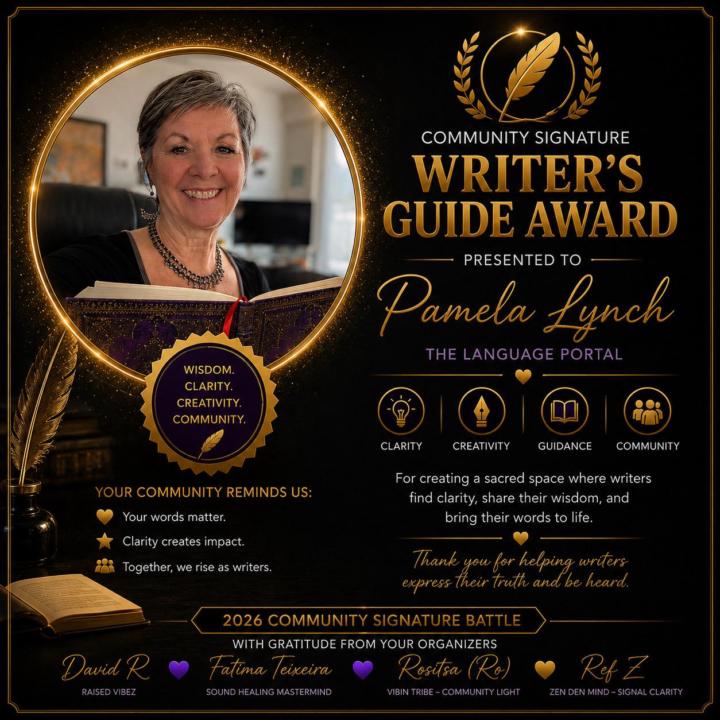
Community Signature Awards Live
What a wonderful celebration. Congratulations to everyone who participated: the creators, community members, and commenters. This is an incredible opportunity to connect and share our appreciation for other communities. I am grateful to each of you! And a huge thank you to the Community Signature Leaders @David R, @Fatima Teixeira, @Zor Zen Den, and @Rositsa Aleksandrova for their thoughtful and beautiful awards that they gave to each of the participants. A special shout out to @Val Vosburg who won two of the top prizes! So amazing.
2 likes • 21d
Congratulations to you all for your hard work. Very deserving🥰🙏🏾
24d •
💜 Heaven on Earth 🌎
Double rainbows graced our skies twice this weekend. I believe Heaven is a place on Earth. It lives in our heart. In our bones. And is alive in our communities, connections, and our devotion to each other. This video doesn't capture the brightness of these double rainbows ... But I wanted to share how much I appreciate you and how much light is shining through this community and others we value. 🎶 They say in heaven love comes first. 🎶 .

2 likes • 21d
I love rainbows but double ring, they are something to really admire.
1-10 of 16
@melvinia-ford-6037
CBT Specialist. Reiki, Touch & Breath Healing. U Of Metaphysics doctoral student. Holistic Life Coach, Counselor & Minister for Women's Outreach
Active 14h ago
Joined May 26, 2026
Hermitage TN