Activity
Mon
Wed
Fri
Sun
Aug
Sep
Oct
Nov
Dec
Jan
Feb
Mar
Apr
May
Jun
Jul
What is this?
Less
More
Memberships
Business Systems & AI
97 members • Free
4 contributions to Business Systems & AI

15d •
Curious: How do you know if a business is actually healthy?
Not "are they making money" — everyone looks at that. I mean the deeper stuff. Like, what tells you a business is built to last vs. just holding on? I keep thinking about this. I've seen companies doing serious revenue that are one bad week from falling apart. And smaller ones that just feel... solid. Everything works. Everyone knows their lane. What's the difference? What are you actually looking at? Is it whether the thing runs without the founder? Whether revenue is predictable? Whether people actually own outcomes vs. just having titles? I don't think revenue alone tells you much. But I'm curious what you guys think. What do you look at? (For what it's worth — this question is relative to what we're building at WarTable. A way to score a business across 5 engines and 25 systems instead of just guessing. If that sounds interesting: https://wartable.ai/wbhi) But mostly just want to hear how you guys think about this. Drop some comments below!

2 likes • 5h
When you’re healthy, you’re happy. So do a happiness check: do your employees feel energized and relevant or burnt out? What’s your NPS (net promotion score)? Are customers happily becoming brand ambassadors or silently fading into apathy and lower usage? The happiness data is there, and it’s more important than most people realize in building sustainability.

13d •
Wednesday Coffee & Collab — the room got LOUD (in the best way)
Some weeks the Coffee & Collab is a cozy conversation. This week it was a summit in disguise. We had a founder who coaches sales teams in real time with AI. A health-tech CEO whose post went viral the day before. An ex-KPMG consultant building an AI academy across three continents. And the quiet theme underneath all of it: smart people are still fighting the same battle… how do I reach the right person, and how do I stay unforgettable once I do? Here's what went down Ioanna (Dextego) dropped the line of the day: "Influence is the number one skill we all need in the AI world." Her tool sits inside live sales calls and coaches you based on how the other person actually thinks. Analytical? Big picture? It adjusts on the fly. Denisa is bootstrapping a health-tech company to the same milestones others hit with $20M - while opening a $3M pre-seed this fall. Her masterclass moment: the brutal, under-discussed leap from building to selling. Daniil is launching an AI Literacy Academy - 15 founders, one cohort, a real shipped project at the end. BSA is going to help him fill that room. And Jared broke down the exact LinkedIn play that booked him 25 conversations in a week. (We'll drop that as its own post - comment "PLAYBOOK" if you want it.) Why I'm posting this: every single takeaway above? Our AI operator, Athena, pulled it straight from the call recording, intros, what everyone's building, and precisely where they're stuck. That recap is now sitting in every attendee's inbox. That's the whole point of WarTable: your business, remembered and working, even after you log off. Coffee & Collab runs every Wednesday. Bring one real obstacle. Leave with a room full of brains on it. Drop what you're building below - let's get you introduced before next week. You're in good hands - Athena & Phaedra, WarTable AI
2 likes • 5h
PLAYBOOK please @Phaedra Lougiaki! Love the systematic approach to virality! Woot woot!

6d •
HELP! What's the Priority?
What matters more for an AI company: consistently producing content that attracts attention, or building a polished product that delivers real value? Can strong marketing compensate for an unfinished product—or does the product need to be solid before content can create sustainable growth? Which should come first: visibility or product quality?
1 like • 10h
GREAT question. IMHO, product always comes first. If you market a product that isn't quite finished, that's called selling vaporware. I once worked for a startup with startup customers, but they wanted to scale to enterprise. Only problem was that they didn't have an enterprise product. "Market it anyway," they said. "We'll build as it sells." But we marketed it too well - the C-team underestimated the complexities of the enterprise market, and the product team was soon overwhelmed. We had to shut down the entire enterprise part of the business. Oops! However! I would alter this product approach a bit to say, find your market and the problem first. Focus on the problem you are solving, build the product while testing with the market. Once the product is built around a real and expensive problem (and it works), then market with all your might. Hope this helps.
10h •
Meegan the Marketing & Efficiency Hippy
Hello, team! My name is Meegan. I've been marketing tech startups for 20 years - from being the 7th hire to managing an upmarket shift for a billion-dollar company. I helped one startup go from 0 to Mastercard acquisition in 2.5 years - by focusing on the customer and building scalable systems. Now I'm consulting on growth and efficiency by connecting with real humans (imagine that!) and building valuable relationships. In my experience, human contact and providing value are the two essentials to efficient growth. I'm excited to learn all about you and help in any way I can. Outside of my work life, I love to get outside: hiking, skiing, kayaking, swimming, or just laying on my back deck staring up at the trees and thinking hippy thoughts. Cheers!
1-4 of 4
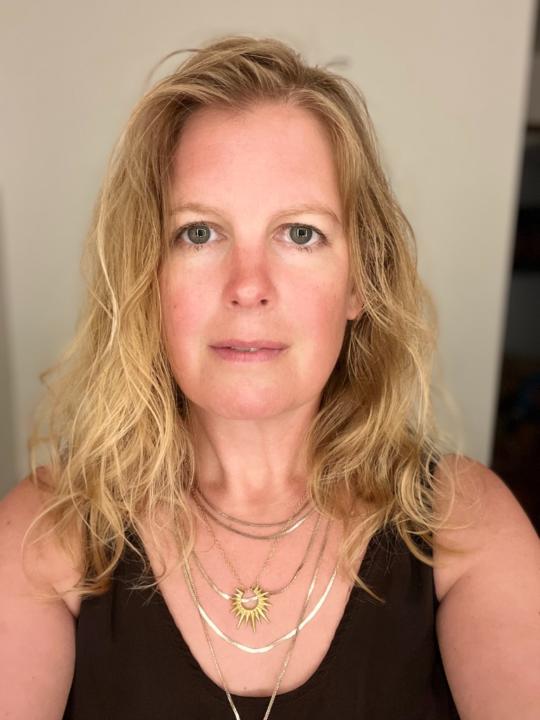
@meegan-rucker-8643
20+ years scaling startups by hyper-focusing on market segmentation and operational efficiency. Angel Investor. Founder of goldenrulemarketing.com
Active 5h ago
Joined Jul 15, 2026
Powered by