Activity
Mon
Wed
Fri
Sun
Sep
Oct
Nov
Dec
Jan
Feb
Mar
Apr
May
Jun
Jul
Aug
What is this?
Less
More
Kenjutsu Online
147 members • Free
20 contributions to Kenjutsu Online

9d •
Where are you with your training right now?
Hi everybody, I just created this poll to get a better idea of where you are at with your training right now. If you're already a distance student, there's no need to answer since this poll is for members who arend distance students yet. Also, there's no wrong answer, I'm just curious to learn where you're at so I know where to direct my time.
Poll
7 members have voted

3 likes • 2d
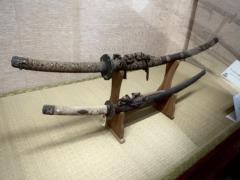
I've flown recently with botanto and wak in checked luggage. Have not tried carry on.
3d •
Training space
A fun question for everyone; what is your training space? Is it somewhere separate from where you live? Is it the dojo itself or whenever the mood strikes you wherever you happen to be? What are some interesting places you’ve trained or places you make a point to train at? For me, I travel quite a bit for work these days so usually the type of hotel I find myself in will dictate what I focus on and whether or not I can tune in on class. When I’m home I usually clear a large space in the living room when the house hasn’t woken up yet and for interesting places, I’ve enjoyed finding a quiet spot or two in the mountains after work occasionally. Sometimes changing things up is a gift in and of itself. I think, for me at least, the objects we dedicate ourselves to signal the spirit of training. For example, the bokken/shinken is here, so here I may begin.
1 like • 2d
@Wayne Nadler I recently changed to some smart light bulbs just for fun and my wife noticed immediately. I thought I had the settings pretty close, guess not close enough! Lol
2 likes • 2d
At home, I'm usually doing suburi and rokudangiri in my living room because of the high ceilings. Everything else is wherever I'm at when the inspiration hits.
Jul 12 •
Be unbothered.
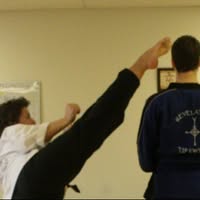
In class today we were working on displacing our training partner. I was doing ok but pointed out to the instructor I really struggle with larger stronger partners. I am older than everyone in class, including the instructor and not really an athlete. Rather than my instructor telling me to do something differently he said be unbothered. Don't think about how big or strong the other person is, just move like we are supposed to and it will work. If I add more I get in my own way. Definitely something for me to work on. I am sharing this in hopes it will help you all in your training. 🙂
1 like • Jul 18
I know I'm super late to this party, but I just had a similar instance today. We were working on iai and I misjudged the timing, and so felt rushed to catch up by engaging muscles to try and speed up. I know this is not our way, so I relaxed, focused on moving my body and not worry about what the opponent was doing. Things suddenly work well. I'm no longer surprised it works, but I am still slightly surprised by how easy it becomes and how little I need to do. I know when we run into a lot of mass or strength, the reaction is to engage muscles to overcome or at least attempt to balance out the forces. This is where letting it go comes into practice, in a lot of ways. Be unbothered....I like that. Imma steal it. 😁
Jun 25 •
Class this evening?
On zoom tonight it tells me the host is in “focus mode”. Figure the zoom isn’t up and running for tonight’s lesson.
0 likes • Jul 6
We've since switched back to just using the class phone for all classes. Everything should be up and running now.

Jun 25 •
Williams Designs
I’m finding it very difficult to find CKRT blades designed by James Williams sensei in Canada as they have been discontinued. I already have several and the design is exceptional. I’m looking for the Hissatu 4.5 folder. Has anyone seen these at a reputable dealer? I found what looked like a legitimate online dealer and then realized that they had “everything” at steep (too good to be true” discounts) and ran the site through fraud detection- it seems to have been a fraud from the ground up. I acquired one item through Alibaba and it actually arrived- but it turned out to be a replica. The handle was a giveaway and blade imprints of Kanji characters were missing.. I’m concerned the metal may be Crap-ite and will fail.
2 likes • Jul 6
Occasionally knifecenter.com will have some of the older models in stock. And they have some great sales from time to time as well. I picked up a pair of yukanto, and a couple of goken there.
1-10 of 20

Active 19h ago
Joined Sep 10, 2025
Powered by