Activity
Mon
Wed
Fri
Sun
Jun
Jul
Aug
Sep
Oct
Nov
Dec
Jan
Feb
Mar
Apr
May
What is this?
Less
More
Memberships
Automatable Free
10.8k members • Free
Automation Vault
131 members • Free
Ai Automation Vault
15.2k members • Free
Online Business Friends
92.5k members • Free
Creator Profits
19k members • Free
The AI Advantage
122.5k members • Free
Lead Gen Secrets 🤫
23.1k members • Free
AI Money Lab
73.3k members • Free
Hamza's Automation Incubator™
46.7k members • Free
9 contributions to AI Money Lab

Feb 13 •
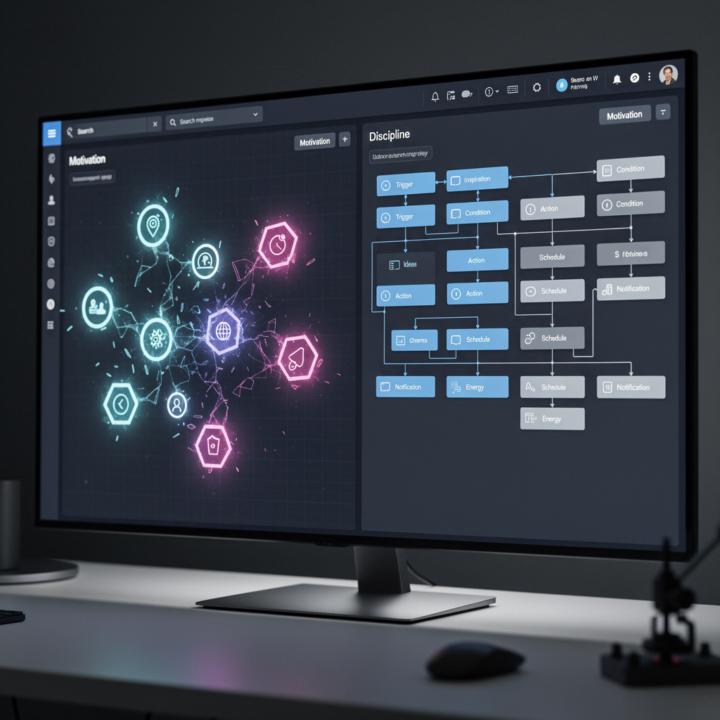
Discipline vs Motivation in Automation
Motivation gets you started in automation. New tools. New ideas. Big possibilities. Discipline is what builds working systems. Motivation connects tools. Discipline defines triggers, tests logic, fixes errors, and documents flows. Motivation feels powerful. Discipline creates reliability. Automation doesn’t reward excitement — it rewards consistency. Clear structure. Iteration. Refinement. If you rely only on motivation, you’ll keep rebuilding. If you build with discipline, your systems compound. When working on automation, do you depend more on motivation or discipline — and what has that produced in your results?
1 like • Feb 14
@Kenneth Anthony 🤝
1 like • Feb 23
@Julian Goldie it has hep me build good workflows with less or no mistakes
Feb 11 •
Automation That Feels Smart — But Delivers No Results
Some automation looks advanced — multiple tools, AI layers, complex logic. But complexity isn’t impact. If a workflow doesn’t reduce friction, increase speed, improve decisions, or directly affect revenue or output, it’s not leverage — it’s noise. Real automation only needs three things: a clear trigger, a necessary decision, and a meaningful outcome. If you can remove the workflow and nothing important changes, it wasn’t infrastructure. Before adding another layer, ask: Is this improving results — or just making the system look smart? Feedback: Have you ever simplified an automation and seen better results afterward? What changed?
2
0


Jan 25 •
Beginner Traps
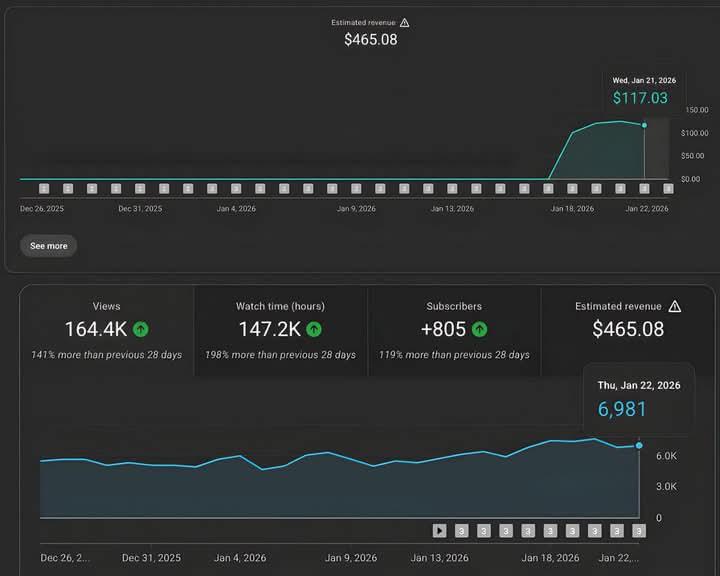
Beginner Traps 1️⃣ Switching niches 2️⃣ Over-editing 3️⃣ Buying tools early 4️⃣ Expecting fast money 5️⃣ Ignoring data 6️⃣ Uploading randomly 7️⃣ Copying blindly 8️⃣ Overthinking 9️⃣ Quitting early 🔟 Starting late
3 likes • Jan 26
i agree thats why alot of people learn but afew understand
3 likes • Jan 26
@Samuel Thomson learn, help, interact
Jan 26 •
Why Some Tools Feel Overrated — and Others Quietly Compound
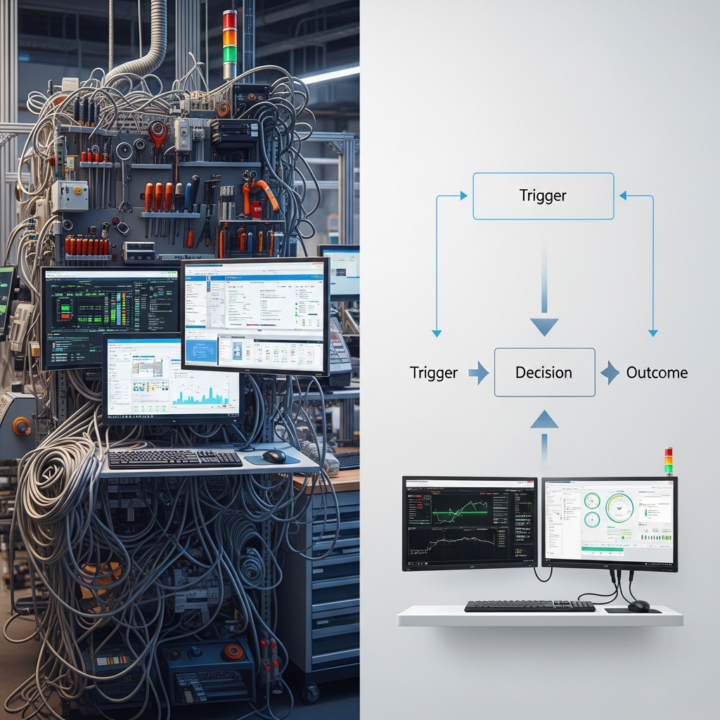
In automation, tools don’t become overrated because they’re bad. They become overrated when they’re used without context. Some platforms get a lot of attention because they promise speed, power, or scale. Others stay under the radar because they focus on fundamentals and don’t feel impressive at first glance. The difference isn’t capability — it’s alignment. A tool feels overrated when it’s applied before the problem is understood. An underrated tool is often one that forces clarity: clear triggers, explicit decisions, and predictable outcomes. These tools may feel limited early on, but they build better habits. For someone starting out, the goal isn’t to find the most powerful tool — it’s to learn how work actually flows. One tool that teaches structure will outperform five tools that encourage complexity. Once the thinking is solid, tools naturally rotate. What felt basic becomes reliable. What felt powerful becomes situational. In automation, leverage doesn’t come from choosing the “best” tool. It comes from choosing the tool that sharpens your understanding of systems. Starting now, I’m curious — which tool taught you the most about how systems actually work, and why?
Jan 20 •
The Cost of Premature Automation
Premature automation doesn’t usually fail loudly — it fails quietly. It shows up as workflows built around assumptions that were never tested, logic that no longer matches reality, and systems that are hard to change because no one fully understands them. Automating too early often locks in decisions before a process has earned its shape. Instead of creating leverage, it creates maintenance work and hidden friction. A better approach is to let a process run manually long enough to reveal its patterns. Once the trigger, decision points, and outcome are clear, automation becomes obvious — and far more durable. Automation delivers the most value when it follows clarity, not curiosity. When do you usually know a process is ready to be automated?

1 like • Jan 24
@Azlan Shah dm
1 like • Jan 26
@Citronella aka Centra Lambert welcome
1-9 of 9

Active 17d ago
Joined Dec 1, 2025
Powered by