Activity
Mon
Wed
Fri
Sun
Jul
Aug
Sep
Oct
Nov
Dec
Jan
Feb
Mar
Apr
May
Jun
What is this?
Less
More
Memberships
Amigoscode
1.7k members • Free
MyFirstHack | Cybersecurity
91.9k members • Free
Software Developer Academy
26.4k members • Free
University of Code
5.4k members • Free
Data Alchemy
37.6k members • Free
Story Hacker STARTER
7.6k members • $7
4D Copywriting Community
64.2k members • Free
Expert Coach Certification
22.5k members • Free
Dev Mastery Roadmap
3.4k members • $7
313 contributions to University of Code

Apr 1 •
The Rise of the Black Box Developer: Evolution or Illusion?
Hey Papfam, Let’s talk about what’s really happening in our editors right now especially in this new era of Opus 4.6 and Codex. You’re building something complex maybe a real-time comment system or a deep auth flow. You get stuck. You prompt your AI. And just like that boom. 200 lines of clean, confident TypeScript. Structured. Typed. Production ready. You paste it. It works. You ship it. Then someone asks: Why is that hook structured that way? What happens if that cache invalidation fails? And suddenly: Em… let me check. --- Welcome to the Age of the Black Box Developer We’ve entered a new phase of development. Not just AI-assisted coding but AI-driven building. Models like Opus 4.6 are designed for deep reasoning and understanding entire systems, while tools like Codex are optimized to execute and ship code fast. Together, they’ve changed the game. You no longer need to struggle through every abstraction. You can generate architecture. You can delegate implementation. You can ship faster But here’s the problem: You can now build systems you don’t understand. --- This Isn’t Just About Speed It’s About Ownership Let’s be honest. We’re not just coding faster we’re thinking less about the code itself. And that creates a new kind of developer: > Someone who can ship features at 10x speed… > but can’t explain 40% of what they shipped. That’s the Black Box Developer. And in the Opus + Codex era, it’s becoming normal. --- Why This Becomes Dangerous AI today isn’t just autocomplete it’s a collaborator. But it has a split personality: According to researchers Opus thinks deeply but may overcomplicate or abstract Codex executes quickly but may skip deeper reasoning If you blindly trust both, you inherit their blind spots. That leads to three real problems: Debugging becomes impossible You don’t know the system you only know the outcome. Architecture becomes accidental Your app works, but no one truly designed it. You lose technical authority


2 likes • Apr 1
I miss those day i would test my brain and write they whole Regx for validating mac address, those where the days - codebase clean, no crazy logic you cant understand but yeah let face it, production was on a different level with this era, i feel we had opportunities for every skills we learned and now everyone is cooked and no opportunity, the only thing left for us all is founder mode - if you cant ship nowadays you will never ship. All you need is $20 and you will put your idea online its best time to live in! tho scarly
1 like • Apr 3
@Raymond Adeniyi Lets continue we got this - timely we need to be more innovative as our work is getting simplier
Apr 1 •
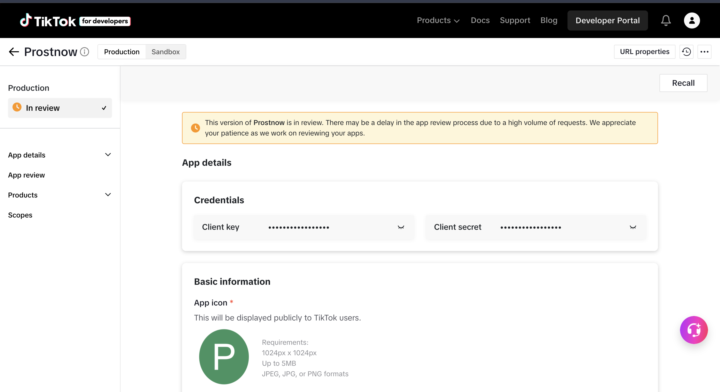
TikTok App Review
Anyone with an idea how long does TikTok take to approve the App its been over a week
3
0

Apr 1 •
🟢 Let's Vibe Code a Quickbooks/Xero Clone with AI | Beginner Series Ep #4 (Cursor, Nextjs, Clerk)
Set your reminder here 👉 https://youtube.com/live/jDTuQTR8gU0 Episode 4 of our new Series 'Code with AI the Right Way' is here! — and this time, we're vibe coding a Quickbooks / Xero Clone LIVE from scratch! This is a LIVE build — mistakes, debugging, and all. That's the point. You learn more watching someone solve real problems in real-time than from a polished, pre-recorded tutorial.
1 like • Apr 1
We need more of these.
Apr 1 •
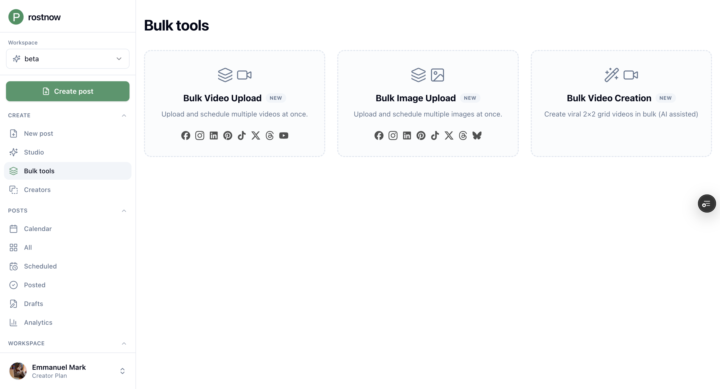
Try Prostnow
Sign up today currently still in test mode zero cost at all https://www.prostnow.com/ have a full whole experience of the platform at 0 cost. If we go live what do you think about these pricing are they worth @Sonny Sangha @Jay Rathod @Digitl-Alchemyst Steven-Watkins and @Raymond Adeniyi
2
0
May '25 •
Day 50 - 60 of dev 100
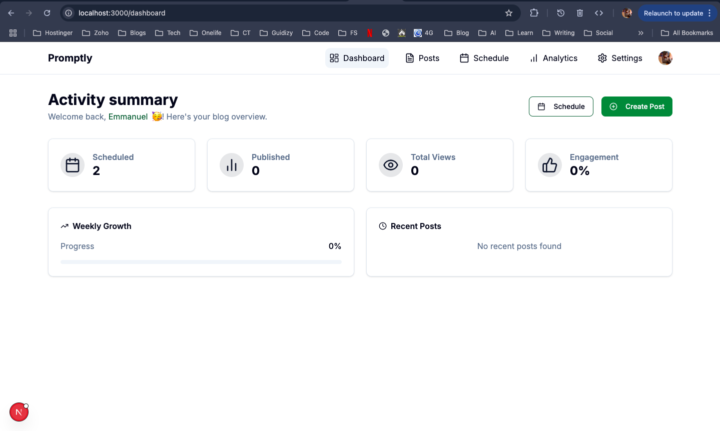
Accomplished: For last 10days been working on most of the pending issues - from the look of things more problems have been born, so what the idea is to fix them. ##Hackbox## Being positive and proactive, changes everything in ones life. I have come to learn this along as i fight procrastination. - Had my desk ready for work - Did take some 4hrs walk - Had Scrum for 2hrs with the team - Did do some QA work with the team - Meet with colleagues to discuss quality assurance - Did some training to our new interns - Had my earning review ## Promptly## I started working on Linkedin integration but i did run in a small issue which am currently exploring to make sure its properly implemented. - Currently only working on integration modules - Completed migration from Mongodb to Convex ## Mentors## I managed to implement creations of study groups and events, which each workspace can host. Though no complemented as the workspaces aren't loading now. ## CHALLENGES## - Unable to get Graph API for Threads and Instagram. - Linkedin API(Callback issues) - Unable to generate a PDF certificate ## CURRENTLY - Am learning metabase for our cdp - CMS base transformation to Nextjs with Convex - Migrations ##PERSONAL DEVELOPMENT## - 100hrs of Metabase - Read a book(Facebook the inside story) - Had a relationship couch session - Went for a tour with my friend - Had business meeting ✅ LESSON LEARNED FROM THE BOOK✅ ##TheFacebook## Vision-Driven Persistence Pays Off Zuckerberg’s unwavering focus on building a platform for social connection, even when faced with limited resources and a chaotic startup environment, laid the foundation for Facebook’s growth. The Palo Alto house was a hub of relentless coding and ideation, showing that a clear vision can drive progress despite obstacles.
0 likes • Mar 30
@Fares Yigeremu you can try it https://www.prostnow.com/dashboard/ now its live after almost 1 year of planning and shippping
0 likes • Apr 1
@Morimura Din Welcome hope you find it useful!
1-10 of 313

@mark-sikaundi-9796
Indie Marker, breaking and developing lystica.cloud
Active 9d ago
Joined Apr 17, 2024
Zambia