Activity
Mon
Wed
Fri
Sun
Aug
Sep
Oct
Nov
Dec
Jan
Feb
Mar
Apr
May
Jun
What is this?
Less
More
Memberships
R.I.S.E. Leader's Circle
251 members • Free
5 contributions to R.I.S.E. Leader's Circle

Mar '25 •
Looking for insights from Black business owners
Hi Accomplices... This message is intended for Black owned business owners. For those who do not identify as Black, I would appreciate if you would be willing to share with Black business owners that you may know. We (my company Zanago) are considering building a product aimed at building a cooperative economic ecosystem for Black folks and allies...Before my company goes all in on our assumptions, I would like some insight from other business owners. Could you please complete this short survey for me? And if you are open to it, please share with other Black business owners. The target is business owners across the spectrum...retail, restaurant, startup, professional services. I would greatly appreciate your support and participation. Thank you https://forms.gle/jybCDf1iPULj8eDv6

2 likes • Mar '25
@Dr. Ada Martin thank you!
1 like • Mar '25
@Violeta Donawa thank you!
Feb '25 •
Collaboration and Cooperation...Devices we use for Change
Habari fellow accomplices! In business, we often default to collaboration—joining forces with others to build something new, solve a challenge, or innovate together. Collaboration is valuable, but for businesses to truly thrive—especially in an era demanding economic equity—we must embrace cooperation. Collaboration is what happens when Nike partners with an athlete to design a signature shoe. Both parties bring value, share risk, and benefit from the success of the product. It’s a joint effort, built on mutual investment. But collaboration often happens in silos, between those already in the room. Cooperation, however, is about deliberate economic engagement—not just working together, but intentionally doing business with, investing in, and sustaining diverse enterprises. It is the foundation of cooperative economics, a system that thrives when businesses actively choose where and how they spend their money to redistribute opportunity and power. Consider this: Instead of hiring a Black-owned consultancy only when facing a diversity crisis, what if a corporation made them the primary strategic partner for organizational development? Not as a symbolic move, but because their expertise shapes the company’s future. This is cooperation in action—a shift from transactional inclusion to sustained economic partnership. If we are serious about change, cooperation must be as common as collaboration. It is not just about who is in the room—it’s about who we pay, who we empower, and who we choose to build with. So… let’s collaborate, but let’s prioritize cooperation—and create real change. Change Happens by Design ~ L.Byrd

Feb '25 •
The Impact Architect’s Manifesto: A Call to Action
Hola, fellow accomplices in change— We are on the brink of a seismic shift. For those of us whose work is rooted in inclusion, responsibility, and impact, the corporate landscape is about to reveal its true colors. Many of the leaders who once claimed to champion our work will soon show their lack of real commitment. They’ll blame political pressure, shifting priorities, or economic downturns. But the truth? Most were never invested beyond the optics. So, the question before us—the impact architects of our time—is: How do we move forward when corporate partners retreat? First, we must acknowledge a hard truth: tying our work to the whims of corporate sponsorship was never sustainable. To create lasting change, we must build products and solutions that stand on their own—beyond contracts, beyond executive buy-in, beyond the fear of being seen as politically inconvenient. Through years of consulting, coaching, and strategizing, I’ve watched too many companies pay for change but never let it take root. They slid back into old habits, watered down hard-won progress, or simply failed to implement. It was in that realization that I shifted my approach. Rather than solely advising change—I started building it. I know not everyone has the bandwidth or expertise to create proprietary products. But I urge you: invest in it however you can. Technology has made it easier than ever to create tools that address the very disparities we fight against. You don’t have to become a tech founder—but a well-designed product that solves real problems can create sustainable income, allowing you to continue your mission on your terms. Think beyond service bundles. What can you build that empowers others to act, even when you’re not in the room? The landscape is shifting. Our work is still needed—perhaps more than ever. But it’s time to rethink our approach. The world still needs the medicine we offer. Let’s put it in the candy. ~L.Byrd

4 likes • Feb '25
@Erin Corine exactly! We will need to not only collaborate, but cooperate with each other. What skills compliment to help reach shared goals? What resources might we share? I could go on...but will save that for tomorrow's post! All this to say...we need eachother so we can kick ass together!
4 likes • Feb '25
@Jillian Love
Jan '25 •
Is It Really a Fair Race
Hi there accomplices! If you follow me on LinkedIn you may have seen this... This past week, my LinkedIn post on DEI received over 100,000 impressions and more than 500 comments. Among those comments, I saw plenty of pushback—claims that DEI is the reason racism still exists or that all decisions should be based solely on merit because DEI is "unfair." Some even misquoted Dr. Martin Luther King Jr., using his words—"not the color of the skin, but the content of the character"—while completely misunderstanding his message. So, I asked a simple question: "Can you explain what DEI is?" Instead of real answers, I got deflections, excuses, or silence. That’s why I spent the past few days writing a new book, once again in upward elementary form, to explain DEI in a way that anyone can understand. I had my 10-year-old read it—he had no prior knowledge of DEI, yet after reading, he could clearly explain it. My hope? That the "adult children" across LinkedIn—especially those who struggle to define DEI yet argue against it—might learn something. But that, of course, requires an open mind and a willingness to learn. In the meantime, I leave you with this question: "Is It Really a Fair Race?" If you'd like to support my work as an author and get a copy of this book—whether to share with your child or to help educate that "meritoriously superb" colleague at work or in your family—Here is the link https://www.zanago.xyz/product-page/is-it-really-a-fair-race-a-5th-grader-s-guide-to-dei Please share! Change Happens by Design

2 likes • Feb '25
@Tamara Slankard way to go!!! I love it...now... I believe the children are the future...teach them well and let them lead the way...
2 likes • Feb '25
@Sharon Hurley Hall Thank you!!!!!
Jan '25 •
Hi I am Louis
Hi everyone! First thank you for the invite, Erin! I appreciate your continued support and the work you are doing for people! My name is Louis Byrd...husband, father, son...music producer (recovering R&B king...House/Soultronica is my thing now), technologist, designer, and futurist. I'm here to do my part in uplifting our shared communities. I dont have any social media accounts left, except LinkedIn...there is a Bluesky account...but I have not got into it. That said..I'm here to share, learn, and challenge the status quo. I apologize in advance for my sometimes over usage of GIFs....

1 like • Feb '25
@Stephanie Obadare
2 likes • Feb '25
@Erin Corine
1-5 of 5
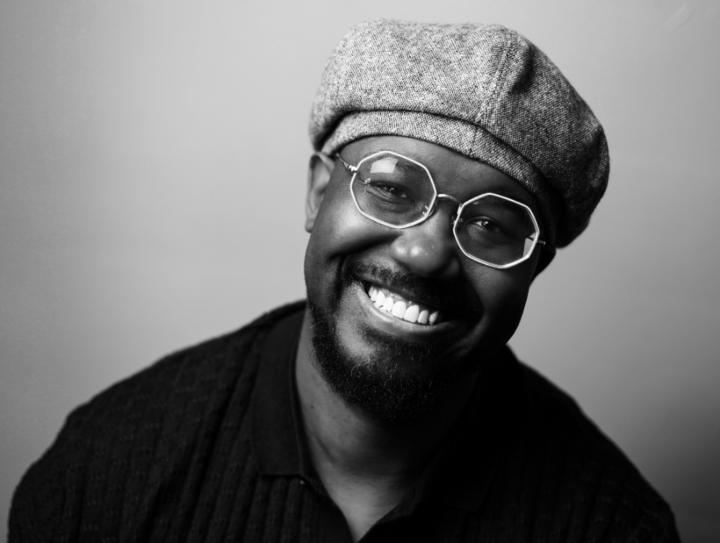
@louis-byrd-9091
Louis is the co-founder and Chief Visionary Officer of Zanago, a hybrid design studio focused on social impact.
Active 426d ago
Joined Jan 29, 2025