Activity
Mon
Wed
Fri
Sun
Aug
Sep
Oct
Nov
Dec
Jan
Feb
Mar
Apr
May
Jun
What is this?
Less
More
Memberships
C.O.R.E NERVOUS SYSTEM RESET
93 members • Free
I AM ACADEMY
409 members • $47/month
Life Mastery Coaching
13 members • Free
The Coaching Hub
1.8k members • $49/month
2 contributions to Life Mastery Coaching

May 23 •
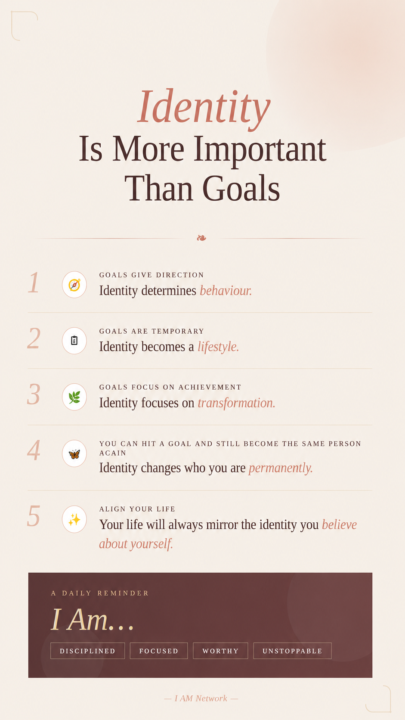
Identity work is powerful - it addresses the root, not just the symptom.
Most people try to change their lives by changing their circumstances: - a new job, - a new relationship, - a new routine, - new goals. But sustainable change does not begin with behavior. It begins with identity. A person will always struggle to create a different future if they still see themselves through the lens of their past pain, failures, rejection, trauma, or limitations. When someone says: - “I don’t know who I am anymore.” - “I feel lost.” - “I don’t know where my life is going.” - “I feel stuck.” - “I keep repeating the same patterns.” …they are not only experiencing confusion. They are experiencing an identity crisis. An identity shift happens when a you move from: - surviving → becoming, - reacting → leading, - self-doubt → self-awareness, - limitation → possibility, - old labels → intentional identity. Because once identity changes: - decisions change, - standards change, - boundaries change, - habits change, - relationships change, - confidence changes. People do not consistently act against who they believe they are. If someone unconsciously believes: - “I am not worthy,” - “I always fail,” - “I am invisible,” - “I am broken,” …their life will eventually mirror those beliefs. But when they begin to say: - “I am capable.” - “I am resilient.” - “I am becoming.” - “I am disciplined.” - “I am worthy of peace and success.” …their nervous system, behavior, and choices begin aligning with that identity. Goals can motivate temporarily. Identity sustains transformation permanently. This is why identity coaching is especially important for: - people in transition, - professionals facing burnout, - individuals recovering from rejection or disappointment, - people rebuilding after loss, - executives who have lost themselves in performance, - anyone feeling disconnected from purpose. An identity shift gives people: - clarity, - emotional grounding, - direction, - self-leadership, - and a renewed sense of meaning.

1 like • 26d
Identify shift is the ultimate game changer
May 18 •
My Story
I didn’t become a Neuro Life Coach because life was perfect. I became one because I experienced what it feels like to lose yourself… and fight your way back. There was a season in my life where everything changed. I faced pain, pressure, setbacks, and moments that forced me to question who I really was. On the outside, I tried to stay strong, but internally I knew I needed healing, direction, and a renewed identity. That journey led me into personal development, mindset transformation, and the power of the human mind. I became deeply passionate about understanding how thoughts shape emotions, decisions, confidence, and ultimately a person’s future. I realized that many people are not held back by lack of potential — they are held back by limiting beliefs, emotional wounds, fear, and a mindset that no longer serves them. As I began rebuilding my own life, I discovered purpose in helping others rebuild theirs. That is what led me to become a certified Neuro Life Coach through the School of Life. My mission is to help people break mental barriers, heal from within, regain confidence, and transform the way they think so they can become the highest version of themselves. Today, I use my story, my growth, and my coaching to help others shift their mindset, reclaim their identity, and create a life filled with purpose, clarity, and impact. My purpose is simple: To help people heal, grow, and become who they were truly created to be.
1 like • May 20
@Henriette Jordaan thank you loads incredible to have you in my path
1-2 of 2

@lethani-gumbi-5255
NLP Transformation Coach | Helping people break limiting beliefs, build confidence and growth. Passionate about mindset, transformation &success.
Active 6h ago
Joined May 18, 2026