Activity
Mon
Wed
Fri
Sun
May
Jun
Jul
Aug
Sep
Oct
Nov
Dec
Jan
Feb
Mar
What is this?
Less
More
Memberships
The School of Bits
47 members • Free
Publish & Profit Challenge
4.1k members • Free
20 contributions to The School of Bits

14h •
Quantum Computers vs Crypto: Here's Why I'm Not Losing Sleep
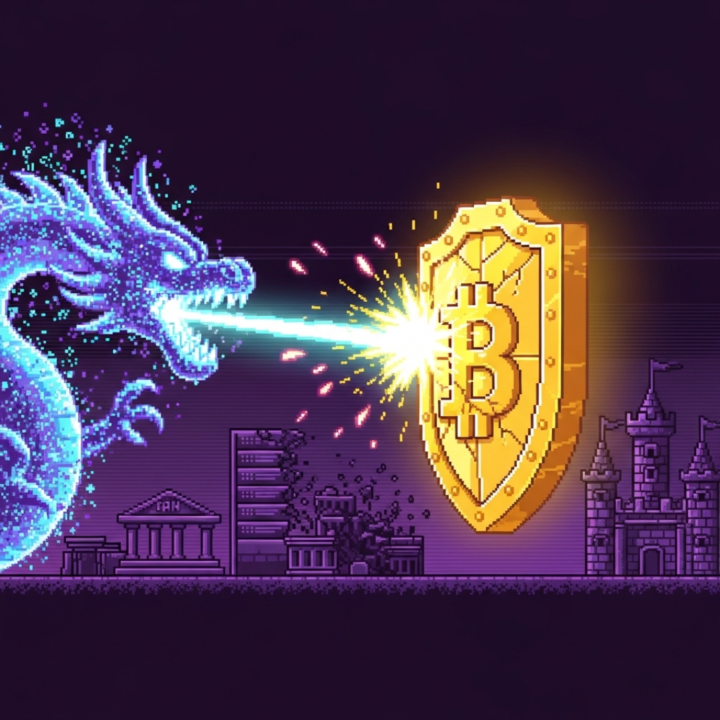
Google is pushing to migrate all its systems to quantum-proof cryptography by 2029. Their researchers just published a paper saying a quantum computer could crack a Bitcoin private key in about nine minutes. Headlines are doing what headlines do. Chyrons and articles saying: "Bitcoin is doomed." "Crypto is cooked." So let's talk about what's actually going on. The assumption is that quantum computers will break Bitcoin's encryption, proving it was always fragile hype and brittle code. Here's what that misses. The same cryptography that secures Bitcoin also secures your bank, your medical records, stock exchanges, military systems, and every website you've ever logged into. If quantum is threatening to break Bitcoin, it really breaks everything else more violently. So why is the headline never "your bank is doomed"? Because Bitcoin makes a better scary story. Here's the part I find interesting. Google can set a 2029 deadline because it's one company. One CEO, one security team, one update pushed from the top. It may be fast and cutting edge, but it's also a one decision-maker, one attack surface, one off switch. It's what we called "centralized." Bitcoin doesn't have a CEO. It has thousands of developers already working on this. A proposal called BIP-360 introduces quantum-resistant address types. Adam Back, a cryptographer cited in the original Bitcoin whitepaper has proposed hash-based signatures as an alternative. A working implementation hit a Bitcoin testnet this month. Ethereum, the second largest crypto ecosystem has a post quantum roadmap to become resistant to quantum attacks by 2029. The network upgrades because the open source communities build the fixes together for their own good. They are incentivized to fix the problem because they have real skin in the game. By owning these tokens, they are actual owners of the networks themselves. It's sorta slower by design. But it's also how you build something without a single point of failure.
2d •
If Wages Go Up…Why Are Regular Folks Still Broke??
My buddy asked me a simple question when I was a teen that I only figured out the answer to a few years ago. And it's this answer that led me to finally understand why bitcoin is a REAL life raft that millions are hanging on to for survival in chaotic times. "If minimum wage goes up and prices go up too, isn't that just a wash?" At the time, I didn't have a good answer. This innocent sounding question sounded logical. But it's wrong. Political policy and slogans that advocate for "fair" inflation is NOT fair at all. It's not even neutral. In fact, it has the OPPOSITE effect from what is intended. The reason is something most people were never taught. It's called the Cantillon Effect, coined by the 18th century author and economist Richard Cantillon. It helps explain why the rich get richer, the poor get poorer and why Bitcoin continues to be the best performing asset in human history. New Money Doesn't Hit Everyone at the Same Time When money is printed by the central bank, pushed through stimulus, or created through low interest rates for "populist political policy," it flows through a line. Sadly, it doesn't show up in everyone's wallet at the same time. Where you stand in that line decides whether the new money helps you or robs you. - First in line → Banks and institutions. (They get fresh money before prices move. They buy assets at yesterday's prices) - Middle of the line → Corporations and investors. (Prices are starting to rise, but they have capital to adjust adjust) - Dead last → Workers, hourly earners, savers (By the time wages go up,if they actually do go up, prices already moved. The "raise" basically buys less than the old wage did. This is why groceries feel insane compared to when you were young even though you make way more dollars today) In total, the result is a giant Wealth Transfer. It is NOT neutral. It does NOT fight corporate greed. It gives politicians more slogans to campaign on, it gives corporate more wealth and it leaves regular folks like us further and further behind. This is the Cantillon Effect.

4d •
Three Forces Are Colliding Right Now…All Pointing to Bitcoin.
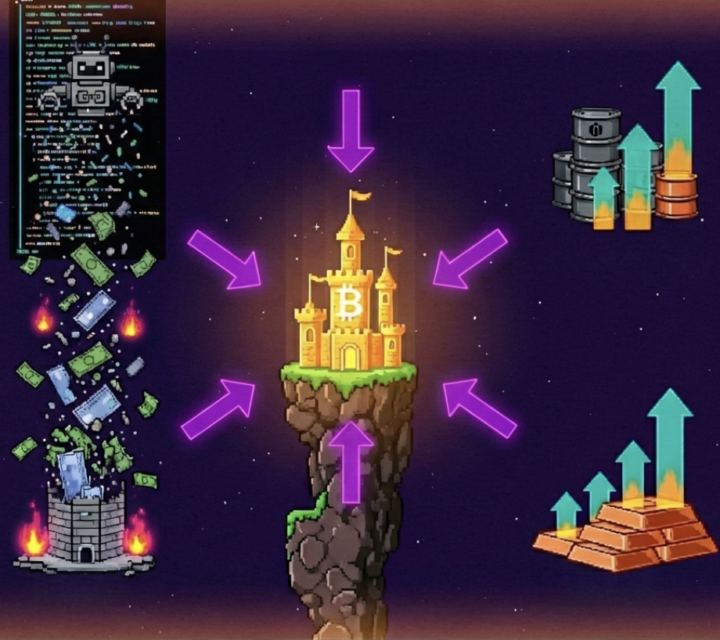
Most people think the biggest risk to their money is a stock market crash. It's not. Something stranger is already underway. Right now, three historically unique things are happening at the same time, and very few folks are ACTUALLY connecting the dots. Credit is cracking. Private credit markets are breaking down. Years of loose lending, rising defaults, and overleveraged funds are catching up all at once. The system needs massive liquidity injections just to keep the lights on…and when that money gets printed, everything you hold in dollars gets diluted. Again. Commodities are screaming scarcity. Oil spiked from $2.80 to $3.92 at the pump in weeks. Silver is up 60%. Copper up 20%. DRAM prices up 500%. This is 1970s-style inflation pressure that is driven by real-world bottlenecks and geopolitics and not simply internet speculation. AI is quietly destroying software valuations. The same tech stocks everyone piled into over the last decade? AI is deflating their pricing power. Why pay tens of thousands per year for a software service tool you can claude code in a weekend. Agentic tools are replacing work that used to require ENTIRE engineering teams. Growth stocks are losing the "growth" label in real time. This means money printing doesn’t necessarily mean number go up for these vulnerable SAAS stocks. So what happens when scarcity drives commodities up, AI pushes tech down, and the credit system keeps bleeding? People start looking for a structurally predictable escape hatch. Here's what's telling: since the Iran conflict kicked off, gold is actually down around 8–9%. Bitcoin? Up 5–6%. Middle East sovereign wealth funds are buying up more Bitcoin ETFs and less gold. And when you think about it, that makes sense. If you're in a region where conflict can escalate overnight, gold has a problem. It's heavy. It's hard to move across borders. It can be seized at checkpoints. Try carrying $500K in gold bars through an airport or across a border crossing in a crisis. Now imagine holding that same value on a phone, protected by a 12-word seed phrase that exists only in your head. No weight. No border friction. No one even knows you have it.

5d •
3/27 - Market Update: Things look bleak.
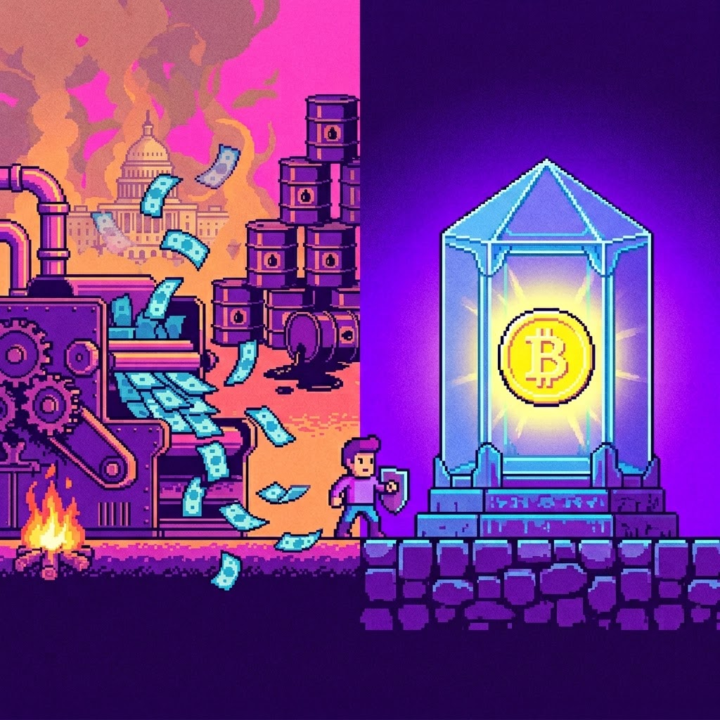
Recently it's really feeling like crypto is "stuck", even with all the "good news" around regulation. So it's time I give an honest breakdown of where I see things stand and going forward for the next 2-3 months. Back in January in our previous community call before we launched The School of Bits, we discussed some downside pressure historically that happens with crypto until May/June. Usually this is driven by selling for tax payments, market liquidation cascades etc, some of what we saw last year in 2025 and in 2024. But right now...... The Iran war is the only chart that matters. Oil crossed $100/barrel. The Strait of Hormuz, which carries 20% of global oil supply, is effectively closed. There's also no clear end in sight. The "revolt" I think the administration hope would happen to help settle this conflict quickly, is simply not happening. This is leading to an oil physical supply shock the world hasn't seen since the 1970s. Every other asset, including Bitcoin, is pricing this and will continue to do so. The Clarity Act, the crypto regulation bill everyone was excited about, is still stalled. Banks are fighting it. Democrats won't sign without ethics language targeting Trump's personal crypto profits (he's made roughly $1.4 billion from his own crypto ventures while setting crypto policy, which is awkward). And even if it passes in a watered-down form, there's a real chance Democrats win back Congress in November and reverse it. My honest take: It really does seem like the market has already stopped caring. Crypto prices aren't moving on regulation headlines. They're moving on war news. The bill was supposed to be the catalyst. It probably won't be now and that's a tough pill to swallow because it means nothing unless this war in Iran is solved. So what actually turns crypto around? The Fed printing money. When the war costs pile up, when AI-driven white collar layoffs start spiraling the jobs numbers downward, the government's only real tool is to print its way out. That's been the playbook since the Gulf War in 1990. When that happens, historically Bitcoin goes up, not because of any bill, but because more fiat gets created. Remember, it's not Bitcoin becoming "more valuable" its your money "becoming worth - less".
2 likes • 5d
It is frustrating to see banks react so violently against native stablecoin yield. But it makes sense since that is an enormous monopoly business banks essentially have cornered for decades at this point and that only crypto tech unlocks. I do think that democrats would have a very difficult time reversing whatever gets passed due to the veto override requirements of 2/3rds majority. But the window to pass clarity is certainly shrinking. Money printing thesis does not change though. Conflict/crisis likely accelerates it.
2 likes • 5d
im really not sure how may sellers are left
6d •
They Said Crypto Had No Real Use. Look What You Can Buy Now!?
For years the biggest knock on crypto was simple: “You can't do anything real with it bro.” That argument was never true. But today, it’s even more clear to normal people how wrong that accusation is. Coinbase and Better just launched crypto-backed mortgages. Backed by Fannie Mae. The same Fannie Mae behind most traditional home loans in America. Here's how it works: - You pledge your Bitcoin or USDC as collateral for your down payment - You keep your crypto without selling it - No taxable event gets triggered - You get a standard 30-year mortgage with the same protections as any other home loan - If Bitcoin drops in price, nothing changes (no margin calls, no extra collateral required, etc...) - Your crypto is only at risk if you fall 60+ days behind on payments (basically the same as any normal mortgage) So why does this matter for regular people?? • 41% of American families can't buy a home because they don't have cash for a down payment…even when they have savings in other forms. • 52 million Americans own crypto. Many of them are sitting on real value but couldn't use it to buy a house. Now that's changed. • The median age of a first-time homebuyer has jumped to 40. It used to be 32. Young people are getting locked out. • 45% of younger investors already own crypto, compared to 18% of older generations. This is how a new generation can potentially build wealth. The system is finally catching up to serve more folks. What this really means: For years you had two choices. Sell your crypto to buy a home and lose your position. Or hold your crypto and keep renting. That tradeoff is gone. You can now hold Bitcoin (the hardest asset on earth) AND own a home. No selling. No tax hit. A real mortgage backed by the same system that backs EVERY other home loan in the country. Every day that the outdated system works to catch up with technology, people are realizing the truth. Crypto is NOT pretend investing anymore. It can safely help regular Americans that feel left behind get a front door and a set of keys.

1-10 of 20

@lemuel-reber-2102
I am a medical student with the cutest daughter in the world and I am passionate about the digital revolution empowering billions of people.
Active 26m ago
Joined Oct 17, 2025
Powered by