Activity
Mon
Wed
Fri
Sun
Jul
Aug
Sep
Oct
Nov
Dec
Jan
Feb
Mar
Apr
May
What is this?
Less
More
Memberships
You Can Reverse Dementia
60 members • Free
5 contributions to You Can Reverse Dementia
Apr 24 •
Red Light Therapy is Non-Negotiable for Cognitive Repair
"Red and near-infrared light therapy has potential to help reverse Alzheimer’s and Parkinson’s disease, and may potentially contribute to delaying and/or halting them if caught early enough" - The Ultimate Guide to Red Light Therapy: Revised and Updated: The Breakthrough Solution for Anti-Aging, Weight Loss, Muscle Gain, Inflammation Reduction, and Peak Performance by Ari Whitten MS and Michael Hamblin PhD https://amzn.to/42rXdoU Among other things, red light therapy done properly improves mitochondrial function (energy on a cellular level) so it can be foundational for improving health and function. Red Infrared Light Therapy Lamp with Stand Led 660nm Red Light-Therapy& 850nm Infrared Light Device for Body https://amzn.to/4sZBFed Other Resources: Red Light chapter in You Can Reverse Dementia https://www.skool.com/you-can-reverse-dementia/classroom/ce39c572 Don't Fall for the Red Light Rip Off https://www.skool.com/you-can-reverse-dementia/classroom/b70db80f Red Light Dosing - The Missing Piece https://www.skool.com/you-can-reverse-dementia/classroom/b70db80f Red Light Therapy: Miracle Medicine for Pain, Fatigue, Fat loss, Anti-aging, Muscle Growth and Brain Enhancement (The Future of Medicine: The 3 Greatest Therapies Targeting Mitochondrial Dysfunction) by Mark Sloan https://amzn.to/4e2yD59
0 likes • Apr 24
Ok I am in North Carolina. I am going to talk to my daughter-in-law about this. She uses the lumenbox
Apr 2 •
Polyunsaturated fats—Toxic NOT Essential!
How to Heal Your Metabolism By Kate Deering Chapter 3 Polyunsaturated fats—Toxic NOT Essential! Now that you know that saturated fats are not the enemy and can be very healthy for you, its important to understand the fats that are actually harmful to you. And when I mean harmful, I mean contributing to slowing your thyroid, decreasing cellular energy, increasing oxidative damage and encouraging you to gain weight. What are these harmful fats? ---The polyunsaturated fatty acids, also known as “PUFA’s.” These are the same fats promoted by the nutrition and medical industry, as the “heart healthy” fats. “What? Are you telling me polyunsaturated fats, the very fats my doctor and Registered Dietician have been telling me to eat are actually harmful to me?” YES! That is exactly what I am telling you. The very fats you have been encouraged to eat for the last 50 years are the very fats that are slowing your metabolism, increasing aging, supporting illness and disease and helping you to gain weight! Americans, and most people around the world, are consuming PUFAs everyday—in dangerously large amounts! And most of you may be consuming them thinking you are doing something helpful for yourself when in fact you are doing anything BUT that. Are you consuming chia seeds, nuts, seeds, flax oil, fish oil, etc.? If so, then you may want to keep reading and find out why these very toxic fats are doing you far more harm than good. First, what are polyunsaturated fats and where are they found? Polyunsaturated fats (PUFAs) are fatty acids with many double Carbon bonds (double bonds link four electrons vs. the usual two). PUFA’s contain double bonds because they lack several hydrogen atoms. This is why they are referred to as “unsaturated”. Remember from the last chapter that saturated fatty acids have only single bonds and are fully “saturated” with hydrogen atoms. Double bonds, although stronger, are more reactive to oxygen than single bonds, making them unstable and susceptible to oxidative stress.
1 like • Apr 8
Wow Paul there is a lot in this!!! very simple to understand, thank you for that. Coconut oil and grass fed butter are my go to. The nuts I go in spurts. Moderation? I am Heeding these words. Thank you for all thr work you put in!!!
1 like • Mar 29
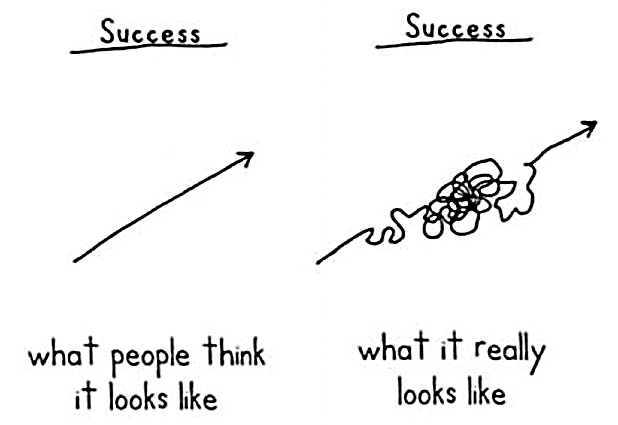
LOL this sad to say is comforting!!!!
Mar 27 •
May I ask a favor? Please & Thank You
First, how can I better help you in this community? My request. This Community, This Mission needs your engagement. On a human level & on a Skool Algorithm level. No Engagement = Skool does not spread the word. BUT for every genuine Like or Comment, Skool spreads the message...You Can Reverse Dementia.
2 likes • Mar 27
You are right! Actions do speak louder than words at times! Biblical truth! Thank you for all you have done and continue to do.
1 like • Mar 29
I agree! Ask Ester…. I am NOT a FB fan! I like this just need to make it habit not “binge” to catch up. True confession good for the soul!!!!!
Feb 20 •
From Falling Weekly to Dancing Again: 82-Year-Old Hazel’s Remarkable Recovery 💃✨
"Are you going to get me?" That’s the question Hazel asked me mid-dance. My answer? "If you can’t catch yourself, I will. But I’m going to let you try first." 🧠🥊 Most people think "safety" for an 82-year-old means avoiding every possible trip or stumble. But if you never practice the recovery, you lose the ability to save yourself when it counts. Hazel’s journey over the last two years has been a gauntlet: - 1/2024: A severe fall resulting in a TBI. - 3/2024: A formal Dementia diagnosis. - 12/2025: A TIA (mini-stroke). - Six months ago, Hazel was falling multiple times per week. Her world was shrinking. But we didn't focus on "staying still". We focused on re-wiring. By 1/24/2026, she was back on the dance floor. 💃✨ As you see in this clip, Hazel stumbles. But look at her reaction. She doesn't panic; she engages. We aren't just training muscles; we are training coordination, reaction time, and neural pathways. We are teaching her brain that a stumble isn't a fall, it’s a skill to be mastered. Progress isn’t perfect - it’s persistent. Who in your life needs permission to stumble and catch themselves? 👇 READY TO UPGRADE YOUR BRAIN? 🔥 1-1 Brain Coaching. I’ve opened a few spots for 1-1 coaching. If you’re ready to stop worrying about your memory and start building a "bulletproof" brain, book your breakthrough call now. You can do this from the Classroom, right after Start Here. https://www.skool.com/better-brain-better-you-6105/classroom #neuroplasticity #dementiarecovery #brainhealth #parkinsons #TBIrecovery #balancehealth #movementismedicine #seniorfitness #cognitivehealth
1 like • Feb 20
I love this!!!!! We all lose our balance at times. Being able to stop ourselves is the issue right Paul?
1-5 of 5
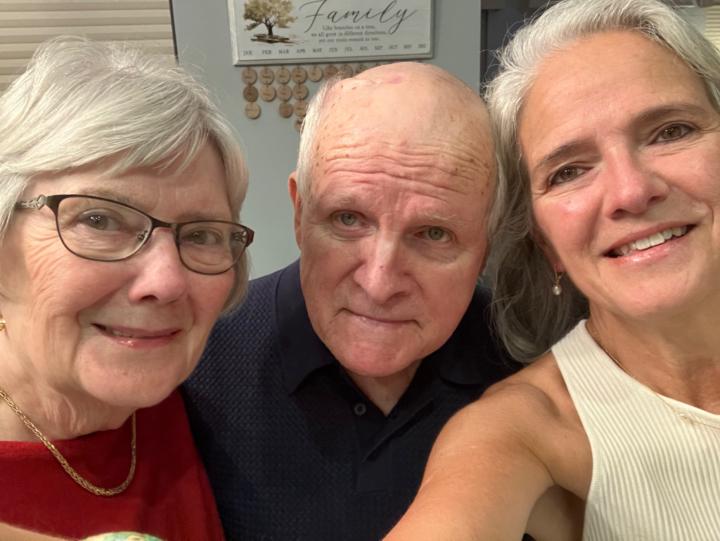
@laurie-grant-9723
Living in FLORIDA full time living/ caring for my parents! Gods timing is always perfect and am privileged to be with them once again everyday!
Active 37d ago
Joined Jan 21, 2026
Powered by