Activity
Mon
Wed
Fri
Sun
Aug
Sep
Oct
Nov
Dec
Jan
Feb
Mar
Apr
May
Jun
Jul
What is this?
Less
More
Memberships
FLEX Sourdough
174 members • Free
Chlorine Dioxide Testimonies
593 members • Free
16 contributions to Chlorine Dioxide Testimonies

Oct '24 •
Start Here
👋 Welcome to the Chlorine Dioxide Testimonies Group! 👋 3 Tiny Action Items for you RIGHT now: - ✍️ COMMENT on this POST to ‘Complete action’ Who you are, why you joined, what ailment/dis-ease are you struggling with, and your goals with detoxing. - 💬 REPLY to someone else’s introduction! Be kind, be friendly, give advice, help each other out - ↗️ Classroom area is being built now. Learn how this group works, and what’s available to you. Demo Video coming soon to help everyone get use to the Skool Platform.


0 likes • 10d
@Jerry Keller Glad you found the channel I would highly recommend getting on the CDT chats found on the calendar here on Skool. There is one in a couple of hours (Friday) on Telegram. These audio chats are where you can get the most benefit the quickest. There are others facing similar issues who may be a little further along with the alternative therapies now being brought to light. I would encourage you to figure out how to join the chats. Lots of folks on there waiting to share so we can all win together. Best to you in your wifes journey.
0 likes • 7d
@Colleen Tepe I think the easiest way I have found to join on an IOS device anyway is at the bottom of your screen select the calls tab and any groups you belong to that have an active call going will show up there with the join button. Hope to see you on the next one which you can find scheduled on the calendar here on Skool. 👍

May 13 •
Lost on the next step ...
I have bottle A and bottle B and say my goal was to make a spray. Do I just follow Kalker protocol D? I have a closed glass wire sealed jar and a shot glass to fit inside. I've not yet ordered the bubbler. So do I just follow the Kalker video on how to make "something" (don't know names yet) and then use that 'something' to make the spray? I'm guessing the 'something' might be referred to as CDS?
0 likes • May 16
don’t think you mentioned what you were going to use the spray for but if it’s your skin you also have the option of creating a MMS1 Spray Bottle and you only have to wait 30 seconds to activate the MMS (Part A) with (Part B). Standard spray bottle is 10 to 1. That is 10 activated drops MMS to 1 ounce/30 ml distilled water. Simply multiply the formula 20 drops MMS1 to 2 ounces of water you get it. Straight out of MMS Health Recovery Guidebook.
0 likes • May 16
Here’s a great document put together by Brian Stone. He has podcasts on PodOmatic app for free https://drive.google.com/file/d/1n87jWO8m0_3wTzcPazNa3-9jIA_OmRa9/view?usp=drivesdk
May 13 •
Terminology page?
Is there a terminology page in here, where I can get a basic understanding of all the lettering and names to make it make sense? thanks
0 likes • May 16
https://www.skool.com/chlorinedioxidetestimonies/bottle-protocol?p=9e94749f This may help.
0 likes • May 16
Also. Great link for getting educated. http://bit.ly/UniversalAntidoteCourse
Apr 28 •
Destination Health Recovery
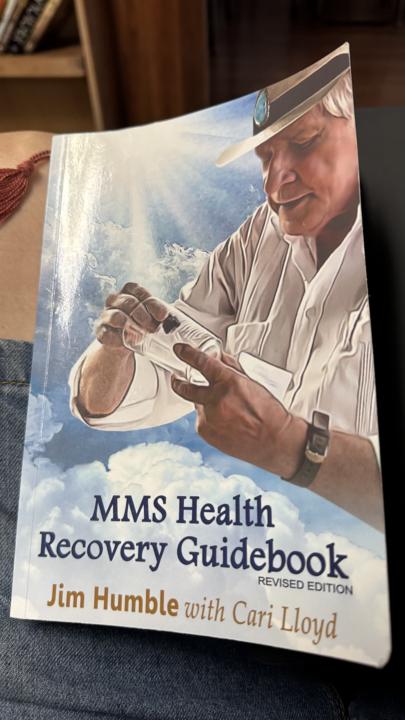
I’ve been reading Jim Humble’s book MMS Health Recovery Guidebook REVISED EDITION for a few weeks now and just getting into the “Starting Procedure”. Brain fog doesn’t help much when dealing with fractional doses but I’ve jumped in and working it. Today had a chance to take my day bag on the road. Even though im only doing 1/4 dose I can feel the warmth in the gut when MMS1 is doing its thing. Going to be interesting to see how long it takes getting comfortable with 3 drops per hour. I’m not new to Chlorine dioxide solution using multiple protocols constantly but I want to give MMS1 a shot
2
0
Apr 28 •
Chlorine Dioxide RBC Oxygenation
Chlorine dioxide (ClO2) functions as a high-efficiency selective oxidizer that augments cellular respiration by significantly increasing oxygen availability to red blood cells (RBCs). By mimicking and enhancing the natural chloride shift mechanism, ClO2 facilitates rapid oxygen saturation in hypoxic tissues, providing a biochemical pathway for metabolic restoration and detoxification. Supporting Arguments • Oxygenation Mechanism: ClO2 releases approximately 10.7 million oxygen molecules per RBC. When it dissociates in aqueous solution, it releases O2 and chlorine ions, the latter of which can bind to hemoglobin to further enhance transport capacity. • Biochemical Efficiency: The process mimics the natural exchange of bicarbonate for carbon dioxide in RBCs but at a heightened efficiency. Clinical observations by Dr. Andreas Kalker indicate rapid improvements in pulse oximetry for patients with chronic hypoxia, including those with cancer or autoimmune conditions. • Pathogen and Toxin Neutralization: By oxidizing heavy metals, microbial loads, and metabolic waste like lactic acid, ClO2 reduces the "detoxification burden" on RBCs. This allows the cells to prioritize their primary function: oxygen delivery. • Selective Oxidation: Unlike hydrogen peroxide (H2O2), which can generate indiscriminate free radicals, ClO2’s chemical structure allows for controlled oxygen release. This selectivity ensures that healthy RBC membranes remain undamaged while diseased tissues and acidic tumor microenvironments are targeted. • Clinical Outcomes: Evidence from cases involving Guillain-Barre syndrome and chronic infections suggests that CDS (Chlorine Dioxide Solution) therapy restores mobility and vitality by improving the oxygen-carrying capacity of the blood and enabling apoptosis in malignant cells. Technical Delta • pH Restoration: In advanced cancer cases, ClO2 reportedly reverses the acidic, low-oxygen environments created by tumors, a critical step in triggering programmed cell death (apoptosis).
2 likes • Apr 28
All that and it’s free. Hard to pass up.
1-10 of 16

Active 23h ago
Joined Jun 12, 2025
Livingston, TX
Powered by