Activity
Mon
Wed
Fri
Sun
Dec
Jan
Feb
Mar
Apr
May
Jun
Jul
Aug
Sep
Oct
Nov
What is this?
Less
More
Owned by Kofi
"Mogul Nation" is a community for high achievers to agitate change from within, elevate mindset, & unlock potential through focused action...w/K.O.F.I
The AI Advantage
131.2k
Free
Skoolers
147k
Free
3 contributions to The AI Advantage

5h •
HumAiN: Can AI Know You Well Enough To Help? Only if you let it.
I’ll be honest: I hesitated before giving AI broader access to my emails, calendars, and business documents. Those aren’t just files and appointments. They’re conversations, commitments, plans, and details about my work and personal life. I had to ask myself: How much access am I comfortable giving a tool—and what might it do with what it learns? Of course, part of me also thought, “Doesn’t AI already know everything anyway?” Probably not. But after a few weeks of me asking it questions, it might have a pretty good outline of my calendar, my business plans, and how often I say, “Let’s find a time next week.” That hesitation is understandable. Trust shouldn’t mean giving technology unlimited access without thinking it through. It means understanding what you’re connecting, choosing tools and settings carefully, and deciding where the boundaries are. But I also began to realize that AI can only be as helpful as the context it has. If it can’t see the commitments on my calendar, the priorities in my emails, or the information in my business documents, it can’t help me connect the dots across them. Once I started integrating AI more fully into my workflow, it helped me keep track of details, prepare for what was coming, organize information, and think through next steps. It cut down on my need for an assistant and gave me back an estimated 10 to 12 hours each week—time I could put toward managing multiple priorities and launching a new business. AI can help you notice a conflict before it becomes a problem, prepare for a meeting with the right context, or remind you about a commitment you might otherwise miss. It can suggest a next move based on what’s already in motion. But a suggestion is still a suggestion. I keep the final say. I review the work, decide what’s accurate, and approve anything before it’s sent, shared, or deployed. That balance is central to being HumAiN: give AI enough context to help you, while keeping human judgment and permission at the center.
5d •
HumAiN*: BE THE BOOKENDS TO AI
As I continue talking with people about what it means to be HumAiN*, I hear a hesitation that makes sense: “If AI creates the work, does it really feel like mine?” I understand that concern. ➡️When there’s a gap between the effort we put in and the outcome we present, it can be hard to feel connected to the work—or to take ownership of it. But AI doesn’t have to take us out of the process. When we bring our thinking, purpose, and direction to the beginning, then review and approve the final work, we can feel connected to the result. That brings me to a concept I’ve been thinking about: being the “Bookends to AI.” The process starts with us and ends with us. We bring the purpose, the problem, the context, and the questions that set the work in motion. AI can expedite, expand, and enhance what happens in the middle. Then the process comes back to us for our judgment, our edits, and our decision about what moves forward. That’s where being a “super prompter and an eloquent editor” matters. A “super prompter” knows how to give AI direction: What are we trying to accomplish? Who are we trying to help? What context does the tool need? What should it consider? The more thoughtfully we frame the task, the more useful AI can be. Then AI can help us explore options, organize ideas, find patterns, see new possibilities, create drafts, build prototypes, and move work forward. But we still have to return to the work. As “eloquent editors”, we check whether the result is accurate, clear, useful, and aligned with our intentions. We bring the nuance, experience, taste, values, and human understanding that help shape the work. We make the final call—and we take responsibility for how it’s used. AI can contribute to the process. We remain accountable for the outcome. This applies when you’re building a business, developing a product, shaping a strategy, creating a presentation, or solving a problem for a customer. Start with a human purpose. Give AI enough direction to help. Then bring human judgment back into the final decision.

0 likes • 4d
@AI Advantage Team So true and so important.
1 like • 4d
@Pablo Franzo Exactly. We have to own the artifact that lives beyond the moment. It’s echo will continue indefinitely.

Apr 8 •
🛠️ Freedom Isn’t Given. It’s Engineered.
A lot of people talk about freedom like it is something that arrives one day. A milestone. A lucky break. A finish line. Something earned after enough hard work, long hours, and sacrifice. But in reality, freedom rarely appears on its own. It is not handed out by the market, by clients, by growth, or by success. Freedom is engineered. It is built through the choices we make every day about how we work, what we prioritize, and what we refuse to keep doing the hard way. It comes from designing a business and a life that create more space, not just more activity. More margin, not just more movement. More control over our time, energy, and attention. That is where the shift begins. At first, many entrepreneurs chase freedom by chasing growth. More revenue. More clients. More opportunities. But growth without structure often creates a different kind of trap. More demands. More complexity. More decisions. More time spent reacting instead of leading. The business grows, but freedom shrinks. That is why freedom has to be designed on purpose. It comes from building systems that reduce friction. Creating workflows that lower rework. Making decisions that protect focus. Delegating what should not depend on us. Using tools like AI to shorten time-to-first-draft, speed up planning, reduce admin, and create breathing room for higher-value work. These are not small operational choices. They are how freedom gets built in real life. Every time we simplify a process, we earn time back. Every time we remove a bottleneck, we create more momentum. Every time we stop doing manually what could be automated or streamlined, we expand our capacity without expanding chaos. That is the practical side of freedom. And the inspiring side is this: engineered freedom compounds. One better system saves an hour a week. One improved workflow removes recurring friction. One smarter handoff reduces delays. One protected block of focused time creates better thinking. These changes may look small in the moment, but over months they turn into reclaimed hours, cleaner execution, and more control over how our days actually feel.
11 likes • Apr 8
More freedom comes from subtraction than addition…and this adds automation. Let’s gooo!!!
1-3 of 3
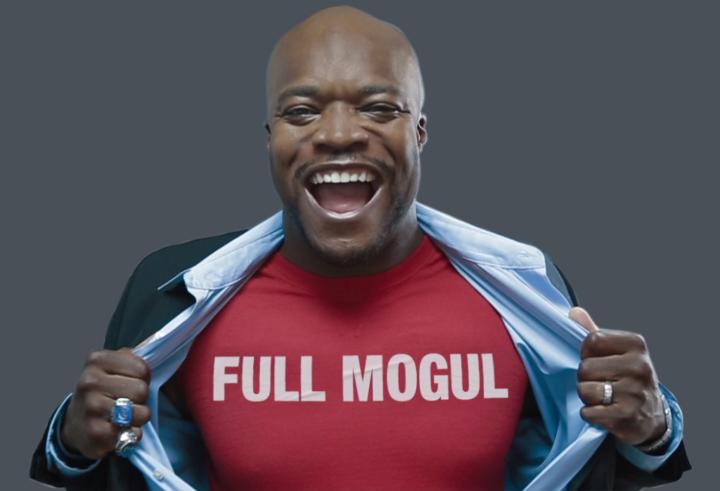
@kofi-nartey-3890
Impact speaker, AI founder, & luxury real estate guru, Kofi is focused on unlocking potential through agitating change!
Active 4h ago
Joined Dec 5, 2025
Los Angeles, California
Powered by