Activity
Mon
Wed
Fri
Sun
Sep
Oct
Nov
Dec
Jan
Feb
Mar
Apr
May
Jun
Jul
Aug
What is this?
Less
More
Oasis Builders
144 members • Free
Deal Hub
511 members • Free
Confidence & Clarity Code
38 members • Free
GenX Creator Lab
948 members • Free
Reclaim Your Light
59 members • Free
Wild Muse Society
363 members • Free
Skill & Soul Studio
207 members • $2/month
Pinterest Skool
5.5k members • $7/month
Summiters
296 members • Free
1 contribution to Oasis Builders
3d •
Managing Fertility on Roman Farms
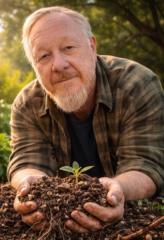
Nearly two thousand years ago, Roman farmers faced the same basic question that gardeners still face today. How do we replace what the harvest removes from the soil? Roman agricultural writer Columella described saving manure from cattle, goats, sheep, poultry, and other animals, allowing organic material to decompose, and returning fertility to fields and meadows. He also distinguished among manure sources and warned that both too little and too much could create problems. The Romans did not understand soil biology or nutrient cycling as we do today, but they understood something important through observation. Fertility could be cycled through the farm rather than continually removed from it. Plants captured sunlight and carbon. Crops and forage fed animals. Animals returned manure to the land. Plant residues returned organic matter to the soil. Beneath the surface, an unseen community of soil organisms helped break those materials down and moved nutrients back into living cycles. Today, we understand that relationship more deeply. Plants are carbon pumps that capture carbon dioxide from the atmosphere and move carbon into leaves, stems, roots, and the soil. Through their roots, plants feed a living soil community that helps cycle nutrients, build soil structure, and support future plant growth. Nature continually takes sunlight, water, carbon, minerals, organic matter, and living relationships to spin them into abundance. Modern sanitation and environmental knowledge have improved greatly since ancient times, but the deeper principle has lasted. Fertility is not only about adding nutrients. It is also about maintaining the living relationships that keep those nutrients moving through soil, plants, animals, and decomposition. Perhaps that is why our life with nature is as much an art as it is a technique. We learn the principles, observe what the land is doing, and decide how to participate wisely. From Roman times to now, we are still asking the same question that Roman farmers faced. How do we replace what the harvest removes from the soil?
Poll
7 members have voted

2 likes • 3d
@Jon Shobe ABSOLUTELY CORRECT!!!
1-1 of 1

Active 3h ago
Joined Aug 8, 2026