Activity
Mon
Wed
Fri
Sun
Jul
Aug
Sep
Oct
Nov
Dec
Jan
Feb
Mar
Apr
May
What is this?
Less
More
Memberships
AI Automation Society Plus
3.8k members • $99/month
AI Automation (A-Z)
155.4k members • Free
Clief Notes
36.1k members • Free
AI Automation Society
389.7k members • Free
AI for Non-Techies
823 members • $67/month
WavyWorld
49.1k members • Free
AI Automation Agency Hub
321.4k members • Free
10 contributions to AI Automation Society

4h •
HELP WITH BRAND IOS
Hey everyone! 👋 I'm Kasia — I've been running my business almost entirely through Claude for the past few months. When I came across Herk's Brand AI OS concept I had that instant "wait, I've been doing this already" moment 😄 Here's what my setup actually looks like, in case it's useful for comparison: The architecture: - 4 specialized Claude agents — each owns a different area of the business (brand/content, products, experiments, operations/CoS) - Every agent has its own identity file, persistent memory, and active task list — so context carries across sessions - One shared "state file" that's the single source of truth for the whole system (prices, campaigns, infra, rules) - Telegram routing — each topic automatically goes to the right agent - All agents can read and send email, log activity to a shared dashboard, and hand off tasks to each other The infrastructure: - Mac = source of truth (all files live here, edited here) - Hetzner VPS (24/7 server) = crons, bots, AI workloads, automations - Sync runs Mac → Hetzner every 5 minutes And here are the two things I'm actively trying to figure out — would love your input: 1. Mobile access — the messy reality. In theory, the Hetzner sync means I can reach the system from my phone. And at first it actually worked. But over time it started falling apart — Claude would stop responding, or changes made on mobile wouldn't carry over properly to the main Mac setup. Technically works in theory, not reliably enough for a client. Has anyone solved this? 2. Architecture — is "agent per project" better than "agent per function"? Right now I have agents split by business area. But I've noticed that when an agent covers too many projects, the responses get generic and lose depth. I'm thinking about restructuring — giving each agent a tighter specialization (one product, one domain) and limiting what context they load. Less reading everything = better, more focused answers. Is that the right direction? Or is there a smarter way to structure this? I'd love to hear how others have approached it — especially if you've built this for clients.
0 likes • 2h
@Ankit Upadhyay thanks for that perspective! i actually run a real business on top of this setup — multiple projects (courses, digital products, client services), each with different domains like sales, marketing, and tech. that's exactly the tension i'm navigating: project-based agents (like a dedicated PM per project who knows the full context) vs function-based specialists (one marketing agent serving all projects). i ended up going hybrid — project agents for coordination + shared functional specialists for deep domain work (e.g. social media specialist that works across all projects). the maintenance cost you mentioned is real though. curious — when things start growing, did you find the project agents started duplicating knowledge across each other? that's my biggest concern right now. and do you think skills/tools should be scoped to specific agents or shared across the whole system?
1 like • 2h
@Melissa Mathurai oh sorry, I meant Claud Max -it's one of the plan - I pay 100usd every month

2d •
Help with LLM Wiki or other memory/context systems
Hi guys, has anyone implemented the LLM Wiki by Karpathy in their AI system? I would be super interested in understanding how you're using it. I mean, you don't necessarily have to share the steps as I think that is outlined in the Wiki itself, but I'm more interested in understanding the different use cases for how you're using it. Or it would also be really useful if you're using different systems that you think are better. I'm really interested in having more context around certain topics and longer-term memory for my conversations and my work.
0 likes • 17h
happy to read your response

2d •
Day 2 Build Done!
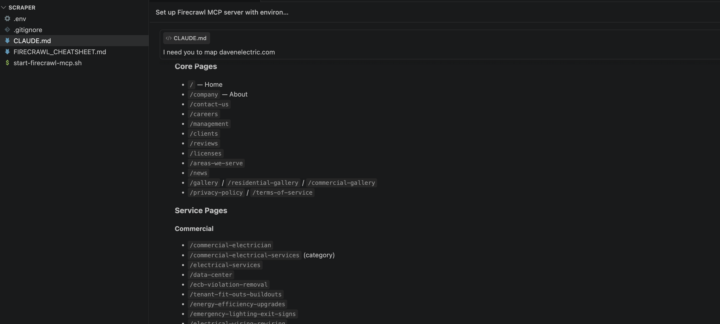
Just finished day 2, feeling great! Just scraped a website I manage to test it and it did fantastic. Ran across an issue with node.js but it suggested what to do and that fixed it. I am using it to prospect clients before meetings. This is actually usable and it's fast. Thank you Nate.
0 likes • 17h
Great job!

2d •
AI Memory: What’s Your Long-Term Solution for Context & Knowledge?
Hello everyone, I’ve been trying to solve a challenge that I believe many of us will face sooner or later: how to build a centralized memory and context system that allows AI to consistently understand our business, projects, workflows, documentation, and personal knowledge over time. Memory/Context is the one making the difference and providing the real value of using AI, and not the AI model itself. I’ve been exploring this space for quite some time, testing and comparing several solutions, including: • Traditional RAG systems • AI Wikis / Obsidian-style knowledge bases • Graph databases and knowledge graphs (e.g., Graphify) • NotebookLM • Vector databases What I’m struggling to understand is: What is currently the best architecture for a long-term AI memory system that can work across multiple models (OpenAI, Claude, Gemini, etc.)? Ideally, the idea is to have one central source of truth that can power AI agents, assistants, Slack integrations, automations, and future tools inside a broader ecosystem. Possibly in cloud. I've been thinking to build my own "Open Brain" vector database, setting up a MCP server to plug in into LLMs easily but is it worth it at this stage? Obviously, it also depends on what "Tech Stack" and ecosystem you're using (Google, Anthropic OpenAI etc). What does your AI memory stack look like, and what have you learned from building it? I’d love to hear how you’re solving this today.
0 likes • 17h
interesting...

Sep '25 •
The Future of SEO is Here: AI SEO / LLM SEO
Traditional SEO is fading. With AI-driven search engines and LLMs like ChatGPT becoming the new way people find answers, the rules have changed. ✅ Old SEO = keywords + backlinks ✅ New SEO = clarity + authority + context If your business isn’t optimizing for AI search, you risk invisibility. 3 quick steps to enhance your SEO today: 1️⃣ Answer questions directly (FAQs, conversational content) 2️⃣ Build topical authority with deep niche content 3️⃣ Format for clarity (lists, headings, summaries AI can read fast) 💡 The shift is happening now. Those who adapt will dominate tomorrow’s search results. 👉 Want to see how to apply AI SEO to your business? Comment “link” below and I’ll share a form to get you started.
0 likes • 17h
great work!
1-10 of 10

@katarzyna-apostoluk-2865
Hi there! product marketing specialist here
Active 51m ago
Joined Mar 10, 2026
Powered by