Activity
Mon
Wed
Fri
Sun
Sep
Oct
Nov
Dec
Jan
Feb
Mar
Apr
May
Jun
Jul
Aug
What is this?
Less
More
Owned by Karen
A calm, supportive writing community to strengthen your craft, build consistent habits, share your work, and grow alongside other writers! ✍
Tiny steps in a virtual space, to aid, help you heal. Embrace your growth layer by layer. Be open and present with current efforts on mental health.
First Novel Academy
924 members • Free
The Book Writer's Kitty
20 members • Free
Creator Connections
92 members • Free
The Storyteller's Path
335 members • Free
Skool Scale Camp
5.8k members • Free
Summit Backstage Mastermind
112 members • Free
The Wordsmiths’ Guild
12 members • $42/month
Alive Poets Society
1.7k members • Free
Fix Your Funk
252 members • $9/month
16 contributions to The Wordsmiths’ Guild

20d •
Accepting Feedback
I shared the first chapter of my novel, Catfish Air with this group, and mine, and some friends, and got excellent feedback. The best part is that I got proper, constructive feedback. Not a single person said, "Oh, gosh-golly-gee-wow mister, this is swell!" Every reader said things like, "These parts are great, but that didn't work for me," or "I like this a lot, but this bit didn't make sense," or even, "Please delete this entire section - it's way too much!" And guess what? I took it all to heart. Not in a bad way. I mean I took is seriously. I genuinely went back and reviewed what I'd written and incorporated the feedback, and I think I cracked the code! Up until now, I'd had the POV and the voice all wrong. It was too stiff like I was a puppeteer with some marionettes and describing what people were doing. Not gonna lie...it kind of sucked. But now I zoomed in, stepped inside a character, share back stories as I go along which allows me to avoid cardboard cut-out characters. Thank you all so much for your feedback! And, if you're interested, I've attached the new version of the first chapter. Fair warning...there's one character who is VERY inappropriate toward women - but give him some grace because it's all part of his character arc.
3 likes • 20d
@Shawn Helgerson well ok, the opening gave me the impression of being told a story, like from a child when your elders would speak of their lives and journeys. But it lost it for me as it transitioned into whose time that was spent in the military. I felt the opening was the narrator and the episode in Iraq were not connected. But the setup going into it was clear. Not sure if I missed something. But the POV still had me wondering with the dialogue. There’s a lot of voices (characters) in the room. I’m new to alpha reads. Ive got lots to learn, I’m sure. Again not my go to genre as a reader.
28d •
Catfish Air, Chapter 1.
After I finished my last non-fiction book, I promised myself I'd focus on fiction. And I did. I spent a lot of time developing the outline, working on worldbuilding, character development, and story arcs. Let me know what you think. Chapter One. Balad Air Base, Iraq Technical Sergeant Virgil R. Mason set his coffee cup down next to his Rubik’s cube and wiggled his computer mouse to wake his computer. The large, black mirror glowed to life. His desk was cluttered with papers in loose piles. The office he shared with Master Sergeant Edmund Erwin was in an old Iraqi military building. There was no way to know why the Iraqis built, or what it was used for. But it was ideall for this small Air Force detachment. “Don’t forget we have the assignment brief at zero-nine,” said Master Sergeant Erwin. “I think she’s sending us to FOB Colfax this week. I heard her mention it to Captain Carlisle the other day.” Virgil’s computer came fully to life and he double-clicked the Outlook icon. He remembered years before they used to say that if you wanted to beat the air force, all you’d need to do is shut down the phone system. These days it was Outlook. “And if you want to do the half-marathon, let me know,” said Sergeant Erwin. “I haven’t done any distance like that in ages and I could use the running buddy.” Virgil nodded and grunted quietly, slowly sipping his coffee. This morning he was having Starbucks’ Veranda – the one with the little hummingbird on the bag. Previous teams who had been through this office set up a collection point for coffee from care packages. If he had to guess, there was maybe seventy or eighty pounds of coffee – mostly Starbucks. His favorite was the Veranda, and he was running low. There was plenty of the Pike’s Place and whatever other dark or medium roast coffees they made – some bags of whole bean and some ground. One thing that hadn’t come in a care package yet was a grinder, so the bags of ground coffee, especially Veranda, were under his personal protection.

3 likes • 26d
Military jargon, whew… my head was swimming with the acronyms! Interesting genre… my only note was men don’t usually wear a ‘blouse’? So it is just a suggestion to change it to shirt on Carmichael. But it gives energy and lots of banter added to uniformed life actions of being in the environment of a service member lifestyle when deployed. Not my genre of interest, but I’d like to continue reading. Nice start.
2 likes • 25d
Wow thank you for the info. I love, love, love learning. This is all very interesting and helpful to a reader. My brother a lifer in the Air Force until he retired many moons ago, might appreciate this project you’re working on. I’m sure he would’ve answered my inquiry if I’d approached him with curiosity. I will have a conversation with him about your book to query his interest. Thanks again, awaiting your next chapter!
Jun 27 •
What Is "Purple Prose"?
Purple prose is writing that is trying so hard to be beautiful that it accidentally gets in the way of the story. It usually shows up as too many adjectives, too many metaphors, too much symbolism, or sentences that draw attention to themselves instead of the scene. For example: The incandescent orb of molten gold languidly descended beneath the undulating horizon, painting the celestial canvas with ineffable hues. Translation: The sun set. Of course, those are opposite extremes. Good writing lives somewhere in the middle. Beautiful prose isn't the enemy. Some of my favorite authors write gorgeous sentences. The difference is that they know when to let a sentence sing. If every sentence is trying to be unforgettable, none of them are. One of the hardest lessons in writing is realizing that readers don't need to be impressed by every line. They need to be carried through the story. Save your best language for the moments that earn it. A good question to ask during editing is: "Is this sentence serving the story, or is it asking the reader to admire the writing?" Those aren't always the same thing.
2 likes • Jun 29
This is something I never took into consideration. But I totally have seen on pages I’ve read and in stories that made me wonder? Are these embellishments of how one writes to give aesthetics for the reader? Or to give the impression of a moment, a place or a time reference. Thanks for sharing its context. This has opened my mind to a clarity that I can reference while researching and studying other authors and writers. There’s so much I still have to learn!
2 likes • Jul 1
Actually, I can! Chapter #2 of my first manuscript draft. After a review of the initial, the revision about an accident involving a non-tangible storage container, Haha! I played with the event and embellished the turn of events. At the time, I felt it showed the prankster's extreme efforts. But now, looking back on it. I feel it's overkill.
Jun 21 •
Hey Guild —
I have some news, and I want you to hear it from me directly. The Wordsmiths' Guild is growing up. Over the next few months, I'm finishing the full Journeyman curriculum — eight lessons, each one built around a concrete, nameable craft skill, each one including a writing assignment that I read personally and send back with feedback. When it's done, the Guild moves to a formal tier structure: Apprentice, Journeyman, and Master levels, each with its own curriculum, its own price point, and its own completion rewards. That goes live September 1. Between now and then, I'm building this in public — and you're invited to be part of it as it takes shape. Every course I'm developing, every mentorship session I host, every piece of curriculum in progress is available to you right now, at no cost. Come learn. Come ask questions. Come watch the thing get built. Here's what I want to offer you specifically, as a founding member: Submit proof of publication before September 1 — anything you wrote, finished, and put in front of readers; a blog post, an article, a book, a piece submitted somewhere — and you earn Founding Apprentice status. That means lifetime free access to all Apprentice-level curriculum, for as long as the Guild exists. No monthly fee. No expiration. Grandfathered in, permanently. Your free membership isn't going anywhere. Nothing is being taken from you. I just want to give you the chance to step into something more before the door closes. For the full picture — tiers, pricing, what's included at each level, and the completion rewards — head to the Classroom and open "The Wordsmiths' Guild: How It Works." To claim Founding Apprentice status: reply to this post or send me a direct message with your proof of publication before September 1. I'll see you in the sessions. — Shawn
3 likes • Jun 21
[attachment]
1 like • Jun 27
@Shawn Helgerson 7 Karen Dennis Oct '24 • 📜 Library - Poetry & Songs Faith - Blessing you. This a piece of poetry I wrote that was published in the 90's, I believe. I was in my early 30's at the time. It can be found in a 3-CD set of writings from various artists and authors. The album is called "The Sound of Poetry". It may not happen today. But tomorrow's not far away. It may not come tomorrow. And you have to let go of your fears. From yesterday. Faith! But you must have it! For if it is not tomorrow. Please hold on! To your dreams and most of al. Your prayers. When? Where?. Why? But you already know this! You know it will happen and Real soon! To face your destiny without Sorrow. Because the Lord will be Blessing you!
Jun 13 •
Productive Procrastination
One of the hardest lessons I've learned as a writer is that not all inactivity is procrastination. There are three distinct states in the creative process: - Working: You're actively writing, editing, outlining, recording, or otherwise moving the project forward. - Fermenting: You've reached a point where more effort won't improve the work. The manuscript needs distance. It needs time to settle. Your subconscious is still processing it even though you're not touching it. - Avoiding: The project is ready for your attention, but you're finding reasons not to engage with it. Suddenly, every other project seems more interesting. New ideas appear. Side quests multiply. The challenge is that fermenting and avoiding can look identical from the outside. In both cases, you're not working on the project. The difference is how the project feels. When a manuscript is still fermenting, returning to it feels muddy. You can't quite see what needs to change. When fermentation is complete, something shifts. The project starts quietly asking for your attention. You begin to sense what needs to be done, but the work itself may feel difficult, tedious, or uncomfortable. That's often the moment writers mistake avoidance for inspiration and run off to a shiny new project. I've also learned that productive procrastination has value. While one project is fermenting, I might write an essay, critique another author's work, record an audiobook chapter, or work on a lesson for the Guild. Those activities keep me engaged with the craft without forcing a manuscript before it's ready. The key is making sure productive procrastination remains productive and doesn't become a permanent refuge from finishing. Sometimes the most important question isn't: "What do I feel like working on?" It's: "Which project is actually asking for me right now?"
3 likes • Jun 17
@Shawn Helgerson I still love this introspect. It’s true on how probably so many who write navigate their time and focus there concentration of thought and creativity. I find it keeps me engaged to diversify. It keeps me from having burnout and stimulated to really reach for the essence of what I’m trying to work on. Thank you for this introspect again you speak words of wisdom.🙂
1-10 of 16
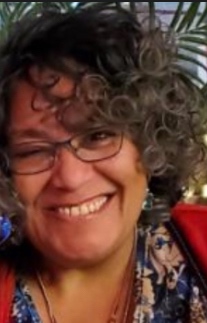
@karen-dennis-8431
Writer, Poet, Advocate. Sharing thoughts, opinions creatively. Strong-minded. People matter. The female mind is a power tool!
Active 13h ago
Joined Apr 26, 2026
INFP
USA