Activity
Mon
Wed
Fri
Sun
Jul
Aug
Sep
Oct
Nov
Dec
Jan
Feb
Mar
Apr
May
What is this?
Less
More
Owned by Justin
The community for Reiki practitioners of ALL levels. Find connection through the power of Reiki. FREE COURSES. Join us today! 🧡
Serious Spiritual Seekers who want to design and build our new world.
Memberships
Ai Filmmaking
7k members • $7/month
Get Views (free)
1.6k members • Free
37 contributions to Escape the Matrix
2d •
Science and Spirituality
I spend a lot of time pondering what the deeper forces that are shaping world events might be. News stories tell us facts about the world we inhabit. But they often just skim the surface of what’s going on at a deeper level. We rely on philosophers, cultural commenters, spiritual teachers, and others to help us understand these kinds of truths, but what fascinates me is trying to connect the dots between the two. The narratives we’re presented with about the world and important world events are constructed narratives. Some may remember Carlos Castaneda, who wrote many books that studied the life and ways of Mexican shaman. His term for this was “consensus reality." But when there are huge changes taking place in the world picture, consensus reality dissolves because consensus dissolves. Things begin to seem chaotic, unanchored, and impossible to understand because, basically, we’ve lost our map of reality. While this feels alienating and troubling, the good news is that what’s being experienced isn’t a permanent condition. Rather, it’s just a characteristic of a transition when the old world is dying and the new one is still being born. It might be useful in this context to explore the roles of tribalism and spirituality. In this context, we might reflect that history has been described as “the lie commonly agreed upon,” then remember Peguy's famous saying that “What begins in mysticism ends in politics.” This beckons the realization that, to understand changes in the world, we have to peel back the surface of things and look deeper at the powerful forces behind world events including spirituality, religion, and culture. These are sometimes grouped together under the heading of tribalism. But tribalism can also include other powerful beliefs such as a belief in science and technology as the ultimate arbiter of truth. We see this most obviously manifested in the increasingly disturbing transhumanist movement, which appears to be an attempt to replace spirituality with science.
2 likes • 21h
Yes, what you were describing are levels of consciousness awarness and interestingly we have the whole spectrum from and tribal and mystical all the way up to post modern where we are now today. When a society is under threat it will revert back to more tribal levels of awareness grouping around religious and core beliefs because of course that is where we came from so we go back to the root chakra so to speak. This is all been described very well by the work of Claire Graves and Don Beck in their thesis of Spiral Dynamics. We are about to go through a huge societal upheaval where many of these hidden things that you referred to will be revealed and for most people it will be shocking and destabilising and for those of us that understand at least to some extent what is going on, it will be beholden upon us to be the stabilising force in our direct environment.
Apr 20 •
❤️🔥 Group Q&A recording - watch the replay here
This first live community call turned into something much deeper than expected. What started as a simple introduction quickly evolved into a raw, honest, and wide-ranging conversation about spirituality, community, truth, and the challenges of living consciously in the real world. People joined from all over the world — from Dublin to Boston, Germany to Sweden, Vancouver to Italy. 🧐 Key Questions From the Community Ella — “How can a global community actually work when we’re all spread out?” A deep dive into: - Online vs physical connection Tom — “What is your vision for this community?” This opens one of the most important parts of the conversation: - Mapping a path to freedom - Creating a blueprint for conscious communities - Exploring what comes after the current cultural systems break down - Introducing the idea of “enlightened communication” Monica (Germany) — “This space removed my sense of isolation.” A powerful reminder of: - How rare genuine spiritual connection is - Why most people feel alone on this path - The real role of community Lara — “Why do spiritual people avoid talking about real-world issues?” This sparks a major theme: - Spiritual bypassing vs grounded awareness - The discomfort around discussing geopolitics, suffering, and reality - Why “staying positive” can sometimes become avoidance Zia (Maryland) — “How do we avoid cult dynamics in spiritual communities?” A crucial and honest challenge: - Guru dynamics and power structures - Whether frameworks like 12-step models could help - The balance between leadership and autonomy Lucia — “What suffering made you seek enlightenment so early?” - The drive to escape suffering vs understand it Another Key Question — “Can we really create our own reality?” A nuanced response covering: - Law of attraction vs real-world cycles - Intentionality vs illusion - The role of focus, timing, and listening ❤️🔥 Themes That Keep Coming Up Across all questions, a few core themes emerge:

3 likes • Apr 21
@Carmen Mitrica Welcome Carmen! I am happy to take a stand. This is my way of saying that I am dependable.
1 like • 3d
@Eva Ordonez thank you ❤️ 😇
6d •
You are the community - thank you ❤️
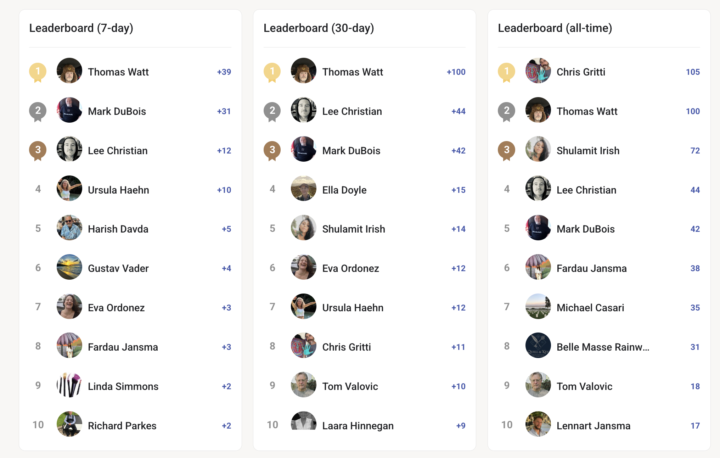
Appreciating all your Posts, thoughts and comments! See the leaderboard here (it's just for fun but it means a lot to me 😇😊) Special thanks to @Chris Gritti @Donald Duck @Shulamit Irish @Lee Christian @Magillivray Freeman and of course @Lennart Jansma (new podcast dropping soon)
1 like • 3d
@Tom Valovic yes!
3d •
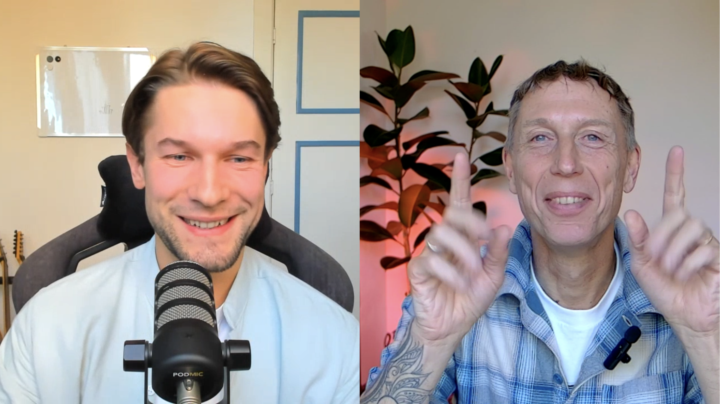
🔴 The Power of Intent. New Podcast Episode.
What does it truly mean to want freedom — not as a passing wish, but as the deepest, most unshakeable commitment of your life? Your desicion to be free when made at the most fundamental level of your being will change the trajectory of your life. This episode will challenge you, confront you, and possibly change the direction of your life. 👉 Watch here
9d •
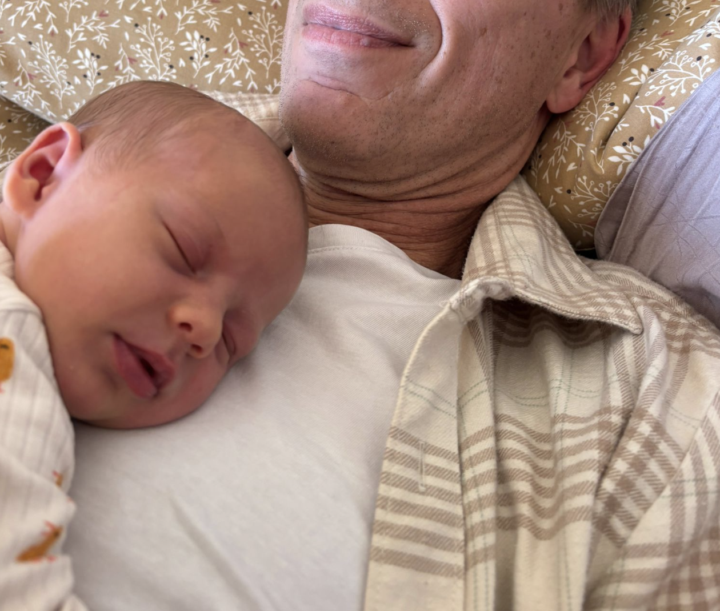
A new love has been demanding my attention ❤️🔥 UPDATE
This beautiful new being just arrived on planet earth and she has stolen my heart ❤️ I have only had sons so far this lifetime so she is a great blessing. I have therefore not been in the community so much but wanted to give you a quick update on things: 🎬 A new podcast episode will drop soon so keep your eyes peeled 👀 🐾 I am thinking a lot how to structure the coming premium group (this will be for those of you who want to work more closely with me.) An update on this coming soon. 🐣 I am planning a new YouTube channel. It will be more simple, less edited. ETM Channel kind of pushed me in a certain direction but I also want to talk in a simple way on how to bring the liberated perspective in our day to day. What might Enlightenment look like without the gurus, having to meditate in a cave or overdose on Ayahuasca? Keep you posted! 😺 If you would like me to organize a new Q & A soon let me know in the comments below. I would love to hear from you ❤️ Much Love, Justin
1 like • 7d
@K.d. Battles thank you!
0 likes • 7d
@Liesbeth Vaessen Thanks very much!
1-10 of 37
@justin-peach
Founder of Modern Reiki & Escape the Matrix. Mentor and spiritual coach for over 25 years. Guiding more than 4000 students.
Active 11h ago
Joined Feb 9, 2026
Italy