Activity
Mon
Wed
Fri
Sun
Jul
Aug
Sep
Oct
Nov
Dec
Jan
Feb
Mar
Apr
May
What is this?
Less
More
Memberships
AI Automation Society
387k members • Free
AI Automation Agency Hub
320.2k members • Free
5 contributions to AI Automation Society

4d •
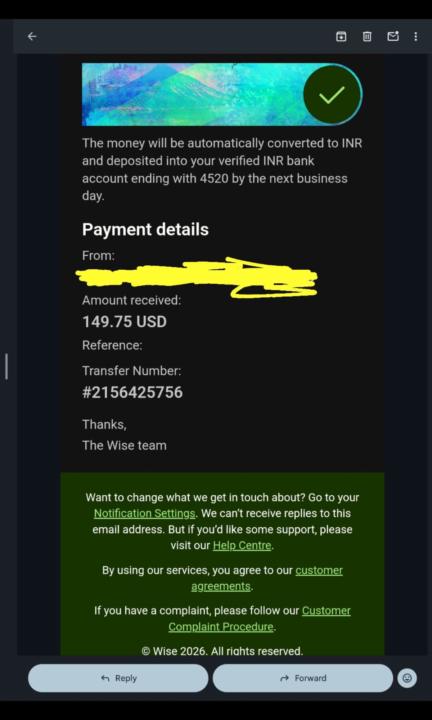
I closed a freaking deal at 17!
So guys, I'm 17 year old from India. I just closed a monthly retainer of $400 / month from a US client. The kickoff payment is done! Feeling so proud. I've grinded for 1 entire year to enter this trajectory!

2 likes • 3d
eyyyyy!! Awesome my brother! The first of many!!!
5d •
AI Automation Objection Handling From a Sales Perspective
Hey everyone, I wanted to share some insights from my experience handling AI and automation objections purely from a sales perspective, not as an engineer. I’m a sales guy first, and these are the patterns and responses that have actually worked for me on calls and in real conversations. I’d love to hear your opinions, tweaks, and feedback on how you’d handle these objections too, so we can all sharpen our approach 1. “It’s too expensive” Objection:“This sounds pricey… we can’t afford this right now.” How to reframe: Tie the price to what they’re already losing in time, errors, and missed opportunities if they keep everything manual. Example response: “Totally fair question. Most clients felt the same way until they compared this to what they’re already spending on manual work and missed opportunities. If this replaces even X hours a week or recovers Y lost leads, it pays for itself in Z months.” 2. “We’ll lose jobs / I don’t want to fire people” Objection:“I don’t want to replace my team with AI.” How to reframe:Position AI as removing low-value busywork so the team can focus on higher-value work instead of being replaced. Example response:“I get that. I’m not here to replace your people; I’m here to remove the boring, repetitive work so they can focus on selling, relationships, and strategy. The teams that win are the ones who give their people better tools, not fewer jobs.” 3. “This is too complex to implement” Objection:“We’re not technical. I don’t have time for a big IT project.” How to reframe:You own the complexity; they get a simple workflow and outcome. Example response:“Makes sense—you shouldn’t be learning another tech stack. That’s why we implement it for you. We map one or two workflows, plug into your existing tools, and your team just follows a simple process. No big IT project, just a done-for-you rollout.” 4. “What if it breaks / isn’t reliable?” Objection:“If this goes down, our operations stop. I can’t risk that.” How to reframe:Explain safeguards, monitoring, and manual fallback so they’re never “stuck.”
1 like • 5d
BTW: 💡 I’m also looking to connect with expert to advanced AI automation engineers who’d be open to working with my company on an on‑call basis. If you’re experienced with building, maintaining, and troubleshooting complex automations and you’re interested in collaborating with a sales-led team, drop a comment or DM me so we can explore working together.

13d •
Content Posting
Does anyone have a N8n template or JSON to automate content posting to tiktok? I want to post 4-5 tiktok carousels daily on autopilot.
2 likes • 13d
Following! Would love this 😀

14d •
Looking for a Sales Partner — Real Estate Automation Niche
I build production-level automation systems for real estate agents using n8n — Speed to Lead, Cold Lead Reactivation, Database Reactivation, follow-up sequences and more. The builds are ready. What I need is someone who can get them in front of clients. You close the deal. I build and deliver everything. You keep 40% of every deal. If you're based in the US, good at outreach, sales calls, or closing — and you want a technical partner who handles all the delivery — this is worth a conversation. What I'm looking for: US-based only — real estate is relationship-driven and timezone matters Ideally has connections in real estate or has sold to agents/brokers Can run outreach and handle calls independently Drop a comment or DM me. This is my LinkedIn profile, I post my workflows here: https://www.linkedin.com/in/shihab-sakif--shihab-media
1 like • 14d
Im looking for a CTO for my company hows your search going?
0 likes • 14d
@Craig Mueller I would agree! Ill stand by to see if I hear back!

14d •
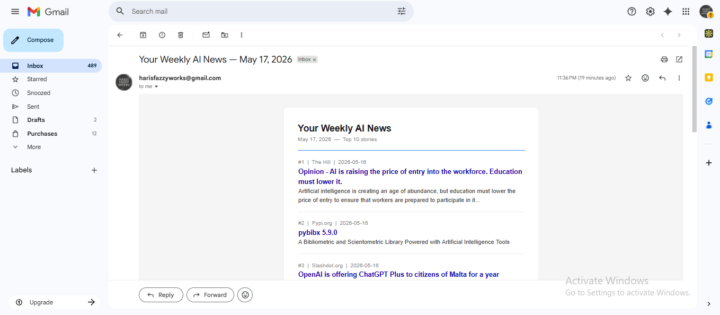
Finally Built an Automation with Claude rather than n8n
I was feeling so much suppressed to switch to Claude for some automations but then watching Nate videos made it too easy to understand and try my automation just for testing in Claude code VS instead of N8N, yes it feels creepy and annoying in the start as its UI is not fascinating like n8n but to be Honest, it is a game changer for Automations and maybe not today, but tomorrow everyone has to shift!! I just followed Nate Framework of WAT, initial setups and with a simple prompt I made a simple automation of getting AI News on my Gmail weekly!!
2 likes • 14d
[attachment]
1-5 of 5

@jon-laverde-7142
Orange County CA based dude with a winning mentality
Active 3d ago
Joined May 17, 2026
Powered by