Activity
Mon
Wed
Fri
Sun
Nov
Dec
Jan
Feb
Mar
Apr
May
Jun
Jul
Aug
Sep
Oct
What is this?
Less
More
KetoforCancer
624
5.0
$9/m
Cancer Warriors
561
5.0
Free
28 contributions to Cancer Warriors

Mar '25 •
Identifying poor studys
I am very sick and been admitted to emerge. One thing that's been on my mind and I want to put out there is that we need to find someone who knows enough about studys to teach us how to identify good from bad. Just because there is a study doesn't mean it's good. We need to learn how to interperate the data and how the study was conducted to decide if it is reasonable. There are many studys out there like cholestrol studys that should not be trusted. Just because we like the study and it fits our outcome we want to see doesnt mean its true. We need to as a group learn how to do this. Not sure where to find someone that knows how to do this but it would be great to do so. If you have colon cancer maybe a study on gbm is not appropriate for you. Diffrent tumour diffrent cancer cell all together so it should be taken with a grain of salt maybe? I don't know i don't have a scientific background.
3 likes • Mar '25
@Seyma Erbas thank you
3 likes • Mar '25
@Melissa Mantilla sure would be!
Mar '25 •
Update
Just to update everyone since they are making wishes in my outher post thank you very much it is much appreciated. deasease progression is putting fluid in my lungs I only have weeks a few months max to live. Thank you for all the prayers and wishes. This is a tough time for my family.
2 likes • Mar '25
@Kimberly Smith 🙏
2 likes • Mar '25
@Bernardo Henriques 🙏

Mar '25 •
Message for Jason Watson
@Jason Watson I've just watched your latest video. You look stronger than in your previous video. I wanted to remind you of how strong and brave you are. Your journey hasn't been easy, but I believe we are here cheering you on every step of the way. Remember, you're not alone in this fight. You have an army of loved ones, friends, and medical professionals who care deeply about you and want to support you. Keep pushing forward. You got this. https://www.youtube.com/live/HtPXHEpADjk?si=WElyKu7D0zCmWbxi
6 likes • Mar '25
Thank you!
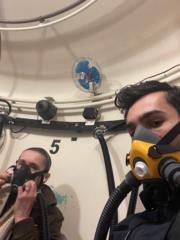
Mar '25 •
AI Analysis Of My Mum’s Protocol
There is a new feature on ChatGPT called “Deep Research”. I ran my mum’s protocol using this tool. It took about 15 minutes. Here’s the result: Regimen Overview and Treatment Goals Supplement/Medication List: The user’s regimen includes antiparasitic medications (ivermectin, mebendazole, fenbendazole, artemisinin), anti-inflammatory/antioxidant supplements (curcumin, quercetin, resveratrol, EGCG from green tea, vitamin E), vitamins/minerals (vitamin D3, vitamin C via camu camu, zinc, magnesium, omega-3 fish oil), a liver support herb (milk thistle), a metabolic supplement (berberine), and others like creatine. Additionally, the user is on rivaroxaban (Xarelto), a blood-thinning medication. This combination strongly suggests an integrative therapy aimed at cancer treatment or a complex chronic condition – leveraging repurposed drugs and supplements to inhibit tumor growth, support the immune system, and protect organ function. Below we analyze how each component fits the likely treatment goals, their mechanisms of action, and how they might interact with one another. Mechanisms of Action and Relevance to Goals • Antiparasitic Drugs with Anticancer Properties: Ivermectin, Mebendazole, Fenbendazole, Artemisinin. Originally anti-parasitic, these have shown broad anti-tumor effects. Ivermectin can inhibit cancer cell proliferation and metastasis by disrupting pathways like Wnt/β-catenin and AKT signaling. It’s been reported to significantly reduce cancer cell motility and metastasis in models. Mebendazole and fenbendazole are benzimidazole compounds that bind to β-tubulin in parasites; in cancer cells they similarly disrupt microtubule formation, impairing cell division. This can induce cancer cell death and has made mebendazole a promising repurposed drug in oncology. Artemisinin, derived from wormwood, is unique: when it encounters high iron levels, it produces reactive free radicals that destroy cells. Cancer cells, which hoard iron for rapid DNA replication, become selective targets – artemisinin can trigger a burst of free radicals that selectively kill iron-rich tumor cells while sparing normal cells. This makes artemisinin a potent pro-oxidant therapy in cancer. In summary, these drugs attack cancer on multiple fronts – inhibiting cell division (mebendazole/fenbendazole), inducing oxidative stress in cancer cells (artemisinin), and blocking pro-survival signaling and metastasis (ivermectin).
5 likes • Mar '25
We have to be very carefully with Ai we can put the same thing in 3 times and get 3 diffrent results. AI is just a tool right now for the starting point of your reaserch. Once you find interesting options you need to go read the liturature and objectively interpret it. You want human data to truly be reliable and double blinded placebo controlled studdys is the gold key. The liturature can be cherry picked very easily so just because you like a study doesn't mean you should trust it. You must challenge it and look for supporting liturature and liturature that is contradicting. AI just gets us started we need to still do the work for true success.
Feb '25 •
Low hemoglobin
Most of us are struggling with low hemoglobin. This is the delivery of oxogen to the cells. Here is the problem. having low hemoglobin drives tumor angiogenesis and tumor growth. If you have low hemoglobin you must urgently deal with this. I forced my oncologist to run feritin and iron blood work. My feritin came back high iron low. They are now doing an iron infusion to fix my low iron. This will lead to less overall cancer growth. A very simple thing that no one is doing that may have a large impact. If your hemoglobin is low simply ask them to check iron level on your next blood work and get this dealt with right away!
1 like • Feb '25
@Thomas Petracca you are welcome
1 like • Feb '25
@Thomas Petracca you are welcome
1-10 of 28

@jason-watson-8351
Stage 4 cancer.
https://youtube.com/@jasonwatson6104?si=22TsttpX_LitgIzP
Active 573d ago
Joined Sep 11, 2024
Powered by