Activity
Mon
Wed
Fri
Sun
Jul
Aug
Sep
Oct
Nov
Dec
Jan
Feb
Mar
Apr
May
Jun
What is this?
Less
More
Memberships
SAVI Basketball
632 members • $97/month
Basketball Training by SAVI
157 members • $47/month
TOC Coach
758 members • $9/month
Catalyst Hoops
142 members • Free
SAVI Coaching
1.3k members • Free
3 contributions to SAVI Coaching

👑
Mar 18 •
🏀 Analytics: Something to get excited about 🔥
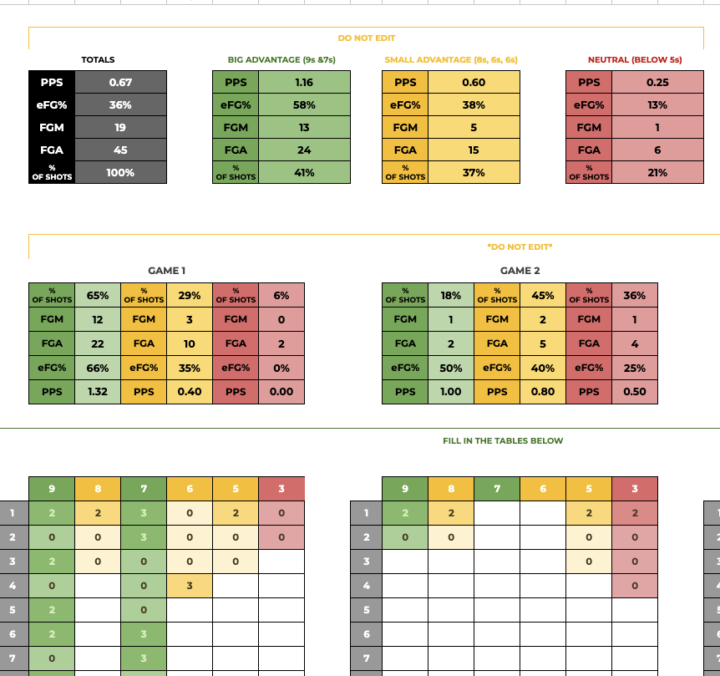
We’re going to spend the month of April diving into analytics with our members. Not just the generic numbers you get. We'll zoom in and help you make data driven decisions for next season - actual application. You’ll fill out the resource below for your team, share your results, and we’ll work through it together. 🎯 The goal Turn your data into decisions for next season. What do you keep? What do you change? Where are you actually gaining or losing points? That’s the part most coaches don’t get to on their own. 🔍 What this looks like inside membership Inside the membership, we’ll be working through this live.Real teams. Real numbers. Real adjustments. If you’ve been wanting to get more out of your analytics, this is a good month to jump in. 🤝 If you want to join us We’re offering the 7-day free trial. And if you decide to stay for the month of April, we’ll refund the cost of your course. No pressure. Just a chance to work through it with us. 💬 Question for you How are you currently using analytics to win games?

1 like • Mar 26
We’re a small school, so I don’t have film or advanced data. I’m really just working off a stat book. We track simple things like points per game and fouls, but it’s been more useful than it sounds. For example, I’ve been able to identify players who made big jumps in PPG and adjust how we use them offensively. I also look at consistency using standard deviation. It’s not about makes or misses, it’s about how much a player’s performance varies from game to game. A lower standard deviation means they’re more consistent. A higher one means their performance swings more. That helps answer the question, was it just an off night or are we seeing a real trend developing? It’s not complex analytics, but it’s enough to spot trends, make adjustments, and put players in better positions to succeed. When you don’t have access to film or advanced data, there is still power in the small things.
Dec '25 •
Lockleft 2.0 Question
This was my first full season fully implementing Lock Left, and before anything else, it’s worth saying this clearly. We absolutely love the system. Players, coaches, administrators, even parents are bought in. That part has been one of the most encouraging surprises of the year. Parents ask real questions. Not just about wins and losses, but about transition roles, why certain rotations happen, and what we’re trying to take away defensively. When that many people are speaking the same language, you know something is working. Over the break I finally had a little space to breathe and go back through the material. I figured I would just re-review some concepts and clean up a few teaching points for next year. Then I noticed Lock Left 2.0. That sent me down a bit of a rabbit hole. As I started digging through it, the first thing that jumped out wasn’t new terminology or flashy additions. It was the order of things. The layers themselves felt familiar, but the way they were stacked felt different. And it made me stop and wonder if I was reading too much into it or if there was something intentional there that I missed the first time around. One change that really caught my eye was the expansion of the foundational layers. What used to feel like a clear foundation built around layers one through three now seems to stretch through layer four. That might sound small, but it feels meaningful. Locking the ball, building the wall, hunting actions, and now treating the close off as part of the foundation rather than something that comes later. It reads like an acknowledgment that pressure without disciplined closeouts isn’t really pressure at all. Maybe the foundation was never just about containment. Maybe it was always about how pressure finishes. I also noticed how some layers that once felt advanced are pulled earlier in the sequence. Jail shows up sooner. Stunt and hunt replaces some of the older pass-denial emphasis. Role rebounding shifts in position, almost as if it’s being framed as a response to pressure rather than a final checklist item. The whole thing feels a little less linear and a little more alive.
👑
Jun '24 •
📌 Start Here & Introduce Yourself 🤝
🎉 Welcome to Our X & O Community! 🎉 1️⃣ Get Started: Head over to our Start Here course in the classroom. 2️⃣ Introduce yourself below. 3️⃣ Need Support? Contact our SAVI Coaching Director of Ops @Clare Murphy. 4️⃣ Have Questions? Check out the FAQ section. 5️⃣ Want some free stuff? Click here for SAVI resources. Looking forward to talking hoops!

4 likes • Feb '25
Hi Savi Community, My name is Jason Smith, and I’m thrilled to introduce myself as the head coach at a small high school in the Houston, TX area. My journey into coaching basketball at this level started somewhat unexpectedly. My children attend a small private school here in Texas, and we recently received an e-mail announcing that this would be the very first year of high school basketball. It was an exciting, yet daunting, proposition for someone whose coaching experience was limited to elementary school boys and whose playing days were far behind him. Our inaugural team comprised five freshmen and one junior—an inspiring mix of youth and potential. With a clean slate to build from, I crafted practice plans and developed a program from the ground up. The challenge was immense, but the rewards were even greater. Throughout the season, my boys demonstrated incredible character and resilience. We were competitive but often outmatched in terms of experience, size, and speed. While the scoreboard didn't always reflect the level of improvement I saw, their determination and heart shone through in every game. It was clear that this was something we could build upon. Offensively, our system revolved around a 4-out or 5-out setup, incorporating various handoffs and screens based on reads. However, I felt that our defense needed a more structured approach, which is what led me to Savi. During one of our league games, I noticed another team's defense was exceptionally challenging to play against. It wasn't exactly a Lock Left concept but had similarities I hadn't seen before. It piqued my interest, and I knew I needed to learn more. Given that I accepted the coaching role just a few weeks before the season began, there was no time for an offseason to prepare. Our season has just concluded, and I'm already eagerly planning our offseason with the goal of implementing the Lock Left concepts I've learned. I'm excited to see how these strategies will elevate our team's performance next season.
1-3 of 3

@jason-smith-1617
I am the Head Coach of a high school boys basketball team, building a program from junior high to high school
Active 4h ago
Joined Feb 14, 2025
Cypress, TX
Powered by