Activity
Mon
Wed
Fri
Sun
Jul
Aug
Sep
Oct
Nov
Dec
Jan
Feb
Mar
Apr
May
What is this?
Less
More
Owned by Jason
Psychic development for people whose gifts interfere with real life. Claim Founder title. https://www.skool.com/rise-plus-5656
Memberships
Freed Mind Academy
65 members • Free
SKOOL PARTNERS ⭐️🚀
1.5k members • Free
Skoolers
181.4k members • Free
Soul Purpose Group
2.1k members • Free
5 contributions to THE SKOOL HUB
23d •
From Skool News
I just wanted to share this with you all. For those of you who missed it, I got you. I watched Skool News yesterday and this is something they shared on how to increase visibility on your community. This is an AI prompt you can use to better your 'About Me' page https://docs.google.com/document/d/1mMiFuiSwGACAmYHLmvKCtsVmDYWBQgqB9BiY4LT27EU/edit?usp=sharing You're welcome 🙏🏻


2 likes • 23d
Thank you. This is valuable.
26d •
What is everyone's #1 problem?
I'm curious what everyone's number 1 problem is? I will reveal the ultimate answer if we get this to 30 comments.

2 likes • 25d
@Heath Adams If I could afford to out out source it, id be able to afford to finish the project on Manus.ai where it was originally born. When the tarot deck is done, I am going to turn it into a ln app and run it on Google Play.
1 like • 25d
@Jake Hill I don't know anyone that wants to work on this. Almost every single person I know that is in this niche is drowning in their own struggles and has no extra bandwidth. I spend a lot of time chatting with AI learning about different options and trying them out. It always comes down to how much $ can I throw at a block to make it go away.
27d •
I have a legit question for everyone
Ok guys I need to know... How many different communities do you belong to? And are you active in all of them? I see people who literally belong to hundreds of communities and I immediately think...there's no way you can be active in all those communities. I wanna know the psychology behind this madness 🤣 Why belong to SO many communities and more importantly, why belong to so many communities you're not engaging with? Let me know in the comments below 👇

2 likes • 27d
Hope, mostly. To meet interesting people, make connections. Sadly, hope is a lie and an excuse to allow us the delusion that it's ok to do less than the minimum standard to better ourselves. Being in multiple communities let's me dupe myself into thinking I am doing a lot of work in myself. Because, there are a lot of opportunities to do that work. Opportunities translate into noise as descion fatigue sets in, and I find myself and doing less overall, than I would if I had stuck to one thing. I compensated by turning off Skool notifications, and I am only paying attention to one or two groups where I am trying to get used to the idea of engaging. I am thinking about going though a purge. Seeing that list of Skools I don't engage in gives me a bit of anxiety, and guilt knowing I made a commitment to myself. Getting rid of the physical reminders of unnecessary obligations that never mattered should help me refocus on the places I do want to have a presence in.
30d •
The 2022 Nobel Prize in Physics just quietly broke reality.
Three scientists, Alain Aspect, John Clauser, and Anton Zeilinger won the Nobel Prize for proving something most people still haven't heard about. The universe is not "locally real." What does that mean? It means objects don't have definite properties until they are observed. Reality isn't just sitting there, fully formed, waiting for you to look at it. Something about the act of measurement is what makes it concrete. Think about that for a second. This wasn't a fringe theory. This was validated in controlled experiments with entangled photons, confirmed by peer review, and awarded the highest prize in science. So here's the question nobody in mainstream culture is asking. If reality only becomes defined when it's observed... what is doing the observing? And why does observation matter at all in a universe that's supposed to be purely physical? One framework that actually makes sense of this we're living inside a simulation. Not in a science fiction way but in a computational way. Just like a video game only renders what's on screen to save processing power, the universe may only "render" what's being observed. The rest stays in an undefined, probabilistic state until something interacts with it. That's not a metaphor. That's quantum mechanics. The Nobel Prize didn't just honor three physicists. It quietly confirmed that the nature of reality is stranger than anything we were taught and that the simulation hypothesis just got a lot harder to dismiss. This is what we talk about at The Reality Code

1 like • 29d
@Heath Adams I love these discussions. If we go far enough up we drop upwards into ourselves from below. In that process we get to experience just about all planes in existence...if we have a framework in place to translate the experience. One of my friends does phycicbin (I can't get the spelling right.) I learn about her experiences and of whom she talks to. Another does DMT and they teach me about where they wandered. For me, it's a circular movement though the chakra system. I enjoyed learning about creation as we find different vehicles of movement and the various entry points so we get to experience it though different lenses. I find your work and experiences fastanating. Thank you.
0 likes • 29d
@Heath Adams It has to be different when the body stops. In that moment whatever part of us that is linked to the body and to this plane of existence isnt there. Being attached to a body and trying to go back to source means your streached across realms with an awareness of everywhere you are. Experiences are diluted because your processing too many places at once. Part of your attention is focused on maintaining everything too. If all of your.....soul or spirit....I forget which, is in one place your gonna have the full experience. I haven't had the privilege of dying to cross the threshold you have, if that happens, I will be greatful. I would like clarification on something. You seem to think that taking a plant, drug or medicine to gain access to the other side is an artificial means of travel. It would be better in the long run if we learn how to do this Naturally. Is this correct? The previously mentioned aids can teach people how to travel....if they pay attention to the act of traveling and learn how to do it on their own. When I hear stories about people taking something to have an experience, I find what they learned to be of interest. And yet, my question is....did you pay attention to how you got there, and can you get back there on your own? Most people never seem to care to learn how to do that. I've always had this idea that if I've traveled somewhere at least once, I can go back there again when conscious. I've helped DMT users go back to those places without any physical aids. It got me thinking about how God gave us fantastic tools to help give us confidence to learn and grow so we can do this on our own. Once we become equipped with those skills, we find ways to guide others to those places naturally Hence the Reality Code, I assume?
Mar 10 •
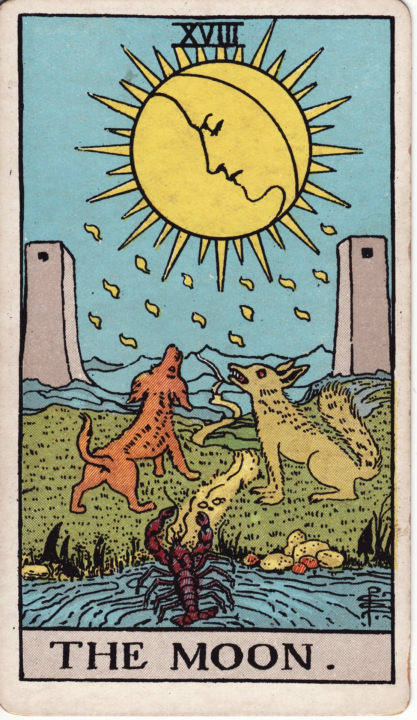
Pick a Tarot Card to help accomplish your goal.
Goal setting is easy, but accomplishing your goals are a b*itch. Tell me what outcome you would like to achieve, if you were to accomplish your goals. Ill draw a tarot card and make a recommendation to help you make that desired outcome easier to accomplish. https://www.skool.com/rise-plus-5656/about
1
0
1-5 of 5
@jason-hottel-9382
Shifting chaos into order. https://www.skool.com/rise-plus-5656/about
Active 1h ago
Joined Feb 25, 2026
INFJ
Santa Cruz, California
Powered by