Activity
Mon
Wed
Fri
Sun
Nov
Dec
Jan
Feb
Mar
Apr
May
Jun
Jul
Aug
Sep
Oct
What is this?
Less
More
Owned by James
Launched Feb 2026, Connecting engineers, shipyards, trades, operators, owners, & students to collaborate and drive the future of maritime innovation.
Skoolers
153.1k
Free
8 contributions to Talk Maritime

Feb 19 •
Welcome to our community
Thank you for joining us. Please introduce yourself and share a pic of your workspace, no matter how messy! I'll get the ball rolling. I grew up in the New Orleans area and graduated with a BS Naval Architecture & Marine Engineering from UNO and later with a MBA From Nova Southeastern University (Ft Lauderdale). I have worked in the Shipbuilding industry, and a couple of others (Aerospace, Cellular, and Autonomous Vehicle) for over 35 Years. I absolutlely love New Technology. I have had the pleasure of working on many exciting projects throughout my career including the first US Navy Landing Craft Air Cushion (LCAC), the initial USCG 47 FT Motor Lifeboat, the USSOCOM MK V, and many others (commercial and military). I have been in Capture Mangement, Contracts, Business Development, Sales & Marketing, Engineering, R&D, Shipbuilding, Vessel Operations, Manufacturing, Logistics, and others. I am a Miami Dolphin Fan (Yeah, I know), think my Cat is Crazy, and I am always looking to learn something new. As you can tell by my workspace, it's pretty boring. Now it is Your Turn! Start by letting us know which type of content that is your highest priority to see in Talk Maritime.
Poll
2 members have voted

0 likes • Mar 20
One of my favs
Mar 19 •
Integrated Shipbuilding Partner (ISP) Concept for Next Generation Shipbuilding Projects
Hi everyone, I wanted to share some thoughts I’ve been developing around reshaping early-stage shipbuilding programs. This is a detailed concept exploring how an Integrated Shipbuilding Partner (ISP) model combined with AI-enabled processes might improve integration, risk management, and industrial base alignment. I’m very interested in hearing your perspectives on this, particularly from those with experience in shipyards, design firms, acquisition, and maritime operations. Some questions to consider as you read: - How practical do you think an ISP model would be in real-world shipbuilding programs? - What challenges or benefits do you foresee with AI-enabled integration across concept to construction? - How might risk and liability need to shift to support this approach? - What early investments could most effectively reduce downstream rework and schedule risk? Please share your thoughts, experiences, or any questions you have. Looking forward to a rich discussion! Note: A version of this post was also shared on LinkedIn in a more concise format due to platform character limits. I’m sharing the full detailed version here to foster deeper discussion within this community. As I’ve been reviewing the new Vessel Construction Manager (VCM) RFP, I keep coming back to whether there’s an opportunity to reshape how we structure early-stage shipbuilding programs, especially as both industry and Government acknowledge that the current model needs to evolve. One idea I keep returning to is whether a VCM could function more like an Integrated Shipbuilding Partner (ISP)—not a single individual, but an organization or team selected early through its own competitive process. Under a MAC-type structure, both designers and shipyards could be prequalified based on capability, capacity, digital maturity, and past performance. When a new program begins, the Government could select an ISP from this pool to lead early integration, while designers and shipyards compete for their respective roles within a more structured and better-informed framework. This preserves competition while improving alignment, design maturity, and industrial-base utilization from the outset.

Mar 16 •
List of Vessels Under Construction - Updated 4/19/26
This is an evolving list. Please contact me with any updates.
0
0

Feb 20 •
Inital thoughts on Presidential EO "Restoring America's Maritime Dominance"
The Executive Order (EO) released by President Trump in April 2025 opens with a blunt assessment of America's position in global shipbuilding - and it does not pull any punches. "Both our allies and our strategic competitors produce ships for a fraction of the cost needed in the United States. Recent data shows that the United States constructs less than one percent of commercial ships globally, while the People’s Republic of China (PRC) is responsible for producing approximately half. Rectifying these issues requires a comprehensive approach that includes: 1. securing consistent, predictable, and durable Federal funding, 2. making United States-flagged and built vessels commercially competitive in international commerce, 3. rebuilding America’s maritime manufacturing capabilities (the Maritime Industrial Base), and 4. expanding and strengthening the recruitment, training, and retention of the relevant workforce" These four pillars form the backbone of the administration's strategy, but each comes with its own deeply rooted challenges. Select one and give your thoughts. I have always subscribed to the belief that you cannot come up with solutions unless you first understand the problems. I have views on all 4, however I'll start with just peeling off the top layer (of many layers) of #3 since I have ALOT of experience in this area. Again, this only scratches the surface. In future posts, I’ll dig deeper into how we can rebuild a distributed, resilient, and competitive maritime industrial base — one that includes every yard, every region, and every worker. America's maritime manufacturing base has not just declined - it has thinned, consolidated, and lost resilience. One of the many contributors to this decline has been due to the nation's focus on protecting only a select few of the shipbuilders in the U.S. There are many shipyards that build small to medium-size vessels. These small and mid‑tier yards — with many located across the Gulf Coast — represent some of the most adaptable and commercially competitive shipbuilders in the country. Yet federal policy has rarely treated them as strategic assets. Besides being limited to competing for the smaller vessels needed by our Navy and USCG, their survival has depended on their ability to compete and win commercial shipbuilding projects that serve e.g. the Offshore, Wind, Ferry, and other markets. These segments of the market are obviously very competitive, and the unique nature of the projects have resulted in the small to medium size yards developing very unique knowledge, skills and abilities along the way. Such capability does not necessarily transfer to the largest yards that for decades have designed and built, e.g. submarines and aircraft carriers.
Poll
1 member has voted
0
0

Feb 19 •
Currents Update: President Trump’s EO on Restoring America’s Maritime Dominance
Currents Update: President Trump’s EO on Restoring America’s Maritime Dominance On April 9, 2025, President Donald J. Trump issued Executive Order 14269, directing the creation of America’s Maritime Action Plan (MAP) — a national strategy aimed at rebuilding U.S. maritime strength across shipbuilding, workforce development, and industrial capacity. The MAP was officially released last week on February 13, 2026, marking a major milestone in the administration’s maritime agenda. Over the coming days, I’ll be breaking down the EO, the MAP, and the developments that have unfolded since the order was issued. Expect focused analysis on key themes and potential opportunities for our shipbuilding community. Stay tuned — and let me know in the comments which areas you want me to explore first. Full documents: - Executive Order: https://www.whitehouse.gov/presidential-actions/2025/04/restoring-americas-maritime-dominance/ - Maritime Action Plan: https://www.whitehouse.gov/maritimemight/
0
0

1-8 of 8
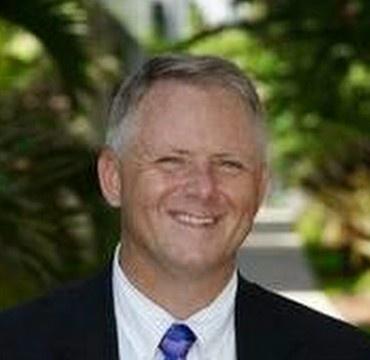
@james-gleason-9136
35+ Yrs Experience in areas including Contracts, Business Development, Naval Architecture & Marine Engineering, Shipbuilding, Operations, and Supply.
Active 18d ago
Joined Feb 17, 2026