Activity
Mon
Wed
Fri
Sun
Nov
Dec
Jan
Feb
Mar
Apr
May
Jun
Jul
Aug
Sep
Oct
What is this?
Less
More
Owned by Islem
🧠 Lead yourself. Think for yourself. Build your own path. A space to lead yourself, challenge borrowed beliefs, and create the life of your vision.
62 contributions to 💎 Lead Yourself

9d •
Love yourself; Lead your life
🌹 What if life is much easier than you think and there’s a shortcut to success and happiness? What if everything starts with you? The shortcut is loving yourself enough not to abandon yourself for anything not for a relationship, a career, or material things. Nothing is permanent. Life is short. And accept that you don’t know everything about life. Life will keep showing you things and testing you until you learn the lesson. So take that shortcut: learn how to love yourself, how to give yourself what you need, and how to speak in your own voice your soul’s voice. You’ll attract what you want in life. I’m speaking from my own experience. By asking myself every day what I wanted, I started living my life like a movie. I saw everything as possible, so I just did it without overthinking. And I want you to do the same for yourself.

1 like • 13h
@Muhammad Belal Bahri keep loving yourself , you people will appreciate that 🌹
17h •
🧠 Choose from a place of Freedom not limitations
A country often follows the mind of its leader. What a leader says, believes and repeats can become part of what a nation accepts as normal. And it made me ask: What do I believe? Where did these beliefs come from? How many of them are truly mine? Some beliefs feel like our own because we have carried them for so long. But many were learned from our family, our culture, our country and the people around us. Sometimes, when you change your environment, a belief you once thought was the whole truth starts to lose its power. You can limit your life by living inside someone else’s mind. Your brain can learn. Your experience can expand. Opportunities can appear where you once saw none. Choose from a place of freedom. Question the limits you inherited, and decide what you want to believe now. — Tata Islem Human & Business Strategist


5d •
🎯 Ambition vs Social Expectations: Are You Living Your Dream or Someone Else’s?
Have you ever felt that people have already decided what your future should look like? They tell you which career to pursue, which country to move to, and what success should mean to you. But here is the real question: Is the life they want for you the life you actually want for yourself? For some people, success means a stable job, a good salary, and a comfortable life in one place. For others, success means freedom, exploration, discovering new cultures, traveling across borders, and experiencing everything the world has to offer. Neither vision is inherently better than the other. We simply have different ambitions, priorities, and definitions of success. The problem begins when we start pursuing someone else's dream just to meet their expectations or gain their approval. Your ambition doesn't have to make sense to everyone. But it must make sense to you. At the same time, having a dream isn't enough. You need a realistic plan, discipline, patience, and the courage to accept the risks that come with your choices. Listen to advice. Learn from other people's experiences. Consider different perspectives. But never confuse listening to others with surrendering your right to choose your own direction. Because at the end of the day, you are the one who will live with the consequences of your decisions. 💭 A question worth reflecting on: If nobody could judge your choices, nobody could criticize your ambitions, and nobody expected anything from you, what kind of life would you choose to build? Would you still pursue the same career, move to the same country, and follow the same path? Or would you finally give yourself permission to pursue something different? Choose your direction consciously. Build your future strategically. And remember that success is not simply reaching a destination that impresses others; it is building a life that genuinely reflects your values and ambitions. #Ambition #PersonalGrowth #Mindset #CareerDevelopment #LifeChoices #SelfAwareness #Success

1 like • 3d
Thank you for sharing 🌹 Life is short , lets make the best of it .
9d •
Who are the people responsible for your happiness?
The only one after Allah of course who take all the responsibilities for your happy #YOU

1 like • 7d
Thank you for sharing this 🌹totally agree
11d •
🧠Thinking Vs Overthinking
There is a huge difference between thinking and overthinking. Thinking helps me move. Overthinking keeps me in the same place. I started noticing this in myself very clearly. When I am thinking, I am dealing with what is actually in front of me. What do I want? What do I know? What is the decision I need to make now? What is the next step? But when I am overthinking, suddenly I am trying to solve an entire future that doesn't even exist yet. What if it doesn't work? What if people don't understand me? What if I choose wrong? What will people say? What if there is a better way? Do I need more information? And suddenly I have 10 problems in my head when, in reality, maybe I only have one. I saw this recently while creating my own event. The moment I thought, "I want to do an event," my brain could immediately go everywhere. I need this. I need that. Landing page. Team. Organization. Everything. And I stopped myself. No. What is the first thing? Pick the date. That's it. Then I did the next thing. Then the next. And suddenly something that looked huge in my head became easy when I was actually doing it. This made me understand something: Sometimes we are not overthinking because we don't know enough. We are overthinking because we want certainty before we experience something. And certainty is exactly what we cannot have. I see the same thing in business. We want to know if the offer will sell before putting it in front of people. We want to know if people will understand our message before saying it. We want to know if the project will work before starting it. We want to know step 10 while we are still standing at step 1. And for me, this is where self-leadership comes in. Leading myself doesn't mean that I always know the answer. It doesn't mean I don't listen to experts. It doesn't mean I don't research. It means I know what I want, I take the step that exists now, and then I allow reality to give me information. If it works, beautiful. If it doesn't work, also information.

1 like • 11d
@Muhammad Belal Bahri 🌹 Thank you for sharing
1-10 of 62
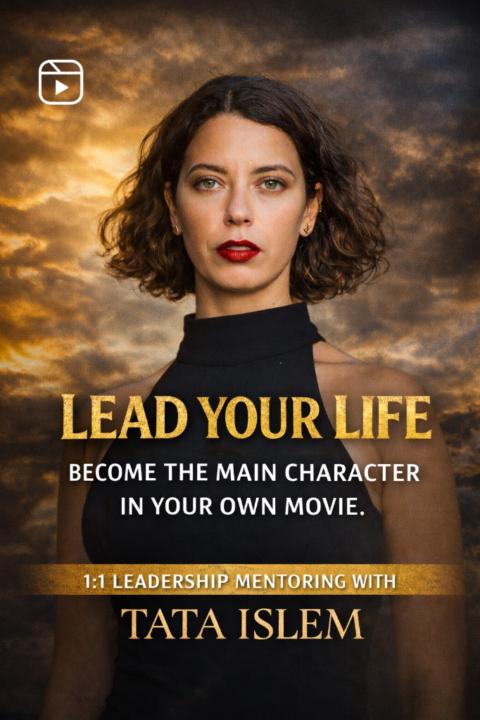
@islem-tounsi-2572
Stop Overthinking. Start Executing.
⚡ Build Success Without Losing Yourself
🎤 Speaker | Human & Business Strategist
Active 13h ago
Joined Jan 14, 2026