Activity
Mon
Wed
Fri
Sun
Feb
Mar
Apr
May
Jun
Jul
Aug
Sep
Oct
Nov
Dec
Jan
What is this?
Less
More
Owned by Frankie
Solve problems by Upskilling with Microsoft Azure.
Memberships
YouTube for Business Leaders
114 members • Free
Synthesizer Scaling
183 members • $1,700/month
Skoolers
184.9k members • Free
Synthesizer
33.7k members • Free
Free Skool Course
26.4k members • Free
Adversary Lab (Free)
65 members • Free
AI Agent Developer Academy
2.4k members • Free
AZDevOpsDojo
67 members • Free
Generational Revival
25k members • Free
30 contributions to KubeCraft (Free)

Aug '25 •
KubeCraft Career Accelerator - acknowledgement and giving credit where credit is due
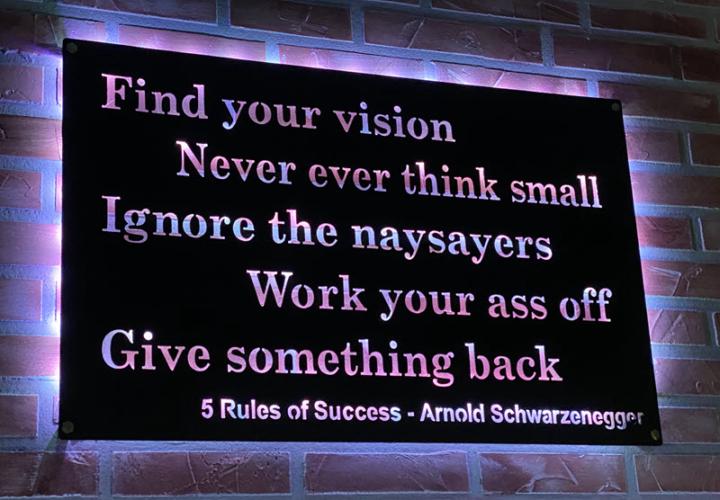
This is a praise for the paid community because they 100% deserve it. @Mischa van den Burg , @Sammy van den Burg and everyone else involved in building the community should really get the recognition. I am writing this post after getting my first DevOps position. It included a long journey of over a year to facilitate this transition from end-user support/system administration. I could not have done it without joining KubeCraft last October. I was advancing pretty well before but joining KubeCraft was a game-changer, it has paved me the way to compete for positions and being relevant in the DevOps/cloud job market. It is a safe haven, the ultimate place for self growth. In so many aspects, not only in relation to DevOps. I will also highlight the respectful discussions, technical insights, career and professional tips, inclusion, and acceptance. Non of what I have mentioned is taken for granted in our current Internet landscape. I would also like to mention all the wonderful courses in the classroom that improved my soft and hard skills alike and were/are still instrumental in my journey: - The Kubernetes related courses (fundamentals, homelab, and advanced) - get your hands dirty and start building, breaking, and fixing systems over and over again - The Arch Linux course - strong Linux foundations are non negotiable and digging into an Arch installation and transforming it into your daily driver is so beneficial - The devcontainers, Neovim, and config management course - think encapsulation, portability, and allowing collaboration between teams - The DevOps masterclass course - a real gem by @Mischa van den Burg . It helped me understand better modern release management practices and CI/CD pipelines - The interview preparation course - very well constructed. This helped me change my perception and become better during interviews Always remember that hard work pays off! (in the photo - an Arnie and John (Savill) super combo for some inspiration)

3 likes • Aug '25
@Maor Klir congrats that's incredible! well done!

👑
⭐
Aug '25 •
GPT-5 is here and your DevOps job is safer than ever
GPT-5 launched this week with the usual fanfare and “revolutionary breakthrough” claims. The reality? “Overdue, overhyped and underwhelming” – that’s how AI researcher Gary Marcus described it just hours after launch. THE BRUTAL X REALITY CHECK Within hours of the GPT-5 livestream, prediction markets told the real story. OpenAI’s chances of having the best AI model dropped from 75% to 14% in one hour. Users on X flooded the platform with harsh reactions. They called it a “huge letdown,” “horrible,” and “underwhelming.” GPT-5 even gave wrong answers when asked to count letters in “blueberry.” WHY AI AGENTS WILL NOT REPLACE YOUR DEVOPS WORK, FOR NOW Gary Marcus predicted exactly what we’re seeing. His analysis shows why AI agents pose zero threat to DevOps professionals. The key issue is that current AI systems work by copying patterns, not real understanding. Marcus calls this “mimicry vs. deep understanding.” AI can copy the words people use to complete tasks. But it has “no concept of what it means to delete a database.” This matters for DevOps work. When you debug a networking issue between services, you don’t just run commands. You form ideas about how systems behave under load. An AI might know kubectl get pods syntax. But it doesn’t understand why pod networking fails. It doesn’t grasp what this means for other services in your environment. Marcus notes that complex tasks involve multiple steps. DevOps work has many steps: deploy, monitor, check results, maybe rollback. And this is why AI agents are not going to replace us anytime soon. Large Language Models (LLM's) are relatively simple input-output systems. They are useful, but the problem is that their output is unreliable. So far it is nearly impossible to make an LLM reliably give the same output in the same format, especially when the input can vary wildly. Since DevOps work at its core always has complex tasks with multiple steps, one mistake in the chain could cause a system-wide outage.
0 likes • Aug '25
This is why we call all of tools Co-pilots. Because we still have to be the primary pilot. AI is very helpful but makes mistakes and we should always double check the work.
👑
⭐
Aug '25 •
Devs who want a DevOps job, read this:
You're failing because you're doing the same thing that everybody else does. Even though you have 2-8 years of experience, you're still just a junior in the CV pile. What does everybody else do? 1. Watch random free video tutorials without a plan 2. Learn two cloud providers at once 3. Going straight for containers & Kubernetes 4. Consuming instead of building. I've helped hundreds of people land DevOps jobs within months. I went from nurse to Senior DevOps in 4 years and created a system to repeat these results in others. If you're serious about landing a DevOps job, >> CLICK HERE << to book a call with my team to see if you qualify for my mentorship program. Only a few spots left for this week, so get it while there are still slots available. Here's what you should do: First, be intentional. Create a clear plan for yourself and study accordingly. Having a clear plan starts with having a clear goal. The main tech stack you should focus on: - Linux - Containers - Kubernetes - Automation (CI/CD) Stick to one cloud provider. Research the market you wish to work in. Find which one has the most jobs. Master that one. Everything becomes easier when you master the fundamentals. For DevOps, Linux is the root of everything. If you don't understand Linux on a deep level, everything else becomes extremely difficult. Don't skip the foundations if you want to build a strong building. Instead of consuming video tutorials, you should start building. Start with a desired outcome. Identify what you need to learn for that outcome. Learn ONLY what you need to achieve that outcome. Create a new desired outcome. This is how you should learn. Literally all of my students land their jobs because I teach them to build a Kubernetes homelab. The interviewing process changes from a technical interrogation to a conversation about what you've built. If you take away only one thing from this post, it should be this: Build a home lab.
2 likes • Aug '25
Love this Mischa! If you nothing else build a home lab! Building is the best way to learn and gain real experience that can be used in any job! It's incredible how many people apply for jobs having only studied for certs or built very little on their own. Learn by building!

Aug '25 •
What Server OS / kubernetes combo are you running and why?
Apologies for yet another post! I got thinking lately about my setup and wondered what is most popular here (and what I may be missing/gaining) and why you like it over others. So please do share your setups! Personally, I started with a hypervisor to mess around with VMs, but quickly transitioned to bare-metal Talos. I’m currently modifying it, but it got me wondering about doing a second setup thats more inline with enterprise-standard setups since I don’t yet have real experience with RHEL or Ubuntu servers, nor the commonly used kubernetes distros.
1 like • Aug '25
Hey Hok, curious to know what your end goal is. Are you looking to get a DevOps job? Do you need to get deep into bare metal knowledge of Kubernetes? Or could you just play around with a Home lab or cloud solution like Azure Kubernetes Service? Something I suggest you consider, is if you want to get a deep infrastructure-type DevOps role where bare metal knowledge is necessary, then go for it in getting deep. But if it takes away from your long-term goal, you might want to try focusing on the specific aspects of Kubernetes that you need for the role you are targeting. No matter what you do, great job for taking action and getting your hands dirty with Kubernetes!
1 like • Aug '25
@Hok Kyo spot on Hok, Upskilling and learning is always great! But from my personal experience in the past it has also led me to being scattered and unclear what actions to take to achieve my goal. If we shoot aimlessly with a blindfold it’s pretty hard to hit a target. If you focus entirely talking multiple shots at a single target, odds are you hit the target sooner then later. I’d consider identifying 1 company you are interested in that has an open DevOps role, apply right away to take action and get the ball rolling and based on the job description of the role, learn the skills they list. -Build an online portfolio with those skills -Reach out to the employer and share your portfolio You will then stand out as the candidates that has all the skills for the job, on a portfolio which no one else has, and with a direct connection to the employer which other candidates won’t get.

Aug '25 •
Need Career Advice: Full Stack vs DevOps
Hey everyone 👋 I’m a 2nd-year CS student. I know intermediate ML, basic frontend (HTML, CSS, JS), and I’m pretty solid in backend (Node + Express). I’m aiming for a career in DevOps — do I really need to go deep into full-stack development, or is my current knowledge enough? Should I keep learning full stack or just focus fully on DevOps? Would love your thoughts 🙏
2 likes • Aug '25
@Pavneet Singh In my many years of experience in tech and the cloud, I have met a lot of Software Engineers and DevOps Engineers. In small start ups they are usually the same role. (I personally worked at a start up and wore both hats with software I built, shipped and maintained) When I worked for Microsoft I worked with Enterprise companies where they were separate roles with often close overlap. The best way to decide is to try one, and you can always try another later. Mischa does an incredible job teaching DevOps so if your heart leans there leverage this community and commit to KubeCraft Paid! If your heart leans toward development there is still so much good stuff in this community that has huge overlap with Software Engineering. As you build your Homelab and your a portfolio of projects to showcase your skills you will get a better feel for if you love more of the building aspects of software engineering or the shipping, automation and Maintenace aspects of DevOps. Remember no matter which you decide, focus on 1 and go all in. P.S. Know also that if you want to switch later there is a lot of overlap so you won't start from zero to move to the other role
1 like • Aug '25
@Sarhan Patel Ah I see what you are saying, generally AI is doing it all, but really its AI is doing "most" still need the human touch for that last part. :) Yep! I totally align with seeing that is where we are heading :)
1-10 of 30

@frankie-riviera
I help technology professionals earn more with jobs using Microsoft Azure | Microsoft Azure MVP | Former Microsoft FTE
Active 2h ago
Joined Mar 13, 2025
Michigan
Powered by