Activity
Mon
Wed
Fri
Sun
Sep
Oct
Nov
Dec
Jan
Feb
Mar
Apr
May
Jun
Jul
What is this?
Less
More
Owned by Elsebeth
For women who carry to much - and are ready to let go It’s not the strength to carry more but peace to carry less Wellcome Home to yourself
Memberships
The AI Advantage
127.1k members • Free
Skoolology: Growth by Design
61 members • Free
Unstuck to Unstoppable
112 members • Free
Skool Growth Free Training Hub
9k members • Free
Skool Growth Boosters 🚀
275 members • $9/month
Skoolers
162.1k members • Free
Skool Danmark 🇩🇰
8 members • Free
The Success Club
15.5k members • Free
10 contributions to The AI Advantage

9d •
The version of you who gets the result isn't built on your best days.
It's built on your most ordinary ones. Anyone can show up when they're motivated. Anyone can grind for a week. Or a month. The hard part is becoming the kind of person who does the work when it feels completely average. No breakthrough. No applause. No big wins. Just another Tuesday. That's where identity is formed. Not because you accomplished something extraordinary. Because you kept a promise to yourself when nobody would've blamed you for breaking it. Your future isn't built by your biggest moments. It's built by the standards you refuse to lower on your most forgettable days. Question: What's one standard you've committed to keeping, no matter how unremarkable today feels?

0 likes • 1d
@Amare j Bright oh yes I’m loving it. I have this on my wall in the Living Room after attending a management cource in Disney World Florida Reminding myself and my coaching clients if You can dream it you can do it 🌟 What are you working on?
0 likes • 4m
@Leslie Jo Skero i could probably learn from that 🥰 it’s all about finding the healthy balance I’m so exited building my new community on Skool, posting, sharing, connecting and creating all the materials for the Classroom that my hands and fingers are sore. Can’t stop myself

🔥
6d •
Don't Let One Bad Day Become a Bad Life
Everyone has setbacks. A bad day doesn't mean you're failing. A rejection doesn't mean you're not good enough. A delay doesn't mean you've been denied. Learn from it. Reset. Then keep moving forward. The people who succeed aren't the ones who never fall they're the ones who refuse to stay down. What's one lesson you've learned from a recent setback?
1 like • 1d
This was my lesson yesterday having a bad day, my very sick brother at the hospital going trough a surgery and things going on here online making my thoughts spiraling while trying to explain myself You cannot control the version of you that lives inside someone elses mind You can only control how you show up. I ran the promt Dean offered for stopping the spiraling and made a post in my community about it

1d •
Enjoy the View Before the Next Climb
One lesson I’ve learned on my AI journey is this: don’t rush past your progress. It’s easy to focus on the next skill, the next follower, or the next milestone. But every once in a while, stop and appreciate how far you’ve come. Celebrate the small wins. They matter. Growth isn’t just about reaching the next level—it’s also about recognizing the person you’ve become along the way. Enjoy the moment… then keep climbing. 🚀
1 like • 1d
I really loved the structure of the AI advantage bootcamp with Dean and Igor celebrating the wins every week, and your perspective of enjoying the view and the proces as much as the results that can be counted I made this at the bootcamp when we were invited to play with pictures ⛰️ me enjoying the view after the bootcamp. Not in my wildest dreams I could have imagined were I am today just a few month after. Still climbing from plateau to plateau Like a life before and after I started the climb

2d •
AI is a mission not a race
Great article that puts an other angle on AI and how to deal with it: https://au.civic.ai/p/mission-not-race
0 likes • 1d
@Dennis L Stewart I simply love your perspectives. It resonates with me. One step at a time. Not nessesary to see the whole picture. It evolves over time
0 likes • 1d
@Dionny Chejito your words resonates with my proces. I really like you and Rene calling it Mission mindset. Note to self

2d •
🧠 Memory Is the New AI Feature Everyone's Chasing, But Most People Aren't Using It Right
Persistent memory, the ability for AI tools to retain context across sessions rather than starting fresh every time, is one of the most significant product developments in AI right now. It's a genuinely important capability, addressing one of the most common frustrations with earlier AI tools: the need to re-explain context constantly. But having access to memory and using it well are two different things, and a lot of people who now have this capability available aren't getting anywhere near its full value. ------------- Context ------------- The promise of persistent memory is straightforward: instead of re-explaining who your clients are, what your business does, and what your preferences look like every single session, that context persists, and each new interaction can build on what's already been established. This should, in theory, produce exactly the kind of compounding value that comes from AI infrastructure done well: less setup time per interaction, more consistent output, and a system that gets more useful the longer it's used. In practice, a lot of people using memory-enabled AI tools are getting a much smaller fraction of this value than the feature is capable of providing, for two connected reasons. The first is under-use: people don't actively feed the memory system with the context that would make it genuinely useful, treating it as something that will passively accumulate value on its own rather than something that benefits from deliberate input. The second is over-use, or more precisely, undisciplined use: memory that accumulates without any curation becomes cluttered with outdated, contradictory, or irrelevant information, which can actually degrade output quality rather than improving it, because the AI is now working with a noisier and less reliable context than if the memory had been more carefully maintained. ------------- What Getting Memory Right Actually Looks Like ------------- A consultant who adopted a memory-enabled AI tool early found that her initial experience with the feature was underwhelming. She'd expected the system to become progressively more useful simply through ordinary use, but months in, she wasn't noticing much difference from starting fresh each session. When she examined why, she realized she'd never actually taken the time to deliberately establish the kind of foundational context that would make the memory genuinely valuable: her business's specific positioning, her clients' distinct situations, her standards for what good work looked like. She'd been using the tool the same way she always had, just with memory technically available in the background, without doing anything differently to take advantage of it.

0 likes • 1d
Yes I save the material we have been working on as markdown files - such as E books, pdf’s, artifacts etc for Skoll classroom and important strategy sessions, my voice, values, ideal client, method background etc and design manuals & heros - in instructions in the project I also have memory turned on I really experience my clone knows exactly who I am and what good looks like for me. The workflow works smoothly and the prompting nice and easy I just have to write the name of my ideal client and Inner Power Institute. Then my clone right away knows the context because I have trained in for 4 month every day. It has acces to my thinking and feelings. We have Long chats about life and insights I experience it gets better and better every day understanding me and my intentions I have seperate projects for my headhunting business and teak plantations in Panama. It’s another tone required and different work flows
1-10 of 10
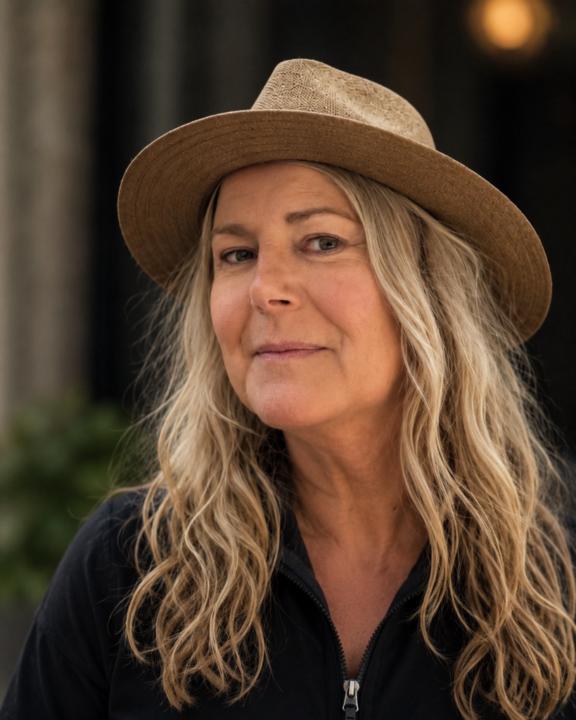
@elsebeth-fogh-6718
Founder of Inner Power Institute.
My foundation is 28 years in the field of consciousness work. But I’m not selling a method. I’m holding a space.
Online now
Joined Jul 26, 2026
Kerteminde, Denmark
Powered by