Activity
Mon
Wed
Fri
Sun
Aug
Sep
Oct
Nov
Dec
Jan
Feb
Mar
Apr
May
Jun
What is this?
Less
More
Owned by Edward
Exploring Britain’s hidden history, dark mysteries, forgotten places, strange crimes, weird folklore, haunted locations and unexplained events.
Master the fundamentals of Statement Analysis. Spot deception, weak denials, and hidden meaning in everyday language.
Memberships
Sing Therapy Studio 🌸
11 members • Free
Skoolers
168.3k members • Free
178 contributions to The Black Archive
1d •
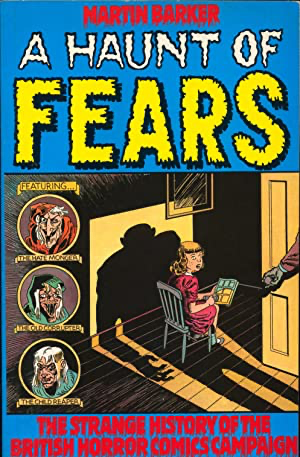
A Haunt Of Fears
There is an undeniable charm in discovering that some of the most controversial comics of the 1950s ended up preserved in the National Archives. Nestled among official papers and government correspondence are lurid American horror comics that once prompted serious debate in Westminster. Their vivid covers, filled with skeletons, vampires and grinning villains, seem oddly at home among files documenting matters of state. The discovery is a reminder of just how much concern these publications generated. During the early 1950s, imported horror comics became the focus of growing anxiety among parents, teachers, churches and politicians. They were accused of encouraging delinquency, damaging young minds and eroding standards of decency. Campaigners called for action, and ministers found themselves discussing comic books with a seriousness usually reserved for weightier affairs. Looking back, there is something rather fascinating about the contrast. This was an era shaped by post-war reconstruction and the uncertainties of the Cold War, yet horror comics became a genuine political issue. Internal memoranda and ministerial correspondence reveal officials trying to decide whether these colourful publications represented harmless entertainment or a genuine social problem. The debate eventually contributed to legislation designed to curb so-called ‘harmful publications’, demonstrating how readily popular culture can become a lightning rod for wider anxieties. Time, of course, has a habit of altering perspective. The comics that once caused such alarm now seem comparatively innocent, especially when viewed alongside the media available to young audiences today. Their exaggerated monsters and melodramatic plots have lost much of their power to shock, replaced instead by a certain nostalgic appeal. Collectors prize them, historians study them, and archivists preserve them with the same care afforded to far more respectable documents. Perhaps that is what makes this discovery so engaging. The comics themselves are entertaining enough, but the official reaction tells the richer story. They offer a glimpse of a society trying to understand the influence of a rapidly changing popular culture, asking familiar questions about what children should read and who gets to decide.
1 like • 9h
@Mark Vent - No, Vent! It’s Frankenstein! Keep up!
17h •
And Called It Macaroni…
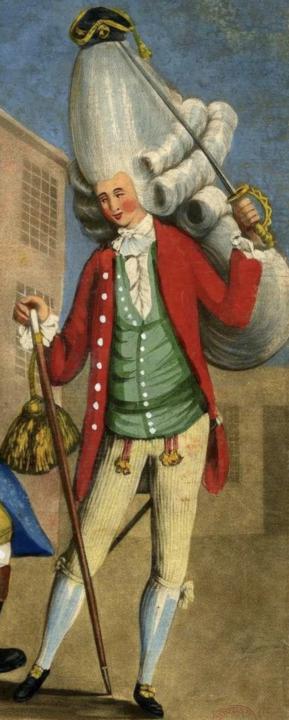
There are few spectacles more delightfully absurd than the Macaroni. In the bustling streets of Georgian London, where powdered wigs already strained the limits of good judgement, these fashionable gentlemen somehow contrived to go further. Their hair rose skyward in elaborate constructions, their coats shimmered with embroidery, and their tiny hats appeared to have landed by accident upon mountains of carefully arranged curls. And the duelling swords that they routinely wore were delicate to point of uselessness—and used only for removing their hats. Evidently, these were ponces, not fighters. The name itself hinted at foreign adventures. Having returned from the Grand Tour, these young men embraced continental tastes with evangelical enthusiasm, adopting Italian refinements that struck many of their countrymen as hopelessly extravagant. To admirers, they represented sophistication; to satirists, they were irresistible prey. Their reputation travelled far beyond Britain. During the American Revolutionary War, British officers are thought to have mocked colonial militiamen by singing Yankee Doodle. One verse jeers that a man ‘stuck a feather in his cap and called it macaroni’—the implication being that simply adding a feather was a laughably poor attempt at achieving the dazzling, over-the-top elegance of a true Macaroni. In one of history’s neat reversals, the American troops embraced the song instead, turning the joke into a badge of pride. Back in piss-taking London, caricaturists sharpened their pens, playwrights rolled their eyes, and pamphleteers wondered aloud whether Britain had exchanged sturdy common sense for silk stockings and scented powder. Yet beneath the towering wigs and embroidered coats lurked deeper questions about masculinity, wealth, patriotism and the unsettling influence of foreign ideas. Every age invents its own peacocks. The Georgians simply did it with more lace, more powder and considerably greater theatrical flair. Mind you, the little hats were clearly excellent. (Pretty much how all hats look on me!)
1 like • 9h
@Mark Vent - I think they look rather doggy! As my mum would’ve said ‘why can’t men dress like that NOW?’
1d •
The Monster Of 1930s Newsprint
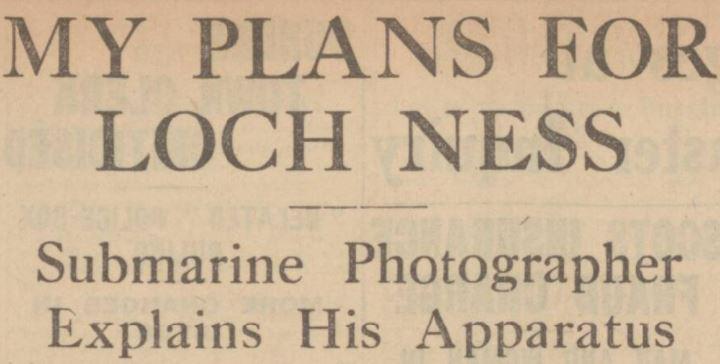
The Loch Ness Monster did not simply emerge from the depths of a Highland loch. It surfaced, almost fully formed, from the pages of newspapers. That is perhaps the most intriguing aspect of the phenomenon. We tend to think of Nessie as an ancient legend, a creature whispered about for centuries before finally revealing herself to modern eyes. There is certainly older folklore attached to Loch Ness, but the monster we know today—the long-necked enigma that launched a thousand postcards—was very much a creation of the 1930s, born in an age when newspapers could transform a local curiosity into an international obsession almost overnight. The ingredients were irresistible. A deep, dark loch stretching for more than twenty miles through the Highlands; eyewitnesses who seemed perfectly ordinary; just enough ambiguity to keep every explanation alive. Early reports described something immense rolling through the water, leaving a wake behind it. Within weeks, more people were seeing it. Some spoke of a giant eel, others of a serpent, still others of a creature unlike anything they had encountered before. The descriptions shifted with each telling, but that scarcely mattered. The story had escaped into the wild. Soon the newspapers were doing what newspapers have always done best: feeding an appetite for mystery. Fresh sightings appeared with remarkable regularity. Artists produced dramatic impressions of the creature. Scientists, naturalists and enthusiastic amateurs offered competing theories. Hunters arrived equipped with cameras, telescopes and unshakeable confidence. Even underwater photography was enlisted in the search, although the loch remained characteristically unwilling to give up its secrets. Reading these reports today, one is struck less by questions of evidence than by the sheer enthusiasm they generated. There is a delightful earnestness about them. Witnesses were not treated as eccentrics but as participants in a genuine investigation. Editors balanced scepticism with possibility, always aware that tomorrow’s edition might contain the sighting that settled the matter once and for all.
2d •
Death in Artillery Passage
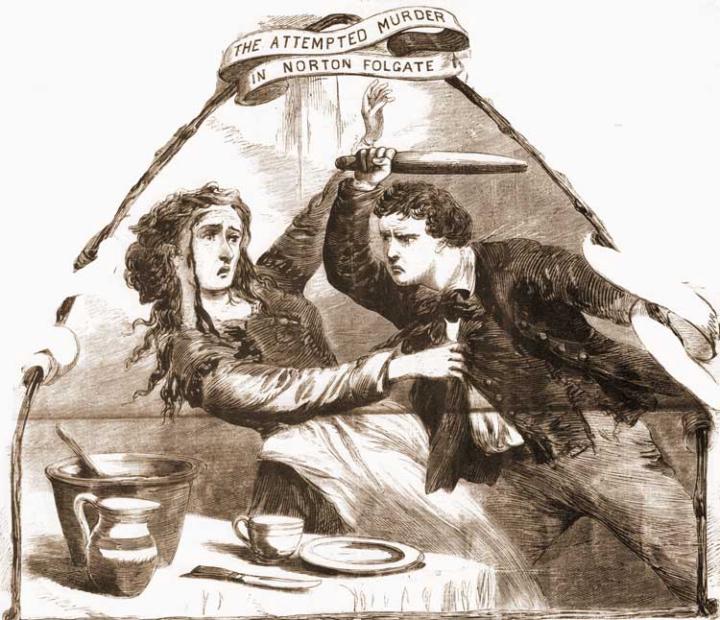
There are corners of Victorian London that seem almost designed to conceal dreadful things. Narrow passages where daylight hesitates, respectable shopfronts masking private miseries, and where violence, when it erupted, did so with shocking intimacy. Artillery Passage was one such place. In the spring of 1868, eighteen-year-old Alexander Arthur Mackay worked as a waiter and general servant for George Grossmith (no, not that one…), proprietor of a modest chop house at No. 11. By all appearances it was an ordinary establishment, the sort of place swallowed by the daily bustle of the City. Yet behind its kitchen door unfolded a tragedy that would carry Mackay to an unwanted distinction: he would become the first man executed within the walls of Newgate Prison after public hangings were abolished. The catastrophe began on the morning of Friday the 8th May. With George Grossmith absent, Mackay quarrelled with his employer’s wife, Emma, a woman of forty-five. Whatever sparked the disagreement soon gave way to uncontrollable brutality. The kitchen ceased to resemble any place where food ought to be prepared, becoming instead the sort of establishment that would have had an Environmental Health Officer reaching for the paperwork, before realising this particular inspection required rather more policemen than clipboards. Emma clung on for nine days. Remarkably, she recovered consciousness long enough to identify her attacker and give a statement to the police before finally succumbing to the appalling injuries inflicted upon her. Mackay, meanwhile, vanished. For several weeks, he succeeded in slipping through the widening net, adopting the name George Jackson and travelling to Maidstone, where fate intervened in the most Victorian of fashions. Henry Ratcliff, a prison warder blessed with an exceptional memory for faces, recognised the resemblance between the man calling himself Jackson and an illustration of the fugitive Mackay. On the 28th of June, he was questioned, identified, and escorted back to London, where Newgate Prison awaited him.
1 like • 1d
@Mark Vent - Look at the picture. He doesn’t even have a moustache. No wonder they spotted him.
3d •
The Acid Bath Murderer
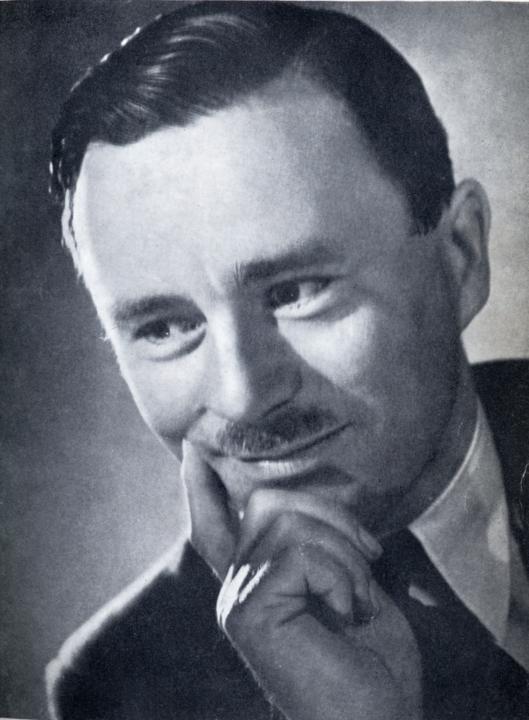
Some murderers hide their crimes. John Haigh set out to erase them. It is a premise so grotesque it feels borrowed from penny dreadful fiction: a respectable man, immaculately dressed, quietly dissolving his victims in vats of sulphuric acid while post-war Britain queued for ration books and cups of tea. Yet the horror of Haigh lies not simply in what he did, but in how chillingly ordinary he appeared. He looked less like a monster than a bank manager who’d politely apologise for stepping on your foot. Born into a deeply religious household, Haigh drifted from fraud to forgery before discovering what he believed was the perfect crime. His fatal misunderstanding was almost laughably simple: he convinced himself that without a body there could be no conviction for murder. Armed with sulphuric acid and supreme confidence, he murdered wealthy acquaintances, reduced their remains to sludge, forged their signatures and calmly helped himself to their money and possessions. It was murder transformed into accountancy. The illusion held for years. Then came Olive Durand-Deacon, an affluent widow whom Haigh lured to his workshop under the pretence of discussing a new plastics invention. She never came home. When detectives searched the premises, they found no intact corpse—but they found something far more eloquent: human body fat, gallstones, dentures and fragments of bone that even acid could not completely destroy. Chemistry, it turned out, makes a poor accomplice. By the time Haigh stood trial in 1949, he claimed to have killed nine people, though only six murders could be proved. He attempted an insanity defence, speaking of drinking his victims’ blood and suffering bizarre nightmares, but few were persuaded. Whether these tales sprang from genuine delusion or theatrical self-preservation remains open to debate. There is something peculiarly British about the Haigh case. Not merely the rain-soaked workshops or the clipped courtroom exchanges, but the unsettling notion that unimaginable evil might arrive wearing polished shoes, offering a reassuring smile, and carrying a ledger rather than a knife. That, perhaps, is the most enduring horror of all
1 like • 2d
@Mark Vent - He was clearly too busy getting his artistic head shots done.
1-10 of 178
@edward-higgins-1760
Statement analyst. Writer exploring Britain’s hidden histories: folk horror, true crime, ghost stories, strange broadcasts and the eerie past.
Active 9h ago
Joined May 11, 2026
London