Activity
Mon
Wed
Fri
Sun
Jun
Jul
Aug
Sep
Oct
Nov
Dec
Jan
Feb
Mar
Apr
What is this?
Less
More
Memberships
Deep Bible Stories
232 members • Free
54 contributions to Deep Bible Stories

22d •
Psalm 22: A Cry of Despair and a Song of Hope
Psalm 22 is one of the most poignant and powerful passages in the Book of Psalms, offering a profound exploration of human suffering, divine abandonment, and ultimate redemption. The Cry of Despair The psalm opens with a heart - wrenching cry: “My God, my God, why have you forsaken me? Why are you so far from saving me, so far from my cries of anguish?” This verse has echoed through the ages, capturing the essence of the human experience when faced with overwhelming pain and hardship. The psalmist feels isolated and alone, as if God has turned a deaf ear to his pleas. He describes his physical and emotional torment in vivid detail. His bones are out of joint, his mouth is parched like a potsherd, and dogs surround him. These images paint a picture of extreme distress, a sense of being at the mercy of cruel forces. The Mockery and Suffering The psalmist also depicts the mockery he endures from his enemies. They scoff at him, saying, “He trusts in the Lord; let the Lord rescue him. Let him deliver him, since he delights in him.” This mockery adds to his sense of humiliation and despair. It shows how in times of suffering, people can be cruel and insensitive, using the faith of the afflicted as a weapon against them. The Glimmer of Hope Despite the depth of despair, there are glimmers of hope in Psalm 22. The psalmist begins to look beyond his present suffering and anticipates God's deliverance. He says, “Yet you brought me out of the womb; you made me trust in you, even at my mother's breast.” This shows that the psalmist has a long - standing relationship with God, and he clings to the memory of God's past faithfulness. The Prophetic Fulfillment In a remarkable way, Psalm 22 is seen by many as a prophetic foreshadowing of the crucifixion of Jesus Christ. The description of the mockery, the piercing of hands and feet, and the casting of lots for his garments all find eerie parallels in the New Testament accounts of Jesus' death. Jesus himself quoted the opening line of Psalm 22 from the cross, “My God, my God, why have you forsaken me?” This connection between the psalm and the crucifixion emphasizes the universal nature of human suffering and the redemptive power of God.

1 like • 17d
The little known fact that most people don't realize about this Psalm is that it was so prophetic of the crucifixion of Christ. On the cross He uttered the opening words of the Psalm to reveal that fact to the religious leaders. Another overlooked thing is that at the same time, those words were literal. On that cross, every single sin committed since Adam and Eve violated God's one and only command was placed on the Lord. And the Father, in His holiness had to turn His face away from His only Son because of the filth of sin He bore at that moment. Yet Jesus carried every single sin, He wasn't guilty of a single one of them. Every single believer should shudder at the thought of that moment... Jesus didn't have to endure what He did that day, but He did. Not because He had to, but because He loves us so much He gave up everything, to receive the torment and death that WE deserve. That is real love, and undeserved grace.

22d •
Out of these, where do YOU think you should spend MOST of your time to get more views?
Most people are spending HOURS editing…But still getting no views. The truth?One of these matters more than all the others combined. I want to see where you are right now 👇 Vote honestly — this will help me build the next training exactly for you.
Poll
12 members have voted
1 like • 22d
This is a tough one for me. Each one is critical in their own right. The first and second one combined is the thumbnail PLUS the title. If they together can’t attract someone's attention, nobody stops, clicks, and watches it. Nevt is the hook. If that falls flat, they're off to the next one in a heartbeat. Then the body. If it doesn't flow in a way that immerses them fully into the message, the viewers may not stay interested enough to make it to the end. They must be held by anticipation to see what comes next. Otherwise, your video is abandoned. Lastly is the CTA. That's what needs to influence the viewers to not only consider what they saw as something that pertains to their own particular situation, but it should inspire them to share it with others they know who may relate to the content as well. Each piece must do its part in order to be successful, otherwise, if one segment doesn't do it's part correctly, one's content may just fade into obscurity in the sea of mediocrity hundreds of other productions find themselves adrift in.
22d •
The Timeless Comfort and Assurance of Psalm 23
Psalm 23 is a beacon of hope and a wellspring of comfort that has endured through the ages, resonating deeply with people across different cultures and generations. Attributed to King David, this psalm is a profound expression of trust in God's care and protection. The opening lines, "The Lord is my shepherd; I shall not want," immediately set a tone of security and contentment. In the metaphor of God as a shepherd, we find a powerful image of guidance and provision. Just as a shepherd watches over his flock, ensuring they have food, water, and safety, God looks after His people. To say "I shall not want" implies a complete surrender of our needs and worries to God. It reminds us that in the presence of the Almighty, we lack nothing essential for our well - being. The psalm then describes the paths of righteousness that God leads us on. These paths are not always easy; they are filled with trials and tribulations. However, the assurance is that God is with us, even in the darkest valleys. "Yea, though I walk through the valley of the shadow of death, I will fear no evil: for thou art with me; thy rod and thy staff they comfort me." The rod is a symbol of God's authority and protection, while the staff is used to guide and support. In the most terrifying moments of our lives, we can take solace in the fact that God is by our side, ready to defend and direct us. The imagery of God preparing a table in the presence of our enemies is both vivid and comforting. It speaks of God's ability to provide for us even in the midst of adversity. Our enemies may threaten and try to disrupt our lives, but God's provision is undeniable. The anointing of our heads with oil and the filling of our cups to overflowing are signs of God's abundant blessings. Finally, the closing lines, "Surely goodness and mercy shall follow me all the days of my life: and I will dwell in the house of the Lord forever," offer a promise of eternal security. Goodness and mercy are not just occasional gifts but constant companions on our life's journey. And the prospect of dwelling in the house of the Lord forever gives us a sense of purpose and a hope that transcends this earthly existence.
0 likes • 22d
@Rob Merc I want to thank you for your words, but I must confess that most of the time, my words aren't mine at all. Often times I'll read something, then ponder on them for a while, then when the Holy Spirit will give me something more appropriate I'll give them where needed. Otherwise, if I just speak for or from myself, the words may as well be pouring a bowl of alphabet soup on the table and just running with that. After all, speaking just to say something may not only give the wrong message, but it can end up meaning something I never intended, and leading to unnecessary problems.
0 likes • 22d
@Rob Merc Everything is for the glory of God! I, like you and hopefully everyone else here fully understands that we're not here for ourselves, as we all have a life, and it might be busy and sometimes chaotic, but we're here for Him, that we may all learn how to serve Him better in our own chosen ministries, and for those who don't have one yet, but are in the process of learning what that might be... None of us are here for ourselves, but for our Lord. To Him be the glory in all things!
28d •
Day 5 challenge
UNDERWATER (The scene is set with a man in water, slowly sinking and nearly motionless) Have you ever been underwater? Not literally. Or maybe literally. But I mean that feeling — when everything around you suddenly becomes distorted. When sound doesn't travel the way it should. When you look up and you can see the surface, you can see light, but you can't quite tell how far away it is. You're not sure which direction is up. You're not sure how long you've been down here. And everything that was familiar to you — the faces, the voices, the routines, the certainties — all of it looks strange now. Refracted. Changed. That's what this is about. Not the triumphant moment when you break through the surface and take that first breath of air. Not the testimony of arrival. This is about the time in between. The disorientation. The not knowing. The middle of the story — when you don't yet have access to the ending. Because most of us have been there. And some of you are there right now, you know someone traveling down that road right now, or you may even find yourself there one day. And I want to sit with you in that place for a while right now. Chapter One — The Middle of the Story There's something we rarely talk about in church, in faith communities, in Christian culture. We love the before. The brokenness, the lostness, the wandering. We tell those stories freely. We love the after. The restoration, the redemption, the breakthrough. We celebrate those with everything we have. But the middle? The middle is uncomfortable. The middle doesn't make a clean testimony. The middle doesn't resolve in an hour. The middle is where most of us actually live — for months, sometimes years — and it is the place we talk about the least. Think about the stories you know. The ones from Scripture. The ones from the people around you. The ones from your own life. They rarely go from broken to healed overnight. There is almost always a middle. A wilderness. A pit. A foreign land. A prison cell. A long stretch of silence from heaven that feels like it will never end.
0 likes • 23d
@Paige VanHouten After my unplanned hiatus, I'm just about to fully dive in headfirst. Small screens are terrible for my eyes, as it requires so much from my eyes; extended focus to read and write on a small screen forced me to shut down for a while. I don't want to go slow, but at the same time, if I don't take it easy, I'll be right back where I was the last couple days.
1 like • 22d
@Andrew Dunbar Thank you so much! My intention wasn't to just give a small glimpse into my own story, but to show that the very same principles and lessons I've learned can apply to anyone, regardless of whatever situation(s) have put you, and held you underwater. It's all just the beginning of the process of the potter taking us, each only lumps of clay, and putting us on His wheel, and beginning to transform us into a suitable vessel to suit His, and in turn, our needs.
23d •
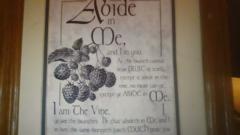
I had to share this
This is so very quaint. I think Deep Bible and one and all will really enjoy this it is really sweet. Really simple. Like another time-a simpler time-in a simple place. Please, if you would like, enjoy . I did. https://youtu.be/l9Ojf4Ga-3M?si=1s5RVjpkLuCjWHai
2 likes • 22d
That's so different than what I'm used to, but not in a bad way. I really like it, and I couldn't help but notice a familiarity in the voice of the female vocalist. I can't place where I've heard her before, but her voice is distinct. Now it's going to bug me until I remember where I've heard her before.
1-10 of 54
@ed-moran-5936
Working down here for the Lord until He gives me a new mission He has in mind for me
Active 12d ago
Joined Mar 30, 2026
ENFJ
Nebraska
Powered by