Activity
Mon
Wed
Fri
Sun
Apr
May
Jun
Jul
Aug
Sep
Oct
Nov
Dec
Jan
Feb
Mar
What is this?
Less
More
Memberships
RNS-Ravens Nest
5.7k members • Free
PBN Collective
445 members • Free
Hacksmith’s Peptalk Community
2k members • $10/m
The Peptide Tactical Playbook
348 members • Free
Women's Peptide Collective
1.4k members • Free
Aminos Academy - Peptide Edu
1.4k members • Free
KRISTINA’S PEPTIDE JUNKIES 24
874 members • Free
Peptides & Pump Knowledge Base
841 members • Free
Peptides for Newbies
3.3k members • Free
5 contributions to KRISTINA’S PEPTIDE JUNKIES 24

9d •
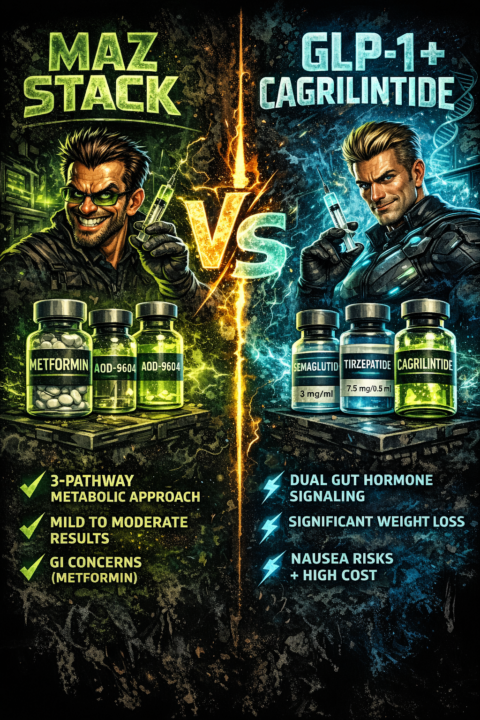
THE “MAZ” STACK
- M = Metformin - A = AOD-9604 - Z = Cagrilintide Metformin • Improves insulin sensitivity• Reduces hepatic glucose production• Activates AMPK (energy regulation pathway)• May blunt appetite in some individuals AOD-9604 (HGH Fragment 176-191) • Fragment of growth hormone• Studied for lipolysis (fat breakdown)• Does not significantly raise blood glucose like full GH• Primarily researched for stubborn fat reduction Cagrilintide • Long-acting amylin receptor agonist• Increases satiety signaling• Slows gastric emptying• Often discussed alongside GLP-1 agonists for dual appetite control Why People Stack Them: The theory behind MAZ: - Metformin → improves metabolic efficiency - AOD-9604 → supports fat mobilization - Cagrilintide → suppresses appetite So the stack aims to target: 1. Appetite control 2. Fat breakdown 3. Insulin sensitivity From multiple angles simultaneously. Important Considerations - Dosing varies widely in online discussions - Potential side effects: GI distress, nausea, hypoglycemia risk (depending on combination and individual factors) - Stacking appetite suppressants can increase nausea significantly First — important context: - Metformin is FDA-approved (prescription medication). - AOD-9604 is a research peptide (not FDA-approved for fat loss). - Cagrilintide is still in clinical development and not commercially approved in the U.S. - Combining these is not an FDA-approved protocol and should only be done under medical supervision. MAZ Stack Overview M = Metformin A = AOD-9604 Z = Cagrilintide Typical Dose Ranges: 1️⃣ Metformin Clinical ranges: - 500 mg once daily → titrated - Common therapeutic range: 1,000–2,000 mg/day divided doses Titrated slowly to reduce GI side effects. 2️⃣ AOD-9604 Research ranges often cited: - 250–500 mcg dailyUsually administered subcutaneously. Human data is limited compared to GLP-1s. 3️⃣ Cagrilintide In clinical obesity trials: - Weekly dosing - Doses studied ranged approximately 0.3 mg → 2.4 mg weekly (titrated)

0 likes • 8d
This is very interesting! Could be used from a break of GLP. Only issue I have is the Metformin for gastric issues. Haven’t looked for it online but when you put Farxiga (SGLT2) together with Metformin it diminishes the gastric issues. It’s called xigduo.
16d •
Tirz
Ok I do not know why I am having such a hard time understanding the micro dose protocol for Tirzepatide, well that and its never listed in any cheat sheet, I do not want to use a full dose once a week with my RS because it can be too much… then my head cant do the math for a 3 month’s supply using 15mg vials Can anyone give me the math my head cant! Dosing - in units is helpful. Thanks!
0 likes • 14d
@Kristina Marie yes correct, I did not add that info of BA water. Which I think is pretty standard for 15mg vial. The dose I was looking for was starting dose at a micro level. Thought that was understood, but my brain wasnt working to do math so maybe not! Lol
1 like • 13d
@Kristina Marie thank you!!💕
Jan 20 •
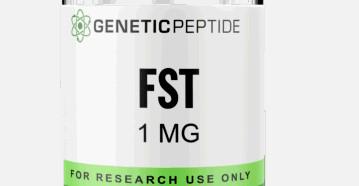
FOLLISTATIN-344 (FST) FOR MUSCLE BUILDING
Follistatin is a naturally occurring glycoprotein that binds to and inhibits myostatin (GDF- 8) and activin—proteins that limit muscle growth and regulate tissue remodeling. By suppressing myostatin, follistatin removes a major “brake” on muscle development and recovery. Key Benefits: 1. Muscle Growth and Strength • Inhibits myostatin, allowing increased muscle fiber size (hypertrophy) • Supports lean mass gains even without extreme calorie surplus • Often discussed in advanced physique or recovery-focused protocols 2. Enhanced Recovery • Faster recovery between workouts • Reduced muscle soreness and breakdown • May support connective tissue repair indirectly 3. Fat Metabolism (Indirect) • Increased muscle mass can raise basal metabolic rate • Often stacked with GH-related peptides for body recomposition 4. Anti-Aging and Regenerative Interest • Activin inhibition may support: o Tissue regeneration o Reduced age-related muscle loss (sarcopenia) • Being studied for roles in fertility, inflammation, and metabolic regulation Common Dosing Protocols: For research/educational purposes only Typical Dosage: • 100–200 mcg per day • Administered subcutaneously Cycling: • 10–30 days ON • Followed by at least 4–8 weeks OFF • Not designed for continuous long-term use Timing: •Often taken: Post-workout or once daily at a consistent time Stacking Considerations: Follistatin is rarely used alone. It’s commonly paired with: • IGF-1 LR3 or DES – amplifies muscle signaling • GH peptides (CJC-1295, Ipamorelin) – supports recovery and fat loss • Follistatin + low-dose GH – popular for recomposition-focused protocols Because follistatin affects multiple growth pathways, stacking increases potency and risk, making conservative dosing critical. Potential Risks and Considerations: • Excessive myostatin suppression may: o Stress tendons/connective tissue if strength rises too fast o Interfere with normal cellular regulation if overused • Not appropriate for: o Long, uninterrupted cycles
0 likes • Jan 20
Is this the same as BioLongevity labs Follistatin?
Jan 15 •
TESOFENSINE (ORAL ALTERNATIVE TO GLP-1's)
Many of you have concerns about appetite suppression. I came across this little hidden gem and wondering if anyone has experience with it? I sure wish I would have known about this when they had me on steroids a few weeks ago and I was eating everything in sight!! 👀 Supposedly it's stronger than Phentermine? I've taken Phentermine before and all it did was make me HUNGRIER. This seems to be a legit option to Cagri. Not to mention the 9 day half life. 😲 GENETIC PEPTIDES NOW OFFERING BUY1 GET 1 FREE ON 50MCG AND 100MCG CAPSULES https://geneticpeptides.co DISCOUNT CODE: KRISTINAMARIE ******************************************************************************************************* Tesofensine is a triple monoamine reuptake inhibitor (dopamine, norepinephrine, serotonin) originally investigated for neurodegenerative disorders and later recognized for its potent appetite-suppressing and metabolic effects. It is not a peptide and is most commonly discussed in the context of medical weight management. Key Benefits: 1. Appetite Suppression - Strong central appetite control via hypothalamic signaling - Reduces hunger, cravings, and food preoccupation - One of the most potent pharmacologic appetite suppressants studied 2. Weight Loss & Fat Reduction - Produces significant, sustained weight loss in clinical trials - Fat loss appears disproportionate to calorie reduction alone (metabolic effect) 3. Increased Energy & Motivation - Dopaminergic and noradrenergic activity can increase drive, alertness, and adherence to lifestyle changes 4. Metabolic Support - May modestly increase resting energy expenditure - Helps counter metabolic slowdown during caloric restriction 5. Possible Cognitive Effects (Secondary) - Improved focus and mental clarity reported anecdotally - Originally researched for neurological indications Typical Dosage Ranges (Clinical / Off-Label Use) Low Dose (Beginner / Sensitive Users)
1 like • Jan 15
Can’t be used with anti depressants.
Dec '25 •
My Shopify store is now open!!! First time shoppers receive a 10% discount!!
The best topical peptides, dermatological grade HA serum and glass, light protected, serum vials. All at great prices! Save 10% off your first purchase with code: KRISTINAMARIE https://peptidejunkies24.shop
1 like • Jan 3
Well done!!
1-5 of 5

Active 20h ago
Joined Dec 10, 2025
Powered by