Activity
Mon
Wed
Fri
Sun
Aug
Sep
Oct
Nov
Dec
Jan
Feb
Mar
Apr
May
Jun
Jul
What is this?
Less
More
Owned by Dean
Improve your posture, reduce pain, and move better using breath, alignment, and awareness. Learn to organize your body daily so posture feels natural.
Memberships
Energy Healing For Abundance
548 members • Free
Skoolers
166.9k members • Free
25 contributions to Posture to Presence

2d •
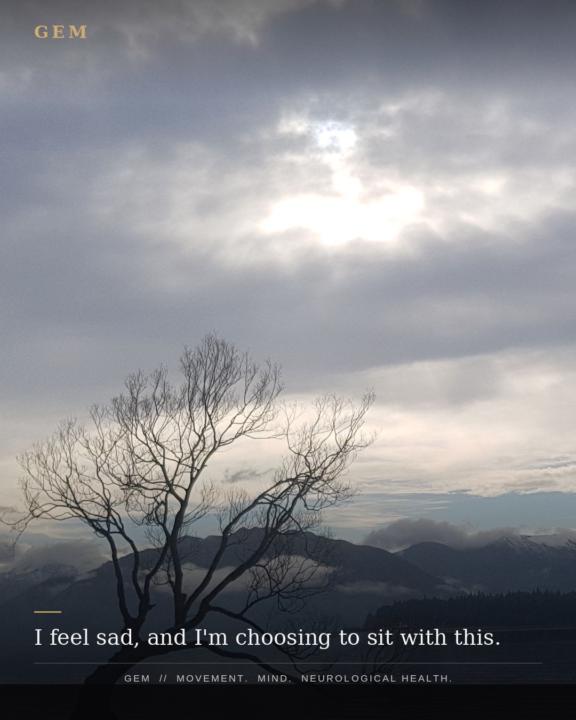
Sitting with a feeling instead of solving it
Had a moment today with a client that I think is worth sharing here. We got talking about something hard he's going through. My first instinct, the old pattern, would've been to jump in and fix it, explain it, or reframe it into something more manageable. Instead I just said what was true. I feel sad, and I'm choosing to sit with this. He paused. Then told me he does the same thing. Neither of us solved anything in that moment. We didn't need to. Something shifted just from being honest about what we were actually feeling instead of moving past it. This is the same principle I teach through movement and breathwork, just applied to emotion instead of the body. The nervous system doesn't need you to fix the feeling. It needs you to stay present with it long enough for it to move through. Curious how this shows up for others here. When something hard comes up, do you tend to sit with it, or move quickly toward understanding it? No wrong answer, just curious what your default is.
0
0
4d •
One Tool. Ten Reps. Full Reset.
Woke up stiff this morning. So I did this. Feet pressing into each other. Glutes firing. Kettlebell tracking straight overhead. Lats loading. Core the whole time. Ten reps and my body reset itself. This is one of the tools I reach for. Not the only one. But one that works every time GEM is applied through the full range. Ground into your foundation. Engage the system. Maintain that awareness as the kettlebell travels overhead. That is the difference between exercise and therapy. Try it and come back and tell me what you felt.
0
0

13d •
You Are Already Love.
You love your pets. You love your parents. You love your kids. You love your partner. And you say you love yourself. So you create a life that enables you to give. Through gestures, talks, time spent together. Love becomes visible through the care one receives. But can you truly give love to someone if you haven't found it within? In the absence of love within, gestures lose their charge. Silence feels like discomfort. Talks feel empty. Your existence loses its depth. So you ask your mind to solve it. You think your way out of the predicament. In the name of love. The struggle continues. Until one day you look at yourself in the mirror. You catch a glimpse of you. The one giving. The one that looks empty. You look into your eyes. Breathe out. And maintain that awareness of being there. Feeling the warm rug under your feet. Breath moving in and out of your diaphragm. Helping your lungs expand. Again. And again. You can feel your legs. You can feel the energy in your hands. Your shoulders drop. Your neck lengthens. You feel your posture. You feel presence. You become love. For that instant — filling your cup. Bringing that love filled vessel to your pets, your partner, your kids, your parents, your work, your chores. To life. You cannot get or give something in life that you already are. You are love. You are presence. You become it through your posture. --- Tell me what this brought up for you.
0
0

18d •
GEM In Action — A Field Report From My Own Training
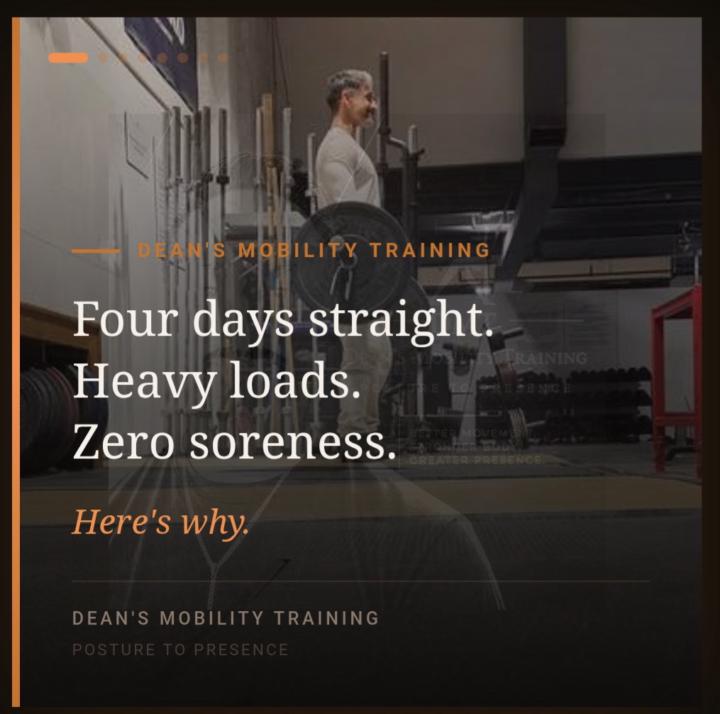
This is what GEM looks like from the inside. Four consecutive days of heavy training. Zero soreness carried forward. Not because I took anything or recovered differently. Because the nervous system stayed organized the whole time. Ground before every session. Engage with intention on every rep. Maintain between every set. This is not theory. This is what the practice produces when you stay consistent with it. The body does not lie. When the system is organized, it adapts. When it is not, it protects. The difference shows up in how you feel on day four. I want to hear from you. Where are you in your GEM practice right now? Are you applying it consistently, still finding your rhythm, or noticing something shift that you did not expect? Drop it below. This community grows when we share what we are actually experiencing, not just what we think we should be experiencing.
1
0
27d •
Why the Place that Hurts is never the real Problem.
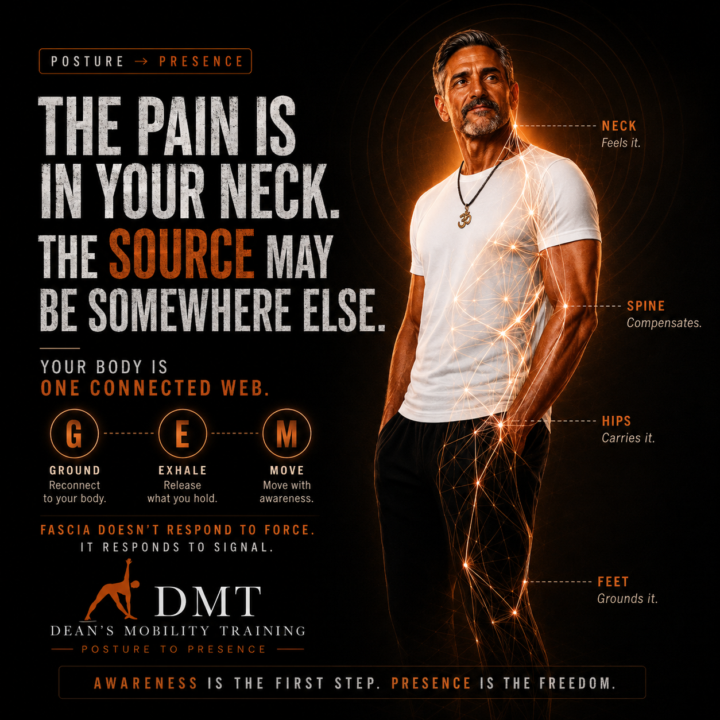
Let me ask you something. Where does your body carry the most tension right now? Neck? Lower back? Hips? Maybe all three? Here is something I want you to sit with for a second. That place that always feels tight, that spot you keep stretching and it keeps coming back, there is a good chance it is not actually the source of the problem. It is just where your body decided to show up with the bill. Your body is one continuous system. Fascia, the connective tissue that wraps around every muscle, bone, organ and nerve you have, links everything together from your feet to the base of your skull. When one area gets restricted, the tension does not stay local. It travels. It compensates. It shows up somewhere completely unrelated and confuses the heck out of you. Tight ankles affect your hips. Restricted hips affect your spine. Your spine affects your shoulders. Your shoulders affect your neck. And you have been icing your neck for six months wondering why nothing is working. This is the foundation of everything I teach through the GEM framework and what I work on daily with my clients through Fascia Stretch Therapy. I want to open this up as a conversation because I know this community has people at all different stages of their movement journey. So tell me below 👇 Where does your body hold the most tension and how long have you been dealing with it? Have you ever had someone look at a completely different area of your body and fix the thing that was actually bothering you? There are no wrong answers here. This is exactly the kind of conversation this space is built for. If you want to go deeper into how fascia, posture and the nervous system all connect, that is exactly what the Posture to Presence community is built around. Drop a comment or DM me FASCIA and let's talk. Let's get into it. 👊
0
0
1-10 of 25
@dean-singh-3323
Learn how posture, breath, and movement restore health, mobility, and presence.
Active 2d ago
Joined Mar 12, 2026