Activity
Mon
Wed
Fri
Sun
Mar
Apr
May
Jun
Jul
Aug
Sep
Oct
Nov
Dec
Jan
Feb
What is this?
Less
More
Owned by Dave
Begin building your 2026 health and fitness plan with a veteran community focused on growth and positivity.
Veterans! Develop your fitness and health habits to make you harder to kill. Ditch the bad habits, learn from your mistakes and dial in your health.
Memberships
FULL STACK
182 members • $49/month
Skoolers
191.2k members • Free
Lifestyle Founders Group™
10.4k members • Free
Scale Your Coaching
20.7k members • Free
114 contributions to The Hard To Kill Community
Nov '25 •
Goodbye Hard To Kill Community
Like walking off into the dusty sunset on my last patrol, this community is done. Off to bigger and brighter in Veterans Getting Fit AF Community. See you there - https://www.skool.com/dave-morrow-personal-training/about
2 likes • Nov '25
@Samson Robertson Consolidating everything here https://www.skool.com/dave-morrow-personal-training/about
Nov '25 •
Going going gone…
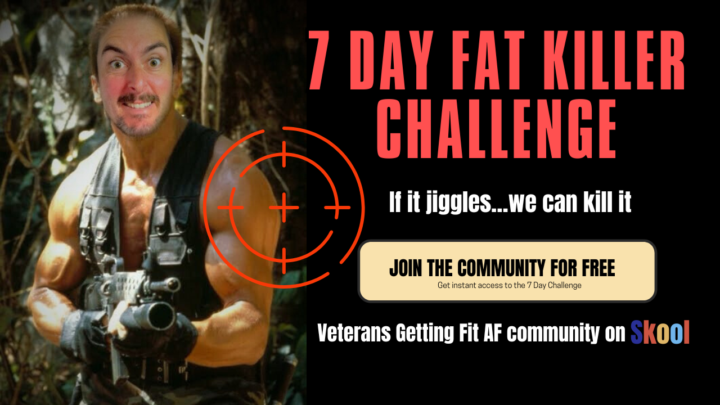
This community officially gets MAiDed on Friday. Everything is consolidated over at Veterans Getting Fit AF. Way more coaching, programs and yuks. All for free. 👉🏻https://www.skool.com/dave-morrow-personal-training/about?ref=d2f531609656463fa0126255070abea3 We’re doing a 7 day Fat Killer Challenge and sign up for our special workshop where you’ll build your holiday workout, nutrition and resiliency plan LIVE Details in the community. See you over there.
0
0
Nov '25 •
On The Bus Off The Bus - Closing This Community (Again)
Yes. You're right. What the hell Dave? Well, I'm an Army officer and we're great at doing the on the bus off the bus game. Turns out, SKool made my wish come true and I can have a FREE tier in my paid community. As much as I like handing them my money, I'd rather keep it for buying more protein powder. Come on over to my Veterans Getting Fit AF Community. Way more programs and conversations, it's free to join or pick up a paid tier. Up to you. Join us here: https://www.skool.com/dave-morrow-personal-training/about This community will self destruct in 7 days....
0
0

Nov '25 •
Weaponizing Caffeine for Strength & Performance
What it is: Caffeine is a natural central nervous system stimulant found in coffee, tea, cacao, and synthesized for supplements (e.g., caffeine anhydrous). It’s the most researched and widely used ergogenic aid in performance.¹ How it works: 1. Adenosine receptor antagonist – blocks adenosine to reduce fatigue and increase alertness.² 2. Increases catecholamines (epinephrine, norepinephrine) – elevates heart rate, focus, reaction time, and energy output.³ 3. Mobilizes fatty acids – can spare glycogen in endurance tasks.⁴ 4.Improves neuromuscular function – enhances motor unit recruitment, power, and perceived effort tolerance.⁵ Performance effects: ↑ endurance capacity ↑ strength & power output ↑ reaction time & vigilance ↓ perceived exertion (RPE)¹˒⁵ When to use it for performance: 1. Take 30–60 minutes pre-training/event (peak plasma concentration window).² 2. Dose: 2–3 mg/kg is effective; 3–6 mg/kg is upper performance range. Higher offers minimal added benefit and increases side effects.¹˒⁵ 3. Example: 90 kg (200 lb) athlete → 180–270 mg (2–3 mg/kg) ideal start. Best use cases: 1. High-intensity training 2. Strength/power sessions 3. Endurance events 4. Sleep-restricted or extended operations Avoid/limit if: 1. Late-day use that impacts sleep (half-life 4–6 hrs).² 2. You’re caffeine sensitive (jitters, anxiety, GI distress, elevated HR/BP).¹ Bottom line: Caffeine sharpens the brain, boosts output, lowers fatigue, and improves performance when dosed properly and timed with intent. Use it strategically, not habitually. References 1. Grgic J, et al. J Int Soc Sports Nutr. 2020;17:2. 2. Nehlig A. Neurosci Biobehav Rev. 2010;34(2):285-301. 3. Davis JM, et al. Med Sci Sports Exerc. 2003;35(8):1361-6. 4. Spriet LL. Appl Physiol Nutr Metab. 2014;39(11):1310-28. 5. Guest NS, et al. J Int Soc Sports Nutr. 2021;18:1.
2 likes • Nov '25
I've started using a killer, poor man's pre workout of: 5g of beetroot 1/2 tsp of baking soda 1 cup of black coffee. It tastes like dirt but it's hella effective at improving bloodflow for your workouts. Great post
Oct '25 •
Newest Program Starts On Monday...One Spot Left
n this video, I introduce the Valor program designed specifically for veterans to heal their mind, body, and spirit. I've spent over six years coaching veterans, addressing issues like obesity and chronic pain, and I've identified key factors that contribute to success in this journey. It's crucial to prioritize your health, as statistics show that 88% of us are metabolically broken and 84% don't meet the minimum exercise requirements. I urge you to take immediate action—whether that's going for a walk or reaching out to me to see if this program is a good fit. Let's work together to create a personalized longevity protocol that empowers you to thrive. We begin on Monday. Last chance, one spot left. Sent me a DM if you're curious.
0
0
1-10 of 114
Online now
Joined Aug 21, 2024
ENTP
Montreal